China Achieves Breakthrough in Lithium Battery Electrolyte Technology
A joint research team consisting of researchers from the 811 Institute of the Eighth Academy of China Aerospace Science and Technology Corporation and Nankai University has recently successfully developed a hydrofluorocarbon electrolyte for high-energy-density and low-temperature batteries. This achievement marks a new breakthrough in China’s core lithium battery technology, promising to double the endurance of existing lithium batteries and significantly enhance their low-temperature performance.
As a key component connecting the positive and negative electrodes of lithium batteries, the electrolyte plays a crucial role in conducting ions, acting like an "expressway" between the two electrodes. It exerts a vital influence on the battery’s energy efficiency, operational stability and temperature adaptability.
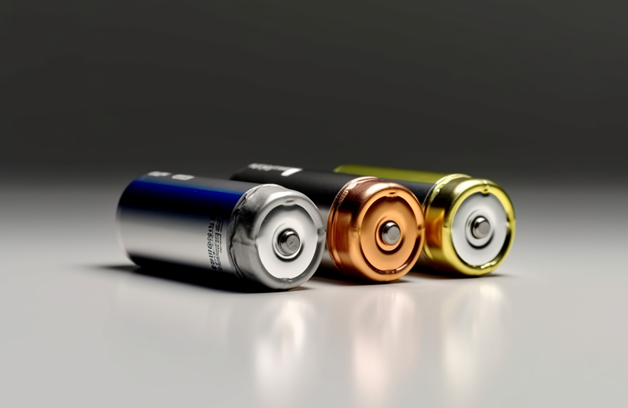
Currently, the electrolyte solvents used in lithium batteries on the market are mainly oxygen and nitrogen-based ligands. Although they have strong solubility for lithium salts, they restrict charge transfer, creating a bottleneck for the improvement of energy density and low-temperature performance. Data shows that the energy density of traditional lithium batteries is about 300 Wh/kg at room temperature, and drops sharply to below 150 Wh/kg in an environment of -20℃.
To address this industry pain point, the joint team has conducted years of technological research, overcoming challenges such as the difficulty of dissolving lithium salts with fluorine. They have synthesized a new type of electrolyte solvent containing monofluorinated alkanes, which effectively reduces the viscosity of the electrolyte, improves oxidation stability and low-temperature ionic conductivity, and enhances the low-temperature energy output performance of high-energy-density lithium batteries.
The breakthrough research achievement enables lithium batteries to have an energy density of more than 700 Wh/kg at room temperature and about 400 Wh/kg even in an environment of -50℃. For lithium batteries of the same quality, the room-temperature energy storage capacity is increased by 2 to 3 times, which can extend the cruising range of electric vehicles from 500 to 600 kilometers to 1,000 kilometers or more. Additionally, the batteries can work normally in extreme low-temperature environments of -70℃.