China Forges Ahead in AI Talent Pool and Infrastructure, Paving Path for High-Quality Development
Against the backdrop of escalating global competition in artificial intelligence (AI), China has made remarkable progress in AI talent supply, policy mobilization, and platform-based organization.
China has established an initial advantage in the scale and structure of its AI talent pool. The size of China’s core AI industry talent force exceeded 500,000 in 2024, with the total number of relevant professionals now ranging from 1.5 to 2 million. Meanwhile, the talent pool for "AI+industry" applications surpasses 8 million, forming a comprehensive talent covering basic research, engineering implementation, and industrial application.
Local governments have increasingly prioritized AI talent as a strategic investment, rolling out incentives such as salary subsidies, household registration support, research grants, and entrepreneurship assistance to attract talents. For instance, the Pudong New Area in Shanghai offers a maximum grant of 7 million yuan for AI talents and teams, and a maximum project subsidy of 100 million yuan. Suzhou and Hangzhou provide high-quality projects with subsidies of up to 100 million yuan and housing purchase subsidies of up to 10 million yuan for talents.
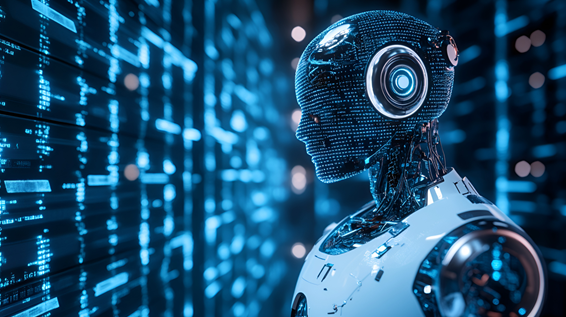
Parallel to talent development, the institutional framework for AI key technology resource supply has taken shape. A national large-model training and verification platform has been deployed in Haidian District, Beijing, with its computing scale exceeding 10,000 PetaFLOPS (P), providing robust support for large-model training and industrial applications.
However, challenges remain in achieving high-quality talent aggregation and innovative output. Local talent recruitment has long relied on subsidies, household registration, and grants, leading to intensified homogeneous competition among cities. Frequent talent migration between policy "hollows" hinders the establishment of stable scientific research collaboration and long-term output mechanisms. Additionally, the talent management system remains localized, with weak cross-regional and cross-departmental information sharing and collaboration mechanisms. This results in repetitive verification, fragmented resources, inefficient allocation, and difficulties in matching talents, tasks, and platforms precisely.
To address these issues, China must focus on platform support, task orientation, and flexible talent flow to build a unified mechanism for high-quality AI talent aggregation.
First, establish a national task engine and a rolling task list system. National technical platforms, in conjunction with key regional nodes, will break down major scientific research and industrial adaptation needs into standard work packages, clarifying milestones, acceptance criteria, resource allocation, and ownership rules. These work packages will be open for nationwide registration and collaboration. A task queue scheduling system based on priority and a key task guarantee mechanism will ensure precise matching of computing and data resources to tasks.
Second, improve the platform-led task scheduling and execution collaboration mechanism. A unified national task scheduling hub will be set up to oversee task matching, talent team formation, process monitoring, acceptance and settlement, and archiving. It will connect with regional nodes through unified interface standards, permission control, and audit rules, forming a cross-regional collaboration network that is callable, traceable, and reusable. This will reduce resource idling caused by redundant construction and siloed management.
Third, build flexible talent flow channels for cross-regional collaboration. For external talents participating in platform tasks and passing assessments, a "one-time certification, multi-location recognition" white-list mutual recognition system and collaboration credit file will be implemented, providing green channels for resource access and quick connection. Short-term on-site assignments and remote collaboration mechanisms will enable talents to move with tasks and transform locally without changing their personnel relationships.
These measures will further strengthen China’s AI talent ecosystem and infrastructure, driving the sustainable and high-quality development of the AI industry.