Xinhe County Boosts Rural Vitality Through Digital Trade, Agri-tech and Community Governance
According to local official releases, Xinhe County in Xinjiang has rolled out targeted livelihood improvement initiatives throughout the year by engaging residents, collecting public demands and delivering practical services. Frontline officials have been stationed in farmland and livestock markets to address residents’ most pressing needs, rolling out tangible livelihood projects that raise household incomes and foster harmonious community development across all ethnic groups.
Digital transformation has thoroughly overhauled the local livestock trading system, resolving long-standing sales challenges for animal husbandry farmers. In the past, local breeders spent early mornings travelling to scattered markets with uncertain pricing and unreliable buyer resources, often facing suppressed trading prices. The county’s standardised livestock trading hub has eliminated such inefficiencies via fully digitalised operational systems. Real-time market quotations are displayed on electronic screens, while an integrated online platform enables instant trading matching and secure real-time fund settlement with transparent and standardised procedures.
The 300-acre professional livestock market has adopted a full-process digital management mechanism featuring real-time data entry and automatic settlement statistics, enabling both buyers and sellers to supervise every trading link and eradicate unfair pricing and delayed payments. The platform has registered more than 3,000 individual users and merchants, with cumulative transaction volume hitting 136 million yuan. Digital optimisation has added over 400 yuan in average income per beef cattle for local farming households.
Since its completion in 2019, the trading hub has nurtured 18 entrepreneurial shops and offered 542 affordable stalls, supporting 60 vulnerable residents with local employment and entrepreneurship opportunities. A comprehensive benefit linkage mechanism integrating market operation, entrepreneurial support and employment promotion has been established, delivering a total of 2.1 million yuan in dividends to 1,000 shareholder households and stabilising income growth for local farmers.
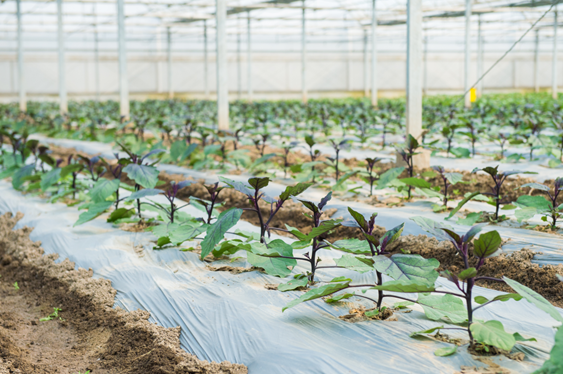
While upgrading sales channels, Xinhe County has leveraged professional agricultural technology to break through traditional planting bottlenecks and drive high-quality development of facility agriculture. Local farming previously relied solely on empirical planting methods, with unstable seed selection, temperature control and pest management leading to low yields and inconsistent produce quality on fragmented farmland. To address these shortcomings, the county has built a systematic rural science and technology service network centred on rural tech campuses, operating 48 village-level agricultural service stations to deliver on-site technical training and guidance at greenhouse bases.
Local authorities have partnered with professional agricultural technical teams from Weifang, Shandong Province, dispatching resident technical specialists to conduct long-term on-site assistance. Multiple high-quality watermelon varieties have been introduced and trialled, with the premium Za Chun Mi variety selected for superior sweetness and market competitiveness, opening new profit channels for growers. Technical instructors provide hands-on training covering ridging, pollination, vine management and fruit thinning, empowering ordinary farmers with professional skills and cultivating a large group of skilled modern agricultural practitioners.
The county has cultivated 282 local professional agricultural technicians. Rural science and technology campuses have delivered 26,000 on-site technical guidance sessions and 50,000 offline practical training courses, forming a complete agricultural support model that combines technology introduction, talent cultivation and large-scale standardised production. Modern planting techniques have comprehensively upgraded traditional farming practices, driving industrial upgrading across regional agricultural sectors.
Alongside industrial income growth, Xinhe County has refined grassroots micro-governance mechanisms to resolve community disputes and bridge communication gaps between residents and authorities. The county has set up 24 neighbourhood mediation pavilions and built a five-level consultation platform covering communities, grid teams, party member centres, resident representatives and volunteer groups. Regular open-air neighbourhood forums have relocated public consultation and dispute mediation services from office buildings to residential communities.
Community workers, judicial mediators, veteran party members and volunteers participate in regular grassroots discussions to collect public demands and resolve neighbourhood conflicts face to face. The community-level governance model effectively tackles minor disputes and daily difficulties within residential areas. Up to now, local authorities have collected and resolved 865 public demands, completed 702 livelihood service projects, and settled 623 disputes covering neighbourhood friction and family affairs, maintaining a mediation success rate above 98 percent.
Xinhe County will continue to optimise its resident-oriented working mechanism in the future. Targeted improvements will be made in industrial development, technical services and community governance. Local authorities will translate public demands into practical service upgrades, continuously improve public wellbeing and consolidate steady development momentum for rural revitalisation across the region.