Dryland Wheat Integrated Farming Tech Delivers Record Yields in Wenxi, Shanxi Despite Late Sowing and Weak Seedlings
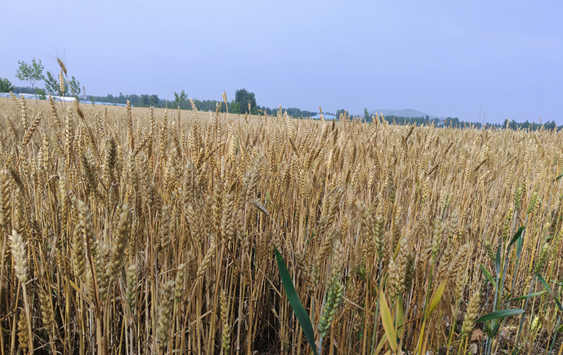
According to domestic agricultural news outlets, official yield assessment results have been released for winter wheat demonstration plots in Wenxi County, Shanxi Province, marking a strong harvest under unfavourable climatic conditions. The core demonstration zone run by an agricultural machinery cooperative recorded a verified wheat yield of 583.40 kilograms per mu, while another cooperative’s extended demonstration area reached 548.06 kilograms per mu after field testing by specialist evaluation panels.
Persistent heavy rainfall disrupted wheat sowing schedules across southern Shanxi this season, pushing planting dates back by 20 to 30 days compared with typical years. Reduced accumulated temperature before winter led to a large proportion of weak seedlings, creating notable risks for safe overwintering and limiting potential yield formation in the later growth cycle.
The integrated agronomy-machinery technical model trialled across the plots has demonstrated robust adaptability and stable yield potential even amid late sowing, weak seedling growth and rain-fed dryland conditions. The research project forms part of major provincial science and technology initiatives delivered via an open bidding mechanism, with long-term field research carried out by agricultural research teams based locally.
Dryland wheat production across the Loess Plateau faces consistent constraints from uneven seasonal rainfall distribution, limited soil water retention capacity and volatile annual precipitation patterns, which have long complicated efforts to secure stable and high grain outputs. Back in the 1970s, average dryland wheat yields in Wenxi stood at merely over 150 kilograms per mu, leaving growers reliant entirely on erratic natural rainfall. For half a century, successive cohorts of university researchers have conducted continuous on-site trials at a dedicated expert research station in Wenxi County, developing practical techniques to capture rainwater and boost grain output on arid terrains and breaking the threshold of 500 kilograms per mu for local dryland wheat.
Subsequent national policy rollouts supporting agricultural science and technology innovation hubs aligned closely with the field service model established by the county’s expert station. The Wenxi Wheat Science and Technology Yard under the China Agricultural Technology Promotion Association was formally inaugurated in 2020, operating as a national-level innovation platform jointly approved by the Ministry of Education, Ministry of Agriculture and Rural Affairs and China Association for Science and Technology.
Both demonstration zones centred their production systems on the Three Advancements soil reservoir construction technique for dryland wheat, paired with complementary core technologies including furrow seeding with soil moisture detection and post-flowering crop regulation. The complete integrated cultivation framework prioritises soil water storage and moisture retention, strong seedling development with stable ear formation, and delayed leaf senescence to raise grain weight, sustaining reliable harvest volumes against volatile weather patterns.
An independent field verification panel, led by a senior wheat specialist, validated the coherent technical roadmap deployed across the project sites. Panel evaluations noted tight integration between all core agronomic steps and high synergy between agricultural machinery and crop cultivation practices, making the full system well suited to large-scale dryland wheat cultivation.
The Thousand Kilogram Dryland Wheat technical package developed for Shanxi rain-fed zones has undergone multi-year promotion across the province, covering a cumulative area exceeding 50 million mu and now applied on more than 90 per cent of Shanxi’s dry wheat fields. Ongoing research work will refine supporting technical frameworks, enabling deeper integration between the Three Advancements water retention method, soil moisture sensing furrow sowing, precision field management and unified agronomy-machinery coordinated operations. The evolving technical suite will supply sustained technical backing to lift comprehensive grain production capacity across rain-fed agricultural zones and reinforce regional food security foundations.