Inner Mongolia Town Revitalises Rural Collective Assets via Asset-rights Reform to Boost Villagers’ Incomes
Per China Rural News dispatches, integrated reforms governing rural collective funds, assets and resources deliver tangible livelihood improvements in Boerjianghaizi Town, Dongsheng District, Ordos City, Inner Mongolia Autonomous Region. Former disused village infrastructure has been renovated into vocational training hubs, opening stable local part-time employment streams for nearby rural households.
A local resident of Manlai Village receives regular monthly wages from the newly completed rural vitalisation training base built on land once occupied by an abandoned school building that lay derelict for decades. Supplementary part-time work at the facility generates nearly 10,000 yuan of extra annual household income, creating steady earnings without long-distance travel for rural labourers.
Collective rural funds, fixed assets and natural resources constitute shared communal wealth for all village residents. Local authorities combine standardised oversight of the three categories of collective rural assets with deepened rural three-transformation reforms: converting natural resources into tradable assets, fiscal capital into equity shares, and rural residents into collective shareholders. Four structured operational steps underpin the policy rollout: comprehensive asset audits to clarify full inventory, joint-stock restructuring with formal equity certification, unlocking idle assets to attract industrial investment, and redistributing operational profits to raise living standards. The framework revitalises underutilised rural stock, expands collective village economic revenue streams and lifts disposable household earnings across all participating villages.

Full Asset Audits Eliminate Unclear Bookkeeping with Village-by-village Digital Registers
Town authorities classify standardised asset audits as a core priority within grassroots governance work. Dedicated task forces coordinate cross-departmental collaboration under a tiered management system where the town oversees overall planning while individual villages implement on-site verification. Outdated loose record-keeping practices are discarded in favour of grid-style asset inspections covering every village, sub-village plot and land parcel across the township.
Verified asset valuations cover 52.526 million yuan of operational collective assets, including high-standard greenhouses in Chaiden Village, melon seed processing plants in Zhejialiang Village, livestock breeding farms in Boerjianghaizi Village and Hu sheep rearing sheds in Manlai Village. Non-operational communal assets are assessed at 14.1565 million yuan. Every asset category receives systematic classification, paper registration and full digital upload onto a unified municipal asset supervision platform. Clear segmentation distinguishes fixed stock from transferable, revenue-generating capital, aligning physical assets with ledger entries and formalising all property ownership records.
Joint-stock Reforms Grant Formal Equity Ownership to Every Village Resident
Local rural property rights reforms advance through three sequential core procedures: complete asset auditing, formal confirmation of village collective membership and quantitative equity allocation. Zhejialiang Village established Ordos City’s first village joint-stock economic cooperative back in 2018, granting formal shareholder status to all 2,536 registered village residents. Physical equity certificates formalise individual ownership of collective assets, replacing vague nominal membership without verifiable profit-sharing entitlements.
All villages within Boerjianghaizi Town complete sequential joint-stock conversion processes, linking clear collective property ownership directly to household-level profit distribution. Systematic rollout of equity registration and certificate issuance transforms the legal identity of rural residents, creating broad-based shareholder cohorts across every village collective jurisdiction.
Idle Land and Premises Converted into Income-generating Industrial Assets
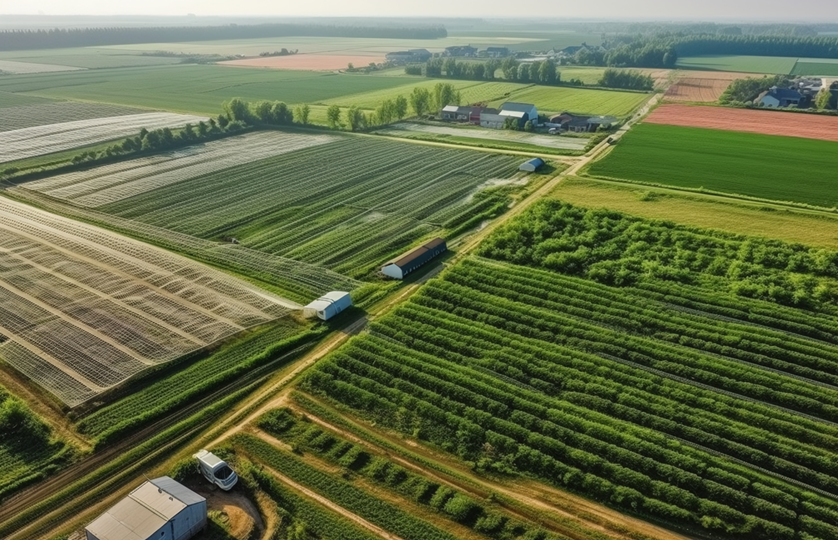
Town authorities implement parallel policies of asset auditing and commercial activation to unlock dormant communal land and buildings, converting static rural resources into revenue-bearing industrial assets. Chaiden Village serves as a benchmark case for this asset revitalisation model. Specialised three-resource audits mapped out underused village land parcels, standardised formal land transfer procedures and unified industrial park management frameworks. Forty-one high-standard greenhouses have been constructed on consolidated plots to develop integrated agritourism operations, including year-round fresh fruit and vegetable cultivation, on-site fruit picking experiences, agricultural study tour services and farm-based interactive workshops. Customised seasonal produce gift boxes extend downstream product value chains, creating permanent local jobs while scaling collective village economic returns.
Zhejialiang Village contributes collective land as equity investment to introduce an international pigeon racing club project, generating stable annual collective dividends of 30,000 yuan alongside more than ten permanent on-site roles. Seven villages including Zongdui, Chaiden and Manlai consolidate and transfer over 7,500 mu of rural land to build a standardised medicinal herb cultivation demonstration base. Supporting processing plants have completed commissioning with an annual raw herb processing capacity of 1,000 tonnes, delivering consistent incremental revenue to participating village collectives.
Distributed Collective Profits Establish Long-term Livelihood Support Mechanisms
Village collectives allocate dedicated public welfare funds from annual operational surpluses, shifting from one-off seasonal relief handouts to sustainable structural support for vulnerable rural population groups. Chaiden Village maintains permanent relief funding pools to supply staple food parcels for elderly residents and households facing sudden severe financial hardship, with targeted seasonal support distributed to aged villagers ahead of major traditional festivals.
Zongdui Village draws steady recurring revenue from its medicinal herb industrial base to distribute annual Spring Festival care packages to all local residents aged 70 and above, delivering material security for elderly rural households. Shipan Village adopts a dual-income land utilisation framework combining fixed annual land rental payments with daily wages for on-site farm labour. Over seventy mu of watermelon cultivation plots draw dozens of local workers during peak growing seasons, with daily labour remuneration set at 300 yuan for light agricultural tasks suitable for older residents unable to seek off-farm city employment. The dual income stream expands stable earning channels for ageing rural labour cohorts.
Digital oversight of collective rural assets will continue to be upgraded across Boerjianghaizi Town, with further expansion of integrated industrial cooperation models linking village party branches, joint-stock cooperatives, commercial enterprises and individual rural households. Additional high-value industrial investment projects will be introduced to strengthen full lifecycle management, activation and sustainable utilisation of all village collective assets, forming robust institutional foundations for sustained rural vitalisation progress.