Bayu Red Bayberry Full Industrial Chain Plan Unveiled at 20th Shangyu Cultural Tourism Festival
According to Xinhua Zhejiang Branch, the sweet aroma of ripe red bayberry fills the air across Yiting Town, Shangyu District, Shaoxing City, as early summer arrives. The 20th Bayu Red Bayberry Cultural Tourism Festival opened on 13 June, with the official launch of the Bayu Red Bayberry Full Industrial Chain Common Prosperity Development Plan taking centre stage at the opening ceremony. Fruit growers and trading operators in attendance stand poised to unlock greater commercial value from this iconic local agricultural produce.
Bayu Red Bayberry holds a recorded cultivation history spanning more than 1,500 years and carries official certification as a national geographical indication agricultural product. Growing coverage across the whole of Shangyu District has expanded beyond 35,000 mu, delivering an annual output of 28,000 tonnes, while aggregate turnover generated by the complete industrial chain has exceeded 1 billion yuan. The once small-scale local speciality has evolved into a lucrative agricultural asset that steadily lifts household incomes for rural residents.
Local authorities have long targeted full-scale industrial expansion built around red bayberry cultivation. The newly published development plan frames end-to-end industrial development as the core strategy to extract maximum economic value from the crop and distribute incremental gains across all tiers of rural producers.
Regional officials acknowledge structural gaps that hinder progress toward fully modernised agricultural operations. Digital transformation coverage within the sector remains limited, deep-processing facilities are thinly distributed, cold chain logistics infrastructure requires further reinforcement, and integrated agritourism formats await richer diversification. Fresh fruit retail alone cannot sustain long-term growth for rural households dependent on bayberry harvests.
The three-year roadmap outlined in the development plan sets clear operational benchmarks, aiming to push total turnover from the Bayu Red Bayberry geographical indication industrial chain past 1 billion yuan and cement the crop as a core pillar of local rural revitalisation. Detailed implementation measures cover planting, processing and distribution segments in sequence.
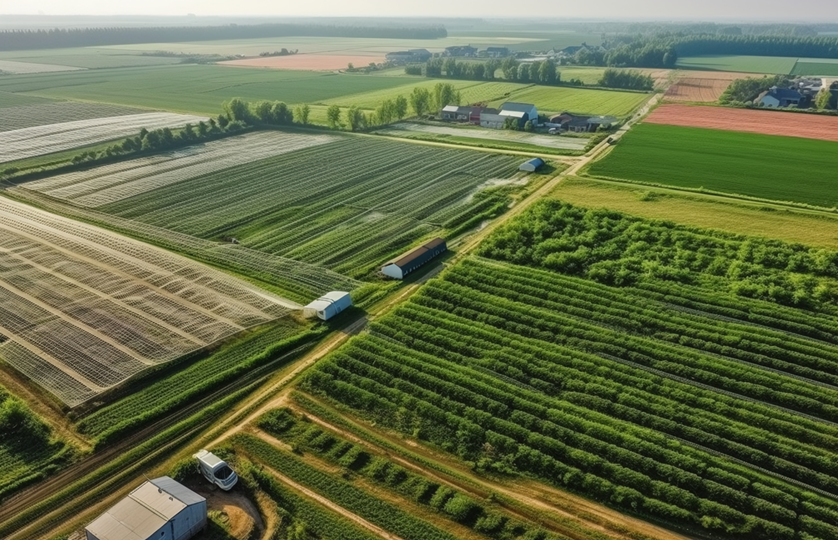
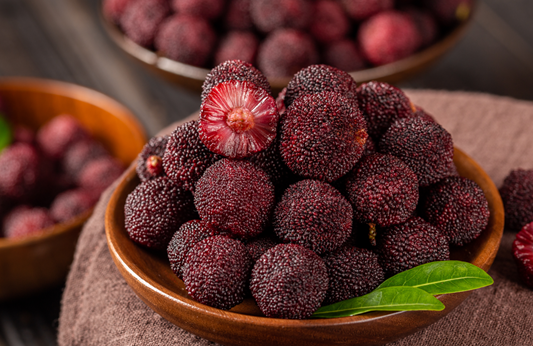
Yiting Town holds 23,000 mu of bayberry orchards in total, with 400 mu of standardised digital greenhouses and five digital industrial bases already operational, yielding an annual output of 18,000 tonnes. Dark red and crystal bayberry varieties form the core cultivated strains, earning the region official recognition as China’s Hometown of Red Bayberries. New construction and upgrading works will deliver over 500 mu of smart greenhouses, lifting overall production volumes by more than 20 per cent. A collective management model with joint shareholding and dividend distribution for local growers will be rolled out; an initial 500 mu of orchard land will enter the scheme, with long-term expansion targeting 2,300 mu. The framework targets a per-mu value increase of no less than 50,000 yuan, delivering annual household income growth of over 20,000 yuan for participating farmers.
Deep-processing development will enable full utilisation of harvested fruit raw materials, eliminating waste across production cycles. High-value finished goods including sparkling fruit wine, bayberry ferment, probiotic beverages and freeze-dried snacks will enter mass production, securing a 100 per cent fruit utilisation rate. The expanded processing network will create more than 500 local employment roles and lift annual collective revenue for individual villages by at least 200,000 yuan. Dedicated cold chain transport lines have been established in partnership with SF Express and China Post, delivering 24-hour delivery to all provincial capitals nationwide while restricting fruit spoilage ratios to below 8 per cent. Finished fresh fruit will feature in premium supermarket retail channels, while online live-stream sales are projected to surpass 500 million yuan. Processed bayberry goods will also be marketed to consumer markets across Southeast Asia.
Young entrepreneurs returning to rural areas witness tangible industrial upgrades first-hand. One operator relocated from Ningbo eight years ago to develop mountain orchards, building a nearly 500-mu ecological fruit farm with 50 mu of intelligent growing facilities on site. A purpose-built deep-processing base produces bayberry rice wine and sparkling fruit wine, with long-term supply agreements signed with close to one hundred local growers to absorb 250,000 kilogrammes of fresh bayberry every harvest cycle. Extended industrial chains form the foundation for sustainable rural income growth, demonstrating how traditional local produce can transform into a reliable source of household prosperity.
Ongoing investment in digital planting equipment, cold chain terminals and processing production lines will support delivery of all targets laid out in the three-year industrial plan. Additional agritourism experiences linked to bayberry harvest seasons will be rolled out to draw domestic visitors and create supplementary revenue streams for village communities across Yiting Town.