Integrated Farming Model and Low-Temperature Grain Drying Hubs Secure China’s Staple Grain Self-Sufficiency
According to Farmers’ Daily, safeguarding domestic staple grain supplies forms a core national food security priority, anchored by the red line protecting 180 million mu of cultivated farmland, with stable high yields standing as a core operational target for agricultural authorities nationwide.
Integrated Primary, Secondary and Tertiary Industry Chain Forged by Jinshahe Group
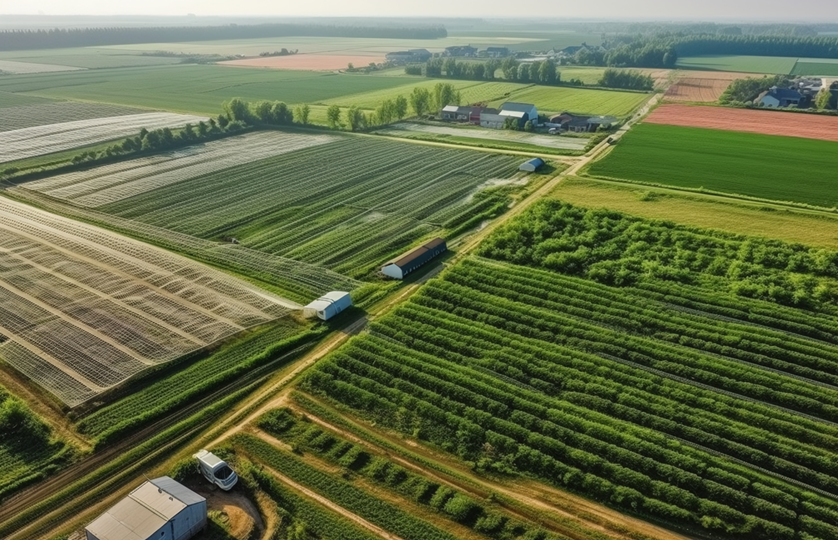
Originating from Shanxia Village, a major grain-producing zone in Xingtai, southern Hebei Province, Jinshahe Group began its food processing operations in 1980, starting with small-scale handmade noodle production. After establishing a market-leading position within the noodle manufacturing sector, the enterprise launched direct grain cultivation operations in 2015 to standardise raw wheat quality, introducing industrialised secondary-sector management frameworks into field crop farming. Three years of field trials delivered a replicable staple grain production system formally endorsed by the Ministry of Agriculture and Rural Affairs as its sole national benchmark for cereal cultivation. Wheat yields under the group’s managed farmland consistently exceed outputs from individual smallholder plots by more than ten per cent, while land rental rates offered to rural households sit above regional market averages. Permanent full-time staff at the group secure minimum annual earnings of no less than 90,000 yuan, with average per-mu farming profits hitting 600 yuan; managed cereal cultivation land now spans nearly 100,000 mu.
In 2018, the group leased close to 10,000 mu of land previously scarred by coal mining subsidence at rental rates double prevailing market prices, planting rapeseed across the entire site. The transformed landscape evolved into a well-frequented rural leisure destination within half a year, with the Jinshahe cultivation system rolled out to manage rapeseed plots, sweet potato terraces and subsequent maize crops each autumn. The scenic site operates a fully free-entry model covering admission fees, vehicle parking and complimentary bottled water, achieving full operational cost balance for land management activities by 2023. A second rural scenic zone, Fozhao Mountain, developed in 2008 to deliver targeted rural poverty support, joins the rapeseed terraces as permanent zero-charge visitor attractions. More than 500 self-service retail kiosks with free water, power and rental terms are installed across both sites for local villagers to sell home-grown agricultural goods. Daily visitor volumes at individual sites have peaked at 130,000 people, with national state news broadcasting featuring the two rural tourism destinations across two consecutive years.
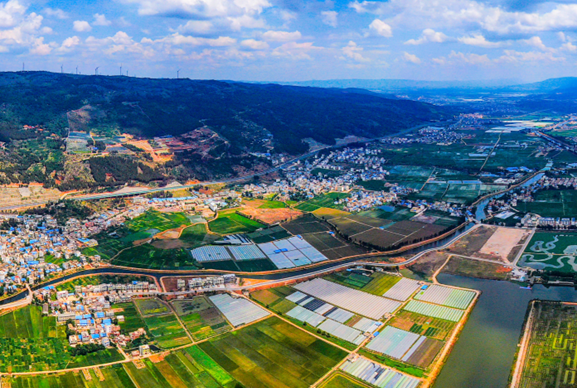
Jinshahe’s industrial layout revolves entirely around agricultural development, building a circular value loop where food manufacturing supplies upfront capital for crop cultivation and rural tourism, farm operations guarantee consistent high-quality raw materials for processing lines, and rural visitor attractions deliver free brand exposure for finished grain goods. The complete agricultural industrial chain delivers tiered value creation: primary farming boosts crop quality, output and farm margins; secondary processing maintains strict hygiene and nutritional standards for edible grain products; tertiary agritourism creates direct market channels for rural produce.
Purpose-Built Agricultural Service Centres Enable Seamless High-Purity Grain Storage and Processing
Having refined its cross-sector integration framework, the group identified structural gaps separating smallholder wheat harvests from factory storage facilities. Self-managed farm grain moves directly into in-house silos, yet multiple intermediate grain traders introduce impurities into wheat sourced from independent growers. To resolve this barrier, Jinshahe invested in large-scale grain drying towers from 2024 to enable early harvesting of ripening cereal crops. Beyond refining proprietary drying techniques on its own farmland, the infrastructure facilitates direct quality-classified purchasing, storage and processing contracts with more than 2,000 surrounding large-scale grain growers, eliminating intermediate traders and passing full market pricing benefits directly to producers while securing uniform high-purity raw grain stocks.
Following trial planning and process refinement throughout 2025, the group injected six billion yuan to construct two dedicated agricultural service hubs in Suiping County, Henan Province and Xingtai City, Hebei Province, both opening for commercial operation in early May 2026. Each facility hosts eight independent drying production lines with a daily processing capacity of 20,000 tonnes of wheat and 10,000 tonnes of maize. Four production lines at the Nanhe agricultural service hub have entered full operation, processing 50,000 tonnes of grain to date. Construction timelines for the Suiping hub were adjusted to align with earlier regional wheat ripening cycles, with four lines completing test runs and handling limited initial wheat volumes.
The low-temperature drying technology deployed across the two hubs delivers transformative upgrades to conventional grain handling workflows. Custom-designed drying frameworks integrating low-temperature treatment, automated impurity removal, layered temperature control and recycled thermal energy are manufactured and installed by external engineering partners based on intellectual property developed in-house, establishing a new technical benchmark expected to dominate future national grain drying infrastructure. Traditional high-temperature drying methods raise operational costs to approximately six fen per kilogram of grain and are only deployed during emergency weather events; the upgraded low-temperature system caps processing expenditure at roughly one fen per kilogram, enabling widespread large-scale early harvest drying.
Full operational capacity at the Nanhe hub will process the region’s entire wheat harvest within less than ten days, sealing grain within fully enclosed silos to eliminate yield losses triggered by extreme weather. Distinct technical architectures are installed at the two hubs to benchmark performance of two proprietary low-temperature drying blueprints: the Suiping facility adapts temperature controls originally engineered for Jinshahe’s noodle dehydration workflows, while the Nanhe hub delivers a complete reimagining of legacy drying machinery protected under new intellectual property rights. Comparative operational data from both sites will inform design specifications for subsequent batches of agricultural service centres. The seamless link between field harvesting and sealed storage not only fulfils the group’s internal demand for contaminant-free grain supplies but also raises the overall conversion rate of potential crop yields into storable harvests, reinforcing stable national staple grain reserves.
Large-Scale Rollout of Agricultural Service Hubs Transforms Traditional Summer Harvest Operations
All tiers of local government prioritise coordinated summer wheat harvesting and autumn crop planting campaigns, as final grain yields for the full agricultural cycle hinge on a narrow two-week window before wheat fully matures. Unpredictable extreme weather including hailstorms, sustained heavy rainfall and lodging triggered by strong winds can wipe out harvests or render fields inaccessible to mechanical harvesters. During the 2026 wheat harvest period, hailstorms struck northeastern Julu County on 4 June, destroying thousands of mu of wheat crops, followed by continuous torrential rain from the evening of 5 June through 6 June that submerged farmland and blocked harvester access for at least seven days. Clear weather returned on 7 June, forcing all harvested grain onto open-air ground for sun-drying. Sudden unforeseen light rainfall events contaminate uncovered grain stocks, with severely dampened wheat only suitable for animal feed in the absence of covered drying infrastructure. Equivalent agricultural service hubs matching Jinshahe’s scale would eliminate such widespread production losses if constructed across vulnerable grain-growing counties.
Deployment of standardised agricultural service hubs delivers measurable cross-system agricultural advantages. Harvesting wheat during the wax ripening stage delivers a minimum five per cent yield uplift against fully desiccated mature grain, a well-documented agronomic gain previously unachievable without dedicated rapid drying and sealed storage capacity. National wheat planting areas cover 350 million mu with a baseline average yield of 400 kilograms per mu; universal adoption of early wax-stage harvesting could generate an additional 7 billion kilograms of national wheat output. Accelerated wheat collection also removes time pressure from simultaneous summer planting, extending the growing cycle for autumn crops to expand yield potential and broaden the range of viable cash varieties. Regions previously limited to low-yield pasture grass and buckwheat due to compressed autumn growing windows can introduce higher-value crops once harvest timelines are adjusted.
Continuous low-temperature drying immediately after wax-stage harvesting eliminates mould formation entirely, laying the groundwork for flour free of harmful mycotoxins. Existing quality controls at Jinshahe maintained extremely low grain germination contamination rates yet could not fully exclude mould-affected kernels from processing batches; full integration of the new drying system across all operations from 2027 will eliminate this residual risk. Nationwide rollout of matching infrastructure would remove mandatory mycotoxin testing requirements for most finished flour products.
Straw cut during wax ripening retains full nutritional value for livestock silage production, generating supplementary farm income while reducing environmental pollution from improper post-harvest straw disposal. Full economic modelling validates positive margins for both growers and operators. Based on the Nanhe hub’s processing cost of one fen per kilogram and average regional wheat yields of 550 kilograms per mu, total drying expenses reach roughly 5.5 yuan per mu. A 27-kilogram yield uplift per mu, priced at 2.4 yuan per kilogram, delivers an extra 64.8 yuan in farm revenue, a return twelve times higher than associated drying outlay.
Commissioning of Jinshahe’s dual agricultural service hubs marks a fundamental overhaul of established summer cereal harvesting practices. The enterprise’s field-proven integrated cultivation and drying framework establishes a scalable domestic model to sustain independent, secure staple grain production systems nationwide.