800-Year-old Peitian Ancient Village Thrives with Living Heritage Preservation
Nestled in Xuanhe Town of Liancheng County in Fujian Province, Peitian Ancient Village stands as a well-preserved Hakka ancient settlement with a history spanning more than 800 years. Boasting a 70,000-square-metre ancient architectural complex, the village features 30 grand courtyard mansions built in the traditional “nine halls and eighteen wells” layout, 21 ancestral halls, six ancient academies and a one-kilometre historic street. Listed in China’s first batch of Traditional Villages in 2012, Peitian holds 25 national-level and 28 provincial-level cultural relic protection sites, widely renowned as the “Hakka Manor” and “Folk Forbidden City”.
The village embodies a classic harmonious landscape pattern embraced by mountains and winding waterways. Local ancestors selected the terrain for sustainable living and development, with proper ventilation, water irrigation and arable land resources. As early as the Wanli reign of the Ming Dynasty, Peitian adopted an early rainwater and sewage diversion system with two man-made water canals running through the village, forming an ancient water supply network that integrates daily usage and drainage functions.
Distinct from conventional heritage protection models that merely focus on individual buildings, Peitian adheres to integrated protection of mountains, waters, farmlands, forests, roads, architectures and residents. This holistic approach safeguards complete cultural landscapes and intact ecological systems, presenting a typical model for modern intangible and tangible cultural heritage co-protection.
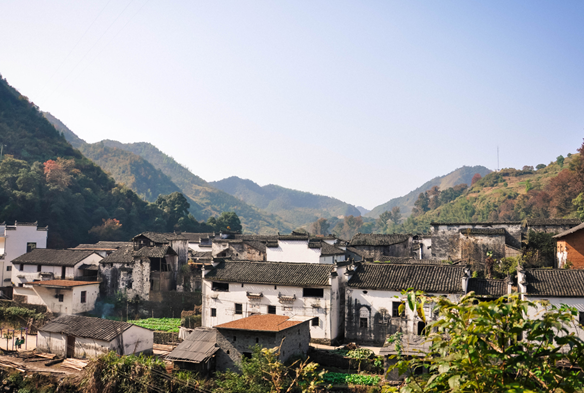
Living inheritance remains the core vitality of the ancient village. Local residents launched spontaneous heritage protection efforts back in the 1980s, systematically sorting out village history and guarding architectural heritage across generations. The village avoids excessive commercialisation and maintains authentic rural vitality with daily residential life, traditional farming and folk customs continuing throughout the ancient streets and courtyards.
Long-standing farming and education traditions underpin the village’s profound cultural heritage. The well-preserved Nanshan Academy built in the Ming Dynasty retains its original layout, with inscribed calligraphy from renowned Qing Dynasty scholars. The village cultivated over 190 scholars during the Ming and Qing dynasties, shaped by the time-honoured ethos of valuing education and moral cultivation. Traditional family maxims and oral cultural inheritance have been well preserved and passed down to modern generations.
Historically a key post on the ancient official road, Peitian served as a vital cultural and trade node connecting inland mountainous areas with coastal regions. The ancient street once accommodated inns, teahouses and merchant shops, facilitating cultural exchanges and commodity circulation. The village’s architectural styles integrate the elegance of Jiangnan gardens, the grandeur of Hakka enclosures and the rigour of northern quadrangles, forming an inclusive and diverse regional architectural feature.
The village embraces balanced inheritance and modern innovation. Local authorities have optimised living environments by constructing new residential zones outside the core protection area, effectively coordinating heritage conservation and residential improvement. Traditional craftsmanship, including the provincial intangible cultural heritage of “nine halls and eighteen wells” construction techniques and Sibao woodblock printing, has been revitalised through immersive cultural experiences and creative product development.
Young practitioners and new villagers inject fresh vitality into the ancient settlement. Renovated art galleries and homestays blend contemporary art with ancient rural textures, building new bridges for dialogue between tradition and modernity. Rooted in the centuries-old farming and education heritage, Peitian continues to extend its complete historical and cultural lineage while exploring sustainable cultural tourism and rural development paths.