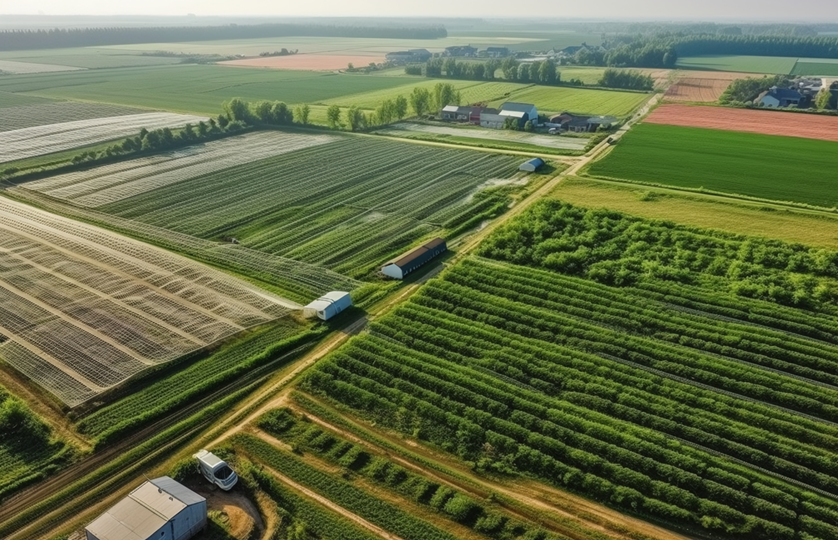
Modern Farming Technologies and Crop Rotation Boost Rural Incomes in Yunnan
China Daily reports that innovative farming techniques and diversified crop rotation models are driving steady income growth for rural households in Zhaotong, Yunnan Province. Local growers are adopting mechanised and intelligent agricultural solutions to upgrade traditional tobacco planting, unlocking new potential for rural industrial development and shared prosperity in mountainous areas.
Since 2021, a local grower has transformed traditional tobacco cultivation by embracing modern agricultural technologies, evolving into a leading technical expert and rural wealth creator in SanTao Village, Weixin County. By prioritising technological upgrading, diversified operation and community-driven development, he has established a sustainable local development model that integrates smart farming, multi-channel income growth and rural collective advancement.
Mechanisation and intelligent management have greatly reduced farming costs and improved crop quality. The grower took the lead in introducing micro-tillers and ridging machines to replace labour-intensive manual field preparation. Work that once required six to seven farmers working a full day can now be finished efficiently within half a day by two machines. Film-covering and punching integrated devices further standardise transplanting procedures, laying a solid foundation for full-process mechanised operations.
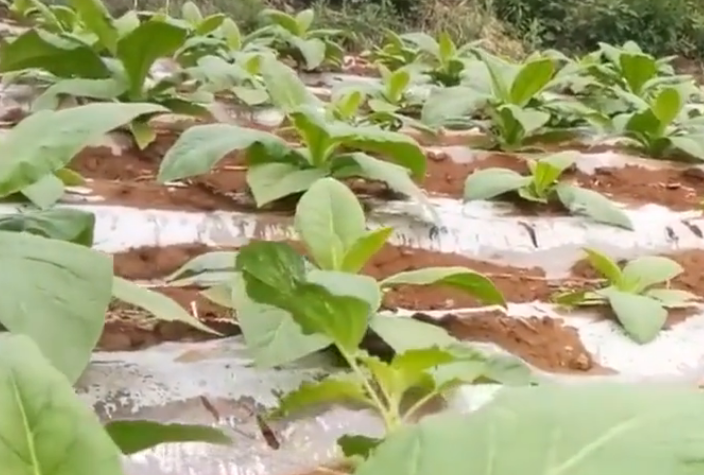
Precision agricultural equipment continues to optimise field management. The adoption of water and fertiliser integrated machines enables accurate irrigation and fertilisation, cutting water consumption by over 20 percent and raising fertiliser utilisation efficiency by 25 percent. Professional plant protection services and drone pesticide application replace manual spraying, lowering pesticide usage by 10 percent while achieving full-coverage pest prevention across large farmland areas. These improvements have lifted the proportion of high-grade tobacco leaves above 73 percent, with per mu output value nearly 200 yuan higher than traditional planting methods.
To mitigate risks from single-crop cultivation, the grower has pioneered a tobacco and vegetable rotation system. Short-cycle vegetables such as flowering Chinese cabbage and Chinese cabbage are planted during tobacco growth intervals, making full use of residual soil fertility and idle farmland. The rotation model optimises soil structure, reduces soil-borne diseases and raises land utilisation rates. In 2023, 150 mu of rotated farmland generated an extra net profit of over 600 yuan per mu, adding nearly 100,000 yuan in annual extra income.
The innovative planting model also stabilises local rural employment. The farming business has provided more than 14,000 person-times of jobs and issued over 1.5 million yuan in labour wages in recent years, effectively increasing income for local villagers, including households lifted out of poverty.
Practical planting experience and technical skills are shared freely with neighbouring farmers. A local technical service team offers on-site guidance, driving more households to adopt advanced machinery and diversified planting modes. The rotational vegetable planting area in surrounding regions has expanded to over 300 mu, forming a distinctive coordinated crop industry. Continuous technical support helps local farmers upgrade planting methods steadily, bringing stable and sustainable income growth to rural communities.