AI Revolutionises China’s Full-industry Agricultural Upgrading
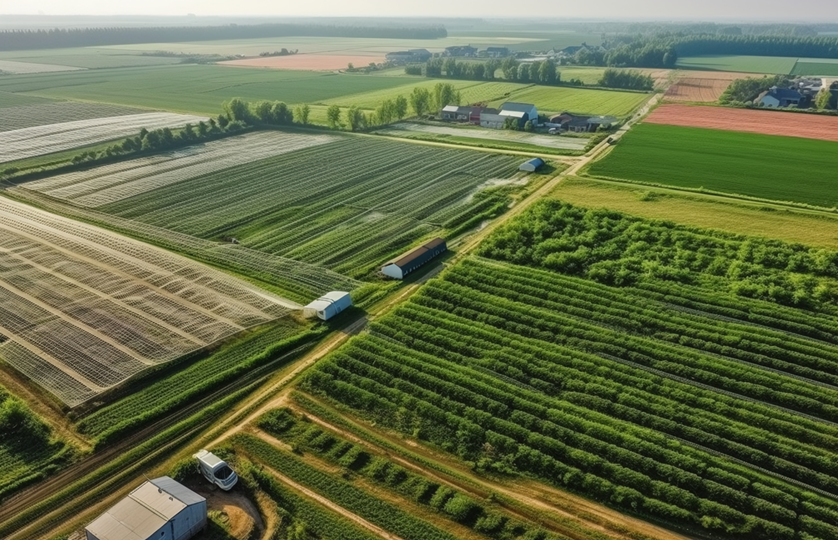
Artificial intelligence is driving comprehensive transformation across China’s agricultural sector, penetrating every link including crop breeding, field management, pest prevention, product processing, logistics and sales. Modern intelligent technologies are reshaping traditional agricultural production modes, operational models and industrial ecosystems to deliver higher efficiency and precision across rural industries.
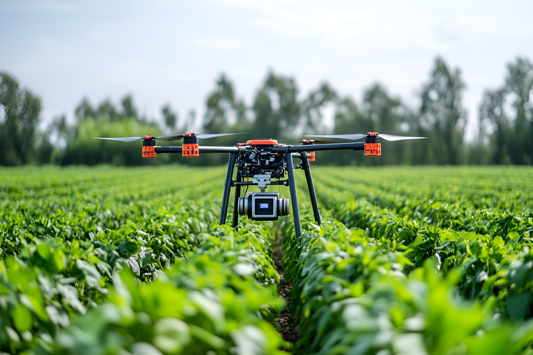
Intelligent agricultural solutions have been widely deployed across multiple regions. AI algorithm systems in Hainan’s southern breeding base greatly shorten crop breeding cycles and accelerate the iteration of high-quality crop varieties. In Zhoukou’s national agricultural high-tech zone in Henan, multi-spectral drones combined with Beidou navigation and intelligent algorithms deliver precise field management plans for large-scale farmland. Intelligent picking robots in Hangzhou automatically identify ripe fruits and conduct efficient harvesting, improving the quality and productivity of forest and fruit planting industries.
Despite remarkable progress in intelligent agriculture adoption, the sector still faces prominent developmental bottlenecks. Generic AI algorithms lack adaptability to diverse climates, regions and crop types. Lightweight and cost-effective intelligent agricultural equipment remains insufficient, creating barriers for small-scale rural households to access and operate smart farming tools. Fragmented agricultural data collection, inconsistent technical standards and incomplete sharing mechanisms result in widespread data silos.
Long investment cycles, insufficient financial support and shortages of interdisciplinary talents further constrain industrial upgrading. Uneven rural digital infrastructure leaves network coverage gaps in remote agricultural areas, limiting the large-scale implementation of intelligent farming technologies.
Targeted technical innovation frameworks are being rolled out to address these challenges. Specialised AI algorithms tailored for regional staple and characteristic crops are under focused research and development. Lightweight intelligent devices suitable for hilly terrains and small-scale farming scenarios are being promoted to lower technical application thresholds. Integrated innovation between AI and biological breeding speeds up the cultivation of high-yield and high-quality crop varieties.
Smart farming models are being expanded across major grain-producing areas, covering precise tillage, intelligent plant protection and automated management. In downstream industrial segments, AI vision recognition and intelligent sensing technologies enable refined sorting and standardised deep processing of agricultural products. AI-powered internet of things systems provide real-time cold chain monitoring and loss risk alerts for logistics links, while big data analytics optimise production and sales matching and market trend forecasting.
China is strengthening digital infrastructure construction to underpin industrial upgrading. Increased fiscal investment extends 5G, internet of things and satellite internet coverage to rural and remote farming areas. Digital interfaces are synchronously planned within high-standard farmland and water conservancy projects. A unified industrial big data hub integrates meteorological, soil, crop growth and market transaction data to break cross-regional and cross-departmental data barriers and build standardised data sharing systems.
Systematic policy support and diversified market participation mechanisms are being improved. Optimised subsidies for intelligent farming equipment stimulate market adoption. Fiscal funds prioritise research and development and industrial transformation of agricultural AI technologies. Innovative financial products and agricultural insurance schemes mitigate industrial risks and attract social capital investment. Academic institutions are launching interdisciplinary majors to cultivate professional talents for digital agriculture.
Collaboration between leading agricultural tech enterprises, research institutions and rural operators accelerates technology translation. Smart agriculture demonstration bases are being built to summarise replicable development models, drive the integrated development of small-scale producers, and foster new service formats for intelligent rural industries.