China Enhances Financial Support for Comprehensive Rural Revitalization in 2026
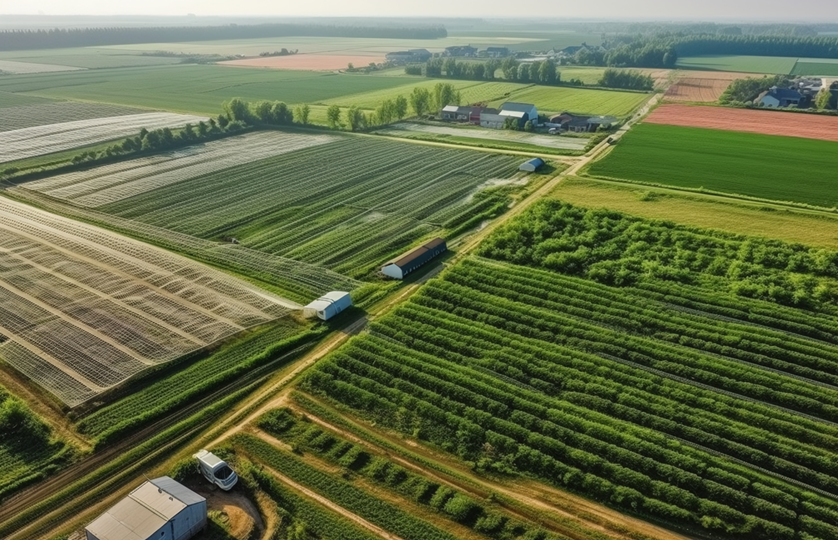
China’s National Financial Supervision Administration has recently issued a circular on strengthening financial support for comprehensive rural revitalization in 2026, urging large and medium-sized banks to focus on supporting the construction of a modern agricultural industrial system, actively develop agricultural industrial chain finance and expand the number of first-time loan recipients.
Industrial chain finance binds the transaction relationships between core enterprises and upstream and downstream entities, transmitting the credit of core enterprises to small farmers, new agricultural operators and agricultural-related enterprises. This effectively solves their financing difficulties caused by the lack of collateral. Expanding first-time loan recipients can activate the "dormant" rural customer groups, expand the coverage of financial services, and promote the transformation of small farmers and new agricultural operators from "non-loan households" to "sustained credit users", injecting long-term capital momentum into agricultural modernization.
Xinhua News Agency reports that in recent years, the National Financial Supervision Administration has continuously strengthened regulatory guidance, guiding banks and insurance institutions to focus on key areas such as agricultural industrial chain finance and tilt policy resources reasonably to provide strong financial support for promoting comprehensive rural revitalization.
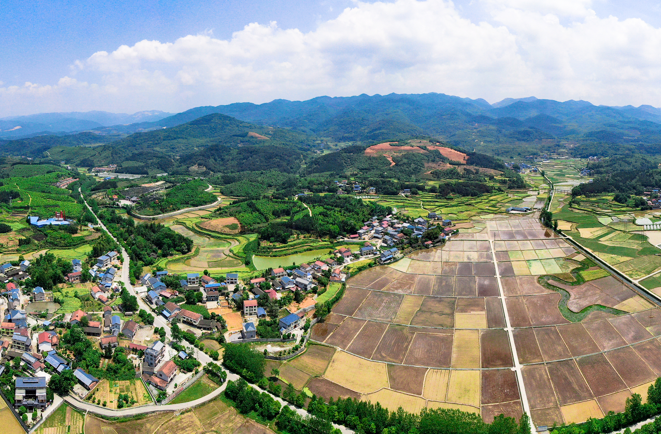
The People’s Bank of China released a statistical report on the lending direction of financial institutions in the first quarter of 2026. The report shows that by the end of the first quarter, the balance of local and foreign currency agricultural-related loans reached 54.32 trillion yuan, a year-on-year increase of 6.7%, 1 percentage point higher than the growth rate of all loans, with an increase of 2.81 trillion yuan in the first quarter.
Banks are increasing credit support for the entire industrial chain, focusing on agricultural-related fields such as tea and aquatic products to help farmers increase their income through various measures. In Chongqing, under the guidance of the Chongqing Branch of the People’s Bank of China, branches of large banks focus on characteristic agricultural industrial chains such as camellia oleifera and tea in counties, tilting credit scale and approval support to inject financial vitality into local comprehensive rural revitalization.
In Shandong Province, behind the industrial upgrading of the pomegranate producing area in Yicheng, Zaozhuang, banks have promoted the transformation of the local single planting industry into an integrated industrial ecology covering planting, processing, cultural tourism and cultural and creative industries through comprehensive financial services such as credit support, making the "pomegranate economy" an important growth pole for comprehensive rural revitalization.
To deepen the services of agricultural industrial chain finance, large and medium-sized banks can adopt a two-pronged approach. On the one hand, they can rely on technologies such as big data, blockchain and artificial intelligence to track order flow, logistics and capital flow in real time, build a dynamic credit evaluation model for the entire industrial chain, and improve the accuracy of risk pricing. On the other hand, they can cooperate with tax and guarantee institutions to depict the credit portraits of first-time loan recipients through multi-dimensional data cross-validation, solving the problem of "information islands".
Looking ahead, China will continue to strengthen the role of financial support in comprehensive rural revitalization, guide financial institutions to innovate service models, optimize credit structures, and further expand the coverage and accessibility of rural financial services. This will provide solid financial guarantee for ensuring food security, consolidating agricultural production capacity, promoting farmers’ income increase and narrowing the urban-rural gap, and inject strong impetus into the high-quality development of rural areas.