Guangxi’s Xincheng Forges a New Silk Road for Rural Revitalisation Through Guangdong-Guangxi Cooperation
Xincheng, a county in southern China’s Guangxi Zhuang Autonomous Region, is leveraging Guangdong-Guangxi cooperation to transform its traditional sericulture industry into a modern, intelligent, and globally competitive sector, forging a new "Silk Road" that drives rural revitalisation and shared prosperity.
Nestled in central Guangxi, Xincheng has long been known as the "Hometown of Sericulture." In recent years, it has seized the opportunities of the "East Sericulture to West" and "East Silk to West" industrial shifts, relying on Guangdong-Guangxi cooperation to comprehensively upgrade its industry from traditional farming to deep processing, forming a complete industrial chain of "mulberry-silkworm-cocoon-silk-satin".
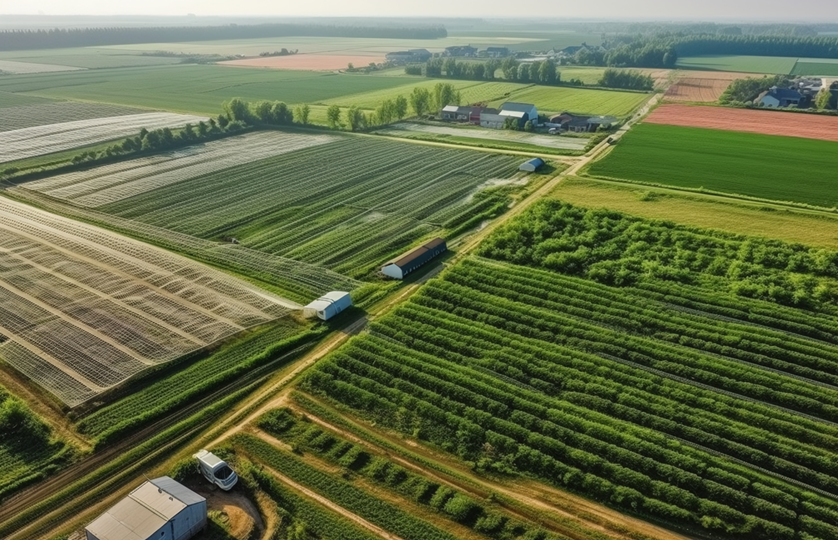
At the 600-acre modern mulberry garden demonstration base in Hongdu Town, intelligent water and fertilizer integrated systems provide precise irrigation. Nearby, in the intelligent reeling workshops of the silk mill, temperature and humidity sensors regulate the environment in real time, ensuring each raw silk reaches 5A-grade standards. This technological transformation has become a hallmark of Xincheng’s sericulture industry.
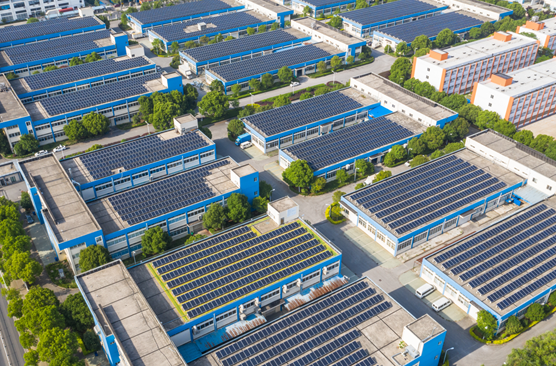
The Guangdong-Guangxi Cooperation Cocoon and Silk Industrial Park, a key project introduced through paired assistance from Maoming’s Gaozhou, Xinyi, and Huazhou cities, stands as a landmark achievement. With a total investment of 5 billion yuan and a planned area of 1,600 mu, the park is being built in three phases over five years. Upon completion, it will become the world’s largest single-unit cocoon and silk industry chain park.
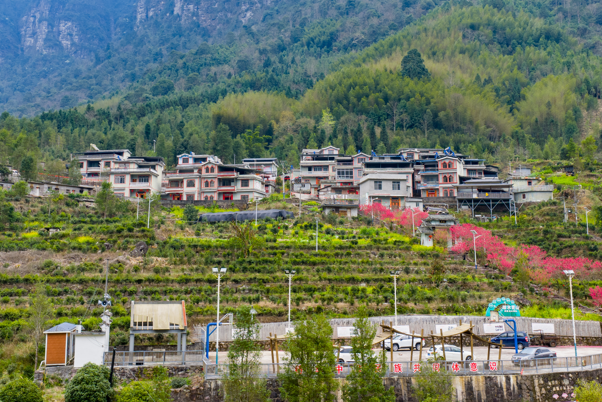
Since the launch of cooperation, Xincheng’s sericulture industry has expanded rapidly. In 2024, the county’s mulberry garden area reached 260,000 mu, with fresh cocoon output hitting 45,900 tons, a year-on-year increase of 8.1%, and an output value of 2.937 billion yuan. The industry covers 276,000 people across 12 towns and 131 administrative villages, accounting for 65% of the county’s total population.
Intensive and intelligent farming models are driving industrial upgrading. Standardised silkworm houses equipped with intelligent temperature control systems ensure optimal conditions for silkworm growth. Centralised farming has improved cocoon quality, with prices stabilising at 60 yuan per kilogram, 15% higher than that of individual farming. The county has cultivated 24 sericulture farmers’ cooperatives, 11 standardised young silkworm breeding bases, and more than 60 local technical talents.
Beyond sericulture, Guangdong-Guangxi cooperation has catalysed the development of other characteristic industries. Xincheng’s waxy corn, honeysuckle, and other agricultural products have gained access to the Guangdong-Hong Kong-Macao Greater Bay Area market. At a promotional event in Guangzhou, local enterprises signed a 36 million yuan purchase contract, opening a stable sales channel.
The "village-enterprise joint venture" model has created a community of shared interests. By investing collective funds and encouraging villagers to work in enterprises, rural incomes have increased significantly. In 2025, the collective economic income of the county’s villages reached 18.3825 million yuan.
Looking ahead, Xincheng will continue to deepen Guangdong-Guangxi cooperation, focusing on extending the industrial chain, enhancing brand value, and promoting integrated development of primary, secondary, and tertiary industries. The county aims to build a national-level modern agricultural industrial park dominated by sericulture, making its "new Silk Road" more prosperous and contributing a powerful engine to rural revitalisation.
Xinhua News Agency reported that Xincheng’s practices have provided a replicable model for underdeveloped regions in western China to achieve industrial revitalisation through east-west cooperation. With the continuous advancement of the Guangdong-Guangxi partnership, this "Silk Road" in southern China will surely shine more brightly in the new era.