Neihuang County’s Melons Harvest in Full Swing, Boosting Rural Prosperity
On 28 April, walking into the melon planting base in Zhaoxin Village, Mashang Township, Neihuang County, Anyang City, Henan Province, neat rows of melon ridges stretch as far as the eye can see, with plump and round melons hanging on the vines. The greenhouse is filled with warm steam, carrying a sweet and rich fragrance that refreshes the senses. Growers Bai Wenying and her husband are busy picking, sorting and packing melons, presenting a lively and gratifying scene of a bumper harvest.
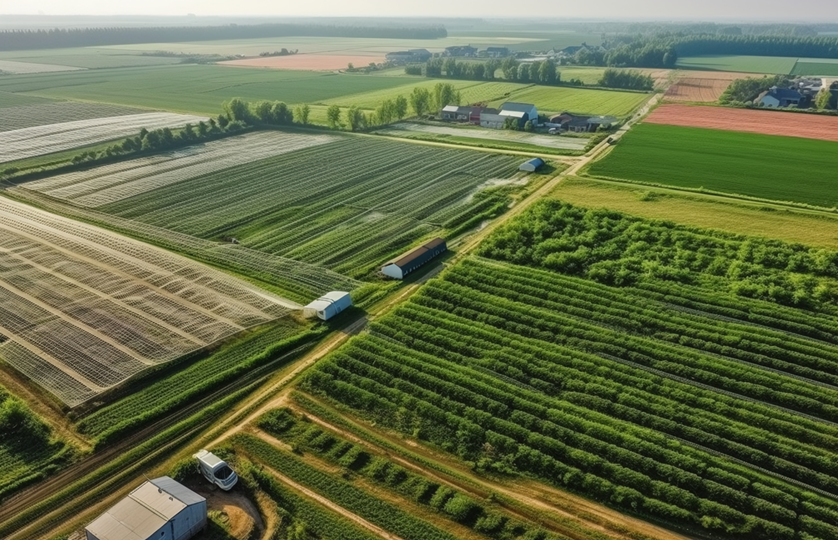
Xinhua News Agency reports that more than 60,000 mu of greenhouse melons in Neihuang County have entered the harvest season recently, with a booming trading market and melons being sold to all parts of the country. The small melons have become a rich industry helping Neihuang promote rural revitalization.
“I grow nearly 15 mu of melons, with a total of 7 greenhouses, and the average income per mu is about 10,000 yuan,” Bai Wenying said happily. The good quality of Neihuang melons has laid a solid foundation for their good sales. In recent years, based on its agricultural resource endowments, Neihuang County has focused on upgrading characteristic and efficient agriculture, continuously optimized its agricultural industrial structure, strengthened and refined characteristic agricultural product brands, and built large-scale standardized melon planting demonstration bases in line with local conditions.
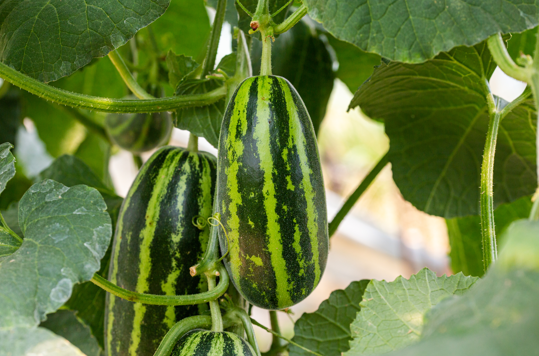
Staff from the county’s vegetable agricultural technology department have taken the initiative to go deep into the fields, following up the entire production cycle of melon seedling raising, planting, field management and mature harvesting, and regularly providing precise agricultural technical guidance and support services to help melon farmers plant scientifically, achieve stable production and increase income.
Zhou Jiankun, a senior agronomist from Neihuang County Vegetable Development Center who was conducting technical guidance in the greenhouse, said, “The core of field management for early spring greenhouse melons lies in two key points. First, accurately control the temperature in the greenhouse and timely ventilate to disperse moisture to avoid melon cracking caused by excessive temperature difference. Second, do a good job in green prevention and control of diseases. Currently, it is the high-incidence period of downy mildew and gray mold. We guide melon farmers on scientific prevention and control and standardized management on site to fully ensure high quality and high yield of melons.”
He added that Neihuang County has organized more than 70 professional agricultural technicians to carry out itinerant technical guidance in various planting greenhouses by dividing areas and taking responsibilities, providing all-round protection for the healthy development of the melon industry.
Walking into the Neihuang Fruit and Vegetable City Trading Market, various melons are piled up like hills, and a strong fruity fragrance greets visitors. Melon farmers coming to sell their products and merchants from all over the country coming to purchase shuttle back and forth, with sorting, loading and shipping carried out in an orderly manner, presenting a prosperous scene of brisk production and sales in the market.
Li Lei, manager of the Operation Department of Neihuang Fruit and Vegetable City, introduced, “Early spring melons in our county have been on the market for more than half a month, and we are currently in the peak trading period. The daily average trading volume of the market reaches more than 2.5 million kilograms, and the most concentrated trading time for farmers is from 6 a.m. to 12 noon every day.”
After more than 20 years of cultivation and development, the planting area of greenhouse melons in Neihuang County has stabilized at more than 60,000 mu, with more than 20 high-quality melon varieties such as Boyang, Lvbao, Yangjiaomi and Shuangjian cultivated. Known as the “Hometown of Melons in China” for its excellent quality, Neihuang’s high-quality melons are sold to many provinces and cities including Gansu, Shaanxi, Shanxi, Jiangsu and Hubei.