Qingdao Boosts Cold Chain Logistics to Facilitate Agricultural Product Circulation
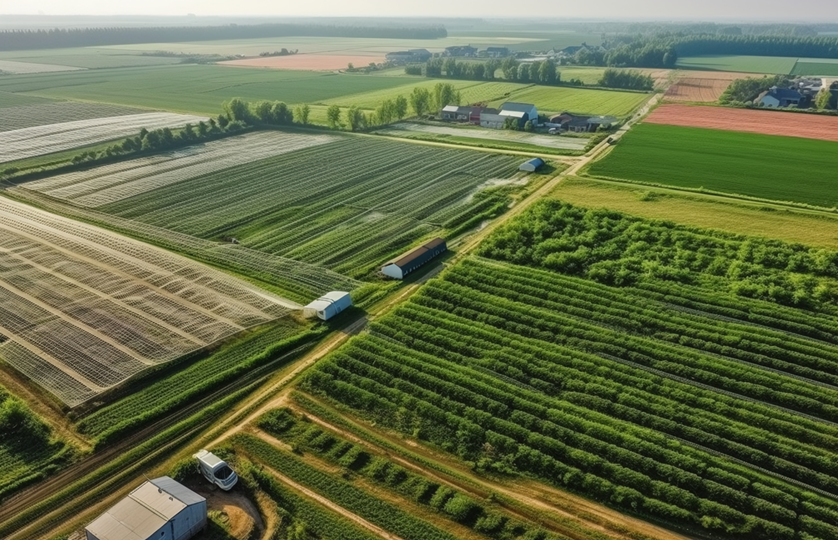
Cold chain logistics plays a crucial role in enabling agricultural products to reach urban markets from rural areas. Recently, the Qingdao Municipal Bureau of Agriculture and Rural Affairs and the Municipal Finance Bureau jointly issued a plan for the construction of cold storage and fresh-keeping facilities at agricultural product origins. Taking the "field market + new agricultural business entities + farmers" model as the starting point, the plan aims to accelerate the layout of ventilation storage warehouses, mechanical cold storage and controlled atmosphere storage facilities, focusing on gathering in key industrial towns and central villages to solve the "last mile" problem in the circulation of fresh agricultural products and provide strong support for stable production, supply guarantee and farmers’ income increase.
People’s Daily Online reports that the plan clarifies that the construction of facilities will focus on two major categories: vegetables and fruits, while taking into account local advantageous and characteristic varieties. Business entities can choose warehouse types and scales according to their needs, highlighting core functions such as pre-cooling at origins, sorting and packaging, and cold storage and fresh-keeping to achieve off-peak sales and improve quality and efficiency. Industry insiders state that promoting the construction of cold storage and fresh-keeping facilities at field heads can effectively reduce post-harvest losses of fruits and vegetables, extend sales cycles, enhance product added value, help high-quality fresh products fetch better prices, and truly retain benefits at the field level.

As a coastal central city with a population of over 10 million, Qingdao bears significant responsibility for ensuring the "vegetable basket" supply. The city has steadily promoted the "36111" stable production and supply project, building a diversified supply system with an annual output of 6 million tons of vegetables and 1 million tons of meat, eggs and milk, with a self-sufficiency rate exceeding 60%. The Qingdao Municipal Bureau of Commerce has strengthened the overall coordination of supply sources and completed the purchase and storage of more than 10,000 tons of vegetables and pork as government reserves, consolidating the market "stabilizer".
According to monitoring, the overall grain prices in the city are stable, meat prices fluctuate slightly, egg prices remain flat, and vegetable wholesale prices show structural differentiation affected by seasonal factors. The Qingdao Municipal Development and Reform Commission states that the city’s grain reserves are sufficient to fully meet the daily consumption needs of residents, and the market supply during the May Day holiday will be stable and guaranteed. Economic Net reports that Qingdao has continued to implement efficient and characteristic facility agriculture improvement projects, providing certain financial subsidies for the construction of related facilities after acceptance.
Behind the bustling production and sales scene, shortcomings in the circulation link remain prominent. For a long time, Qingdao has suffered from insufficient and uneven distribution of cold chain facilities at origins. The loss rate of leafy vegetables from the field to the wholesale market generally ranges from 20% to 30%, much higher than the 5% to 10% level in developed countries. Many planting entities reflect that the approval of land for cold storage is difficult, the operation cost is relatively high, and small and medium-sized farmers cannot afford the investment in cold chains independently.
As an important vegetable distribution center in Jiaodong, Laixi Dongzhuangtou Vegetable Wholesale Market maintains a stable daily trading volume of over 3 million kilograms, but the supporting pre-cooling facilities at surrounding origins are insufficient. During the peak sales season, the disjointed phenomenon of "hot origins but cold markets" often occurs, making it difficult for fresh fruits and vegetables to be pre-cooled and stored in warehouses in a timely manner, which affects quality and benefits.
To address these bottlenecks, Qingdao has promoted the integration of field markets and cold storage and fresh-keeping facilities, driving cold chain resources to concentrate in advantageous producing areas and field heads, and building a new circulation model of nearby pre-cooling, on-site storage and fast distribution. With the support of policy guidance and financial subsidies, family farms, farmers’ cooperatives and other business entities are accelerating the supplement of cold chains and the construction of warehouses, promoting the seamless connection of "harvesting - pre-cooling - sorting - storage - distribution" to reduce losses and stabilize quality from the source.
Meanwhile, the China·Shandong "Vegetable Basket" High-Quality Development Index has been officially released, providing a digital observation benchmark for the development of the agricultural product industry in the province. People’s Network Shandong Channel reports that this index, jointly compiled by China Economic Information Service, Shandong Provincial Development and Reform Commission, Shandong Provincial Department of Agriculture and Rural Affairs and Shandong Provincial Macroeconomic Research Institute, evaluates the overall level of Shandong’s "vegetable basket" development from five dimensions. Experts point out that as an important consumer city and port hub in Shandong, Qingdao should not only adhere to the bottom line of local supply but also give play to its port advantages to strengthen the import and export trade of agricultural products. Improving cold storage and fresh-keeping facilities at origins is not only a livelihood project to make up for circulation shortcomings but also a key support to enhance the competitiveness of "Qingdao Agricultural Products" and smooth the domestic and international dual circulation.