Jilin Promotes Sci-Tech-Enabled Agriculture to Safeguard National Food Security
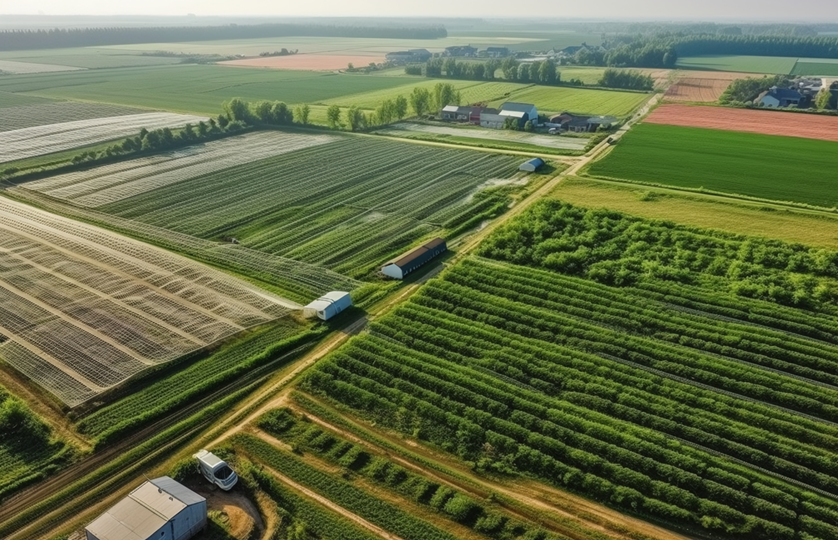
In recent years, Jilin Province has thoroughly implemented the strategy of “storing grain in land and technology”, adhering to agriculture and grain development driven by science and technology. As a major agricultural province and an important commodity grain production base in China, it has taken the lead nationwide in launching the “100 Billion Jin Grain” Production Capacity Construction Project and the “Straw-to-Meat” and 10 Million Beef Cattle Project, striving to strengthen agricultural science and technology and equipment support around the “Four Good Practices and One Intelligence” initiative.
People’s Network Jilin Channel reports that Jilin’s total grain output reached 87.16 billion jin in 2025, marking a record high and ranking the 4th in China for three consecutive years. This achievement is a vivid reflection of the province’s efforts to cultivate black soil with science and technology, effectively fulfilling its responsibility to ensure national food security.
Endowed with unique black soil resources, Jilin focuses on high-quality agricultural development empowered by science and technology, relying on its solid agricultural foundation and scientific and educational resources. To protect black soil and build high-standard farmland, the province has implemented a long-term integrated mechanism for the investment, financing, construction, management and operation of high-standard farmland, aiming to take the lead in converting all permanent basic farmland into high-standard farmland. It has also launched the “Black Soil Granary” science and technology campaign to protect and utilize black soil, known as the “giant panda of cultivated land”.
In terms of seed breeding and agricultural machinery, Jilin is advancing the construction of a cold-region breeding center and building innovation platforms for corn and rice breeding. It has promoted two high-yield and dense-tolerant corn varieties with an annual planting area exceeding 5 million mu, maintaining a 100% coverage rate of high-quality seeds for major crops. The province has deepened pilot projects for integrated R&D, promotion and application of agricultural machinery, accelerated the development of intelligent no-till seeders, and promoted preferential subsidies for high-quality machinery to update old equipment, with the comprehensive mechanization rate of ploughing, sowing and harvesting for major crops reaching 94.6%.
To boost output through advanced technologies, Jilin has promoted 40 million mu of stable-yield technologies such as conservation tillage, 11.38 million mu of yield-increasing technologies like “water-fertilizer integration + dense planting” and 38.31 million mu of “one spray for multiple promotions” technology. It has also built 1 million mu of “ton-grain field” demonstration areas, tapping the production potential of every inch of black soil.
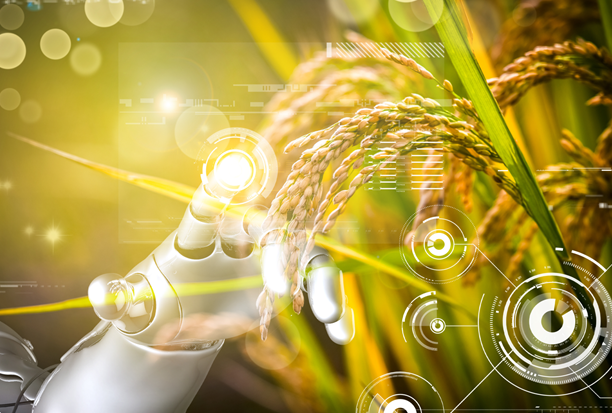
Digital intelligence is adding new momentum to agricultural development. Jilin has developed the “12316” mini-program, completed the local deployment of an artificial intelligence large model on the “Jilin Agriculture Cloud” platform, and advanced the construction of a national corn whole-industry-chain big data platform co-built by the central and provincial governments. It is stepping up research on 47 key agricultural core technologies, promoting the integration of the Internet of Things, big data and artificial intelligence to foster new agricultural productive forces.
Li Youbao, Deputy Director of the Department of Science and Technology of Jilin Provincial Department of Agriculture and Rural Affairs, stated that Jilin will accelerate the development of sci-tech agriculture and stimulate innovation momentum. “We will focus on key areas such as per unit yield improvement, seed breeding and smart agricultural machinery, promote the integrated application of corn film mulching yield-increasing technology in cold areas of eastern Jilin, and deepen the R&D, manufacturing and application of smart agricultural machinery,” he said.
The province will also strengthen the integration of industry, education and research, set up an agricultural science and technology innovation alliance, and optimize the innovation environment by strengthening the main position of agricultural enterprises in technological innovation and innovating the intellectual property pledge financing mechanism. These efforts are helping Jilin accelerate the development of modern large-scale agriculture and move steadily towards becoming a pilot province for “four types of agriculture”.