Smart Pig Farming Takes Root in Changling, Jilin: Digital Transformation Boosts Modern Agriculture
In April, Changling County in Jilin Province still feels chilly outside the pigsties, but inside, it is as warm as spring. Under the automatic control of a real-time AI system, fresh air is filtered, heated and slowly delivered from the ceiling, keeping temperature, humidity and gas concentration in the optimal range. Meanwhile, inspection robots hanging on tracks move slowly, "observing" body shape changes, "listening" for coughs and sneezes, and "calculating" growth rhythms. A single breeder can complete the daily patrol work that used to require walking 10,000 steps just by staring at a screen.
These subtle changes in pigsties are a microcosm of the accelerated digital transformation of China’s animal husbandry and breeding industry. What seems like a traditional pig farming industry is actually a highly complex systematic project, where environment, nutrition, health and energy consumption are closely linked. Any judgment deviation or response delay in one link will be quickly amplified by scale effects, making the traditional model relying on "veteran experience" approach its efficiency ceiling in modern pig farms with tens of thousands of pigs.
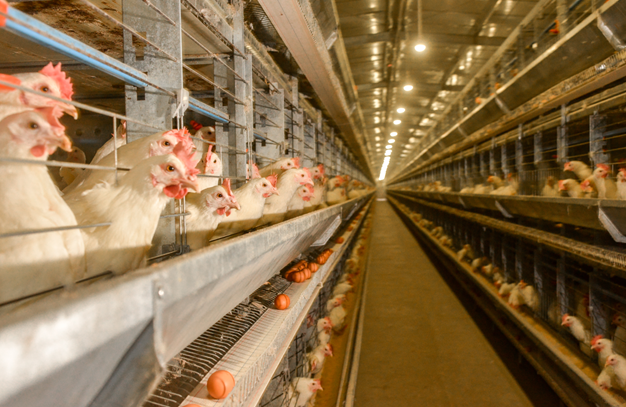
The Outline of the 15th Five-Year Plan clearly proposes to "coordinate the development of scientific and technological agriculture, green agriculture, quality agriculture and brand agriculture, and build agriculture into a modern large-scale industry". China Agriculture News reports that China has been vigorously promoting the integration of digital technology and agriculture in recent years, with smart breeding becoming a key driving force for the high-quality development of animal husbandry.
Kong Weiming, President of Huawei’s Animal Husbandry and Breeding Corps, said, "Animal husbandry is vital to national economy and people’s livelihood with huge development space. China has rich global scenarios and complete data, with great potential to improve quality, reduce costs and increase efficiency. The old path of scale-driven revenue has hit a bottleneck, and building an industrial ecological system for smart breeding, transforming from ‘single-point intelligence’ to ‘systematic intelligence’, has become an inevitable choice."
Taking ICT technology as the foundation, Huawei has promoted the implementation of the "cloud-network-edge-terminal" collaborative architecture in breeding scenarios. At COFCO Jiakangkang’s smart pig farm, sensors all over the pigsties collect real-time indicators such as temperature, humidity, ammonia and carbon dioxide, which are input into AI models to dynamically generate ventilation and temperature control strategies, reducing energy consumption and growth fluctuations caused by stress reactions.
In Muyuan Food Co., Ltd.’s breeding base with millions of pigs, Huawei’s anti-corrosion switches and AP devices ensure high-quality and stable connectivity in pigsties, despite the harsh environment of ammonia corrosion and frequent flushing. Hundreds of thousands of smart devices are seamlessly connected through a unified network, supporting the upload and download of more than 2 billion pieces of data every day.
Yu Ligen, Senior Engineer of the National Digital Animal Husbandry Innovation Center and Deputy Secretary-General of the Information Branch of China Animal Agriculture Association, noted that the key words for animal husbandry development during the 15th Five-Year Plan period are intelligence and practicality. "Digital technology is being applied to precise feeding of each pig, early warning of each disease and cost saving of every cent. Those who can solidify scenarios and make practical use of technology will be the first to benefit," he said.