From Poverty-Stricken Village to Model Village: Goudong New Village’s Path to Prosperity
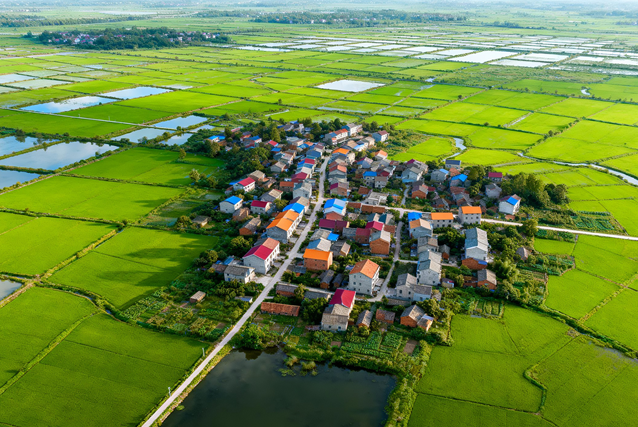
By the shores of Laixi Lake, the warm spring breeze caresses Goudong New Village, a former scattered and shabby resettlement area for reservoir migrants. Today, it has transformed into a beautiful countryside with clean roads, elegant courtyards and booming industries. Stretching grape corridors, a profound migrant exhibition hall and a warm happy canteen paint a vivid picture of prosperity, while local villagers wear smiles of contentment brought by increasing incomes. Few could imagine that this vibrant land was once a provincial-level poor village with zero collective income, scattered hearts and poor sanitation just a few years ago.
Goudong New Village, located in Laixi City, Qingdao, is composed of five natural villages, four of which are reservoir resettlement villages. After the overall relocation for reservoir construction in 1958, per capita arable land plummeted from 5 mu to less than 1 mu, with barren soil, scattered resources and a long lack of leading industries. In 2014, the village was identified as a provincial-level poor village, with a blank collective economy and a per capita income of only 6,000 yuan for villagers. In the early stage of village merging, it also faced the dilemma of "merged villages but divided hearts, unintegrated assets and disjointed development momentum", with prominent historical legacy issues, tense relations between cadres and the masses, and constant petitions.
The key to solving the problem lies in strengthening the organization. The Party Committee of Goudong New Village firmly grasped the "key" of grassroots Party building, taking the lead in Laixi City to fully integrate the "three capitals" (capital, assets and resources) of the new village. It abolished the original economic cooperatives of natural villages and established a new village joint-stock economic cooperative with clear property rights and shared interests, implementing the principle of "one person, one share, equal shares and equal rights", which fundamentally rationalized the ownership of collective assets and made villagers the real masters of the village’s development.
Gao Weiyu, Secretary of the Party Committee of the new village, led the team to collect 200,000 yuan of historical debts in only two days, winning the trust of the masses with the fastest speed and most practical measures. "Reasonable demands do not need petitions; come directly to my home," Gao promised publicly. His dedication to solving trivial matters for the masses earned him full votes in the 2025 village-level general election as a pilot village in Shandong Province, becoming the most trusted "backbone" of the villagers.
Adhering to the integration of self-governance, rule of law and rule of virtue, the village has adopted down-to-earth governance measures. It formulated 17 village regulations in plain language, adjusting clauses such as "harmonious couples" to "no physical conflict when quarreling" to fit real life. A moral integrity points system was introduced, with a 15-member moral evaluation committee scoring 531 households quarterly, linking scores to honors and welfare. An online-offline dispute mediation mechanism has kept the village free of petitions and police cases for three years, making it a national model village for rural governance.
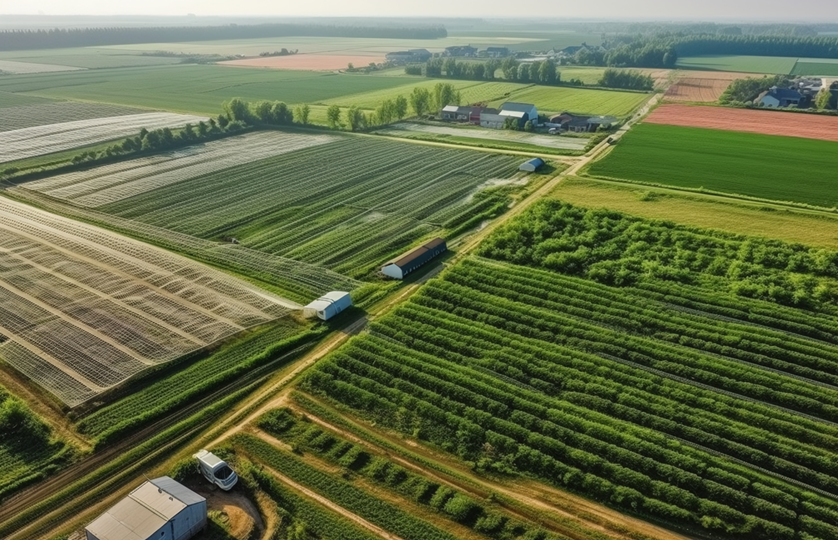
Based on its reservoir resources, the village has built a characteristic wealth path of "Party organization + cooperative + farmer" by developing the grape industry. Initially, villagers hesitated to grow grapes, so 16 Party members took the lead to set up a cooperative, learning technologies and exploring markets. The village "two committees" provide one-stop services including seedlings, technology, management and sales.
Now, the grape planting area exceeds 1,500 mu, radiating the surrounding area to form a 10,000-mu industrial cluster with an annual output value of nearly 400 million yuan. "Growing grapes earns me over 30,000 yuan per mu a year, much more than planting corn and wheat," said villager Xu Shoushan. Villager Gao Pijie expanded his planting area from 1 mu to 8 mu, with steady income growth. The village has also promoted the integrated development of agriculture, cultural tourism and research, hosting seven consecutive Lake-side Grape Festivals. The collective economy has grown from zero to over 2.4 million yuan annually, and the per capita income of villagers has reached 36,000 yuan, six times that before poverty alleviation.