Spring Ploughing in Namling County, Tibet Gathers Pace with Full Support
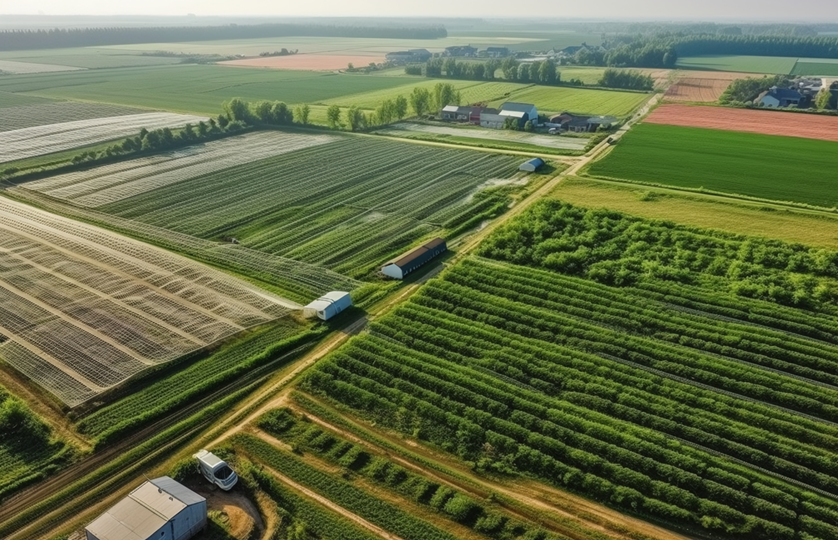
NAMLING COUNTY, Tibet, April 20 — As spring returns to the earth and agricultural activities kick off in April, Namling County in the Tibet Autonomous Region is embracing a bustling spring ploughing season. With rising temperatures, farmers and herdsmen are busy working in the fields, agricultural technicians shuttle around to provide on-site guidance, and trucks loaded with seeds, chemical fertilizers and other agricultural supplies are being transported at a brisk pace, unfolding a vivid picture of spring ploughing.
China Tibet News Network reports that “hard work in early spring paves the way for a fruitful year”. Namling County has pressed the “accelerator button” for spring ploughing and sowing, with the Xiangba land brimming with vitality, laying a solid foundation for the whole year’s agricultural production.
Agricultural technical services have been fully delivered to the front line, bringing peace of mind to farmers and herdsmen with down-to-earth support. It is currently a critical period for planting early-maturing potatoes in Namling County. Mima Dunzhu, a technician from the County Agricultural and Animal Husbandry Comprehensive Service Center, has been staying in several major potato-producing towns these days. He teaches farmers planting techniques for early-maturing potatoes hand in hand, explains field management skills, and answers various questions raised by farmers, focusing on key technical links such as seed selection, seed treatment and standardized sowing at the right time.

“On-site teaching during the farming season, combining service guidance with technical training, is easy for farmers and herdsmen to accept and achieves good results,” Mima Dunzhu said. “This year, the planting area of early-maturing potatoes in our county is more than 3,600 mu. Seizing the farming season and keeping up with planting and management will allow potatoes to enter the market early, enabling farmers and herdsmen to increase income with less investment and achieve tangible results.” So far, Namling County has dispatched more than 80 person-times of agricultural technicians, who not only provide hands-on teaching and face-to-face services but also conduct comprehensive inspections on seed filing and agricultural supply.
Adequate guarantee of agricultural materials has laid a solid foundation for spring sowing. In towns and villages, trucks of highland barley seeds, potato seeds, chemical fertilizers and other agricultural materials have arrived at the front line of production. Farmers and herdsmen line up to receive the needed supplies, which are coordinated and guaranteed by the government and allocated to the production front line to ensure no delay in spring sowing.
“The preferential agricultural policies are getting better and better. Seeds, chemical fertilizers and other agricultural materials are uniformly guaranteed by the government, and technicians often go deep into the fields to provide guidance and services,” Nima Tashi, village head of Shanba Village in Aima Township, said happily. “Our village planted about 2,580 mu of potatoes last year with a good output. This year, high-quality improved varieties are promoted, and it will be another bumper harvest year by the end of the year.” It is understood that the total crop planting area in Namling County this year is more than 160,000 mu, and the required agricultural production materials such as chemical fertilizers, pesticides, commercial organic fertilizers, seeds and seed potatoes are fully reserved and supplied in an orderly manner, providing all-round protection for spring ploughing.
The construction of high-standard farmland is also boosting spring ploughing. While agricultural machinery roars, farmland construction equipment is also operating at full capacity, with the upsurge of high-standard farmland construction complementing the busy scene of spring ploughing preparations. This year, Namling County will build 1,500 mu of new high-standard farmland and upgrade 8,000 mu of existing ones, covering 13 administrative villages in 6 townships and benefiting 909 households with 4,098 people, focusing on solving the pain points and difficulties affecting spring ploughing such as aging farmland infrastructure and insufficient irrigation conditions. Part of the land leveling and irrigation canal construction has been completed, and some built infrastructure has been put into use for spring ploughing.