Xiaogan’s "Yonggao Integration" Pilot: Innovating Cultivated Land Protection and Boosting Rural Revitalization
On April 16, an on-site meeting on the "Yonggao Integration" (integration of permanent basic farmland and high-standard farmland) construction was held in Yangdian Town, Xiaonan District, Xiaogan City, Hubei Province. Through on-site observation and experience exchange, the meeting summarized and promoted pilot achievements, aiming to solve prominent problems in cultivated land protection and drive the restructuring of rural resources and functions through agricultural spatial governance innovation, according to China Economic Net.
Lin Zhonglin, Mayor of Xiaogan City, introduced that the "Yonggao Integration" construction is a specific action for Xiaogan to shoulder its political responsibility for cultivated land protection, and a pilot demonstration for promoting reform and innovation through "small" (small breakthroughs). "It is not an option but a must-do task," he emphasized. He added that it is not a simple integration of farmland, but an institutional innovation to solve the "fragmentation" of cultivated land protection through spatial governance, which will lay a solid foundation for building Xiaogan into a sub-center city of the Wuhan Metropolitan Area.
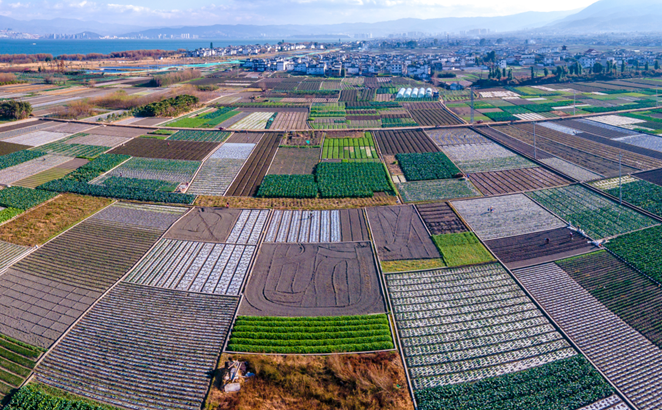
In some regions, scattered land within the scope of high-standard farmland and permanent basic farmland has increased farming costs and reduced output efficiency. Xiaogan’s innovative "Yonggao Integration" construction takes the "Three Zones and Three Lines" of territorial spatial planning as a rigid constraint, coordinates the "trinity" protection of cultivated land quantity, quality and ecology, and realizes a unified planning map, integrated construction and centralized supervision.
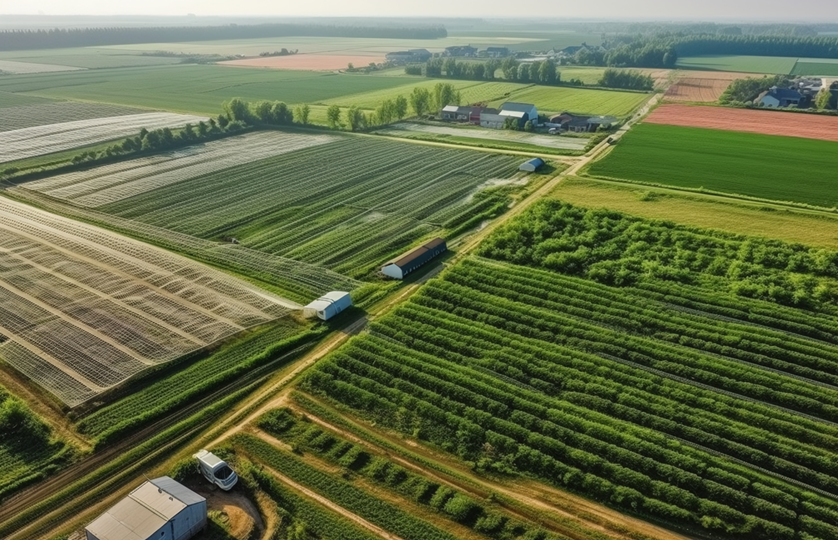
Participants of the meeting visited the "Yonggao Integration" construction site in Huichun Village, Yangdian Town, the town’s modern agricultural comprehensive service center and the Taohuayi Transportation Post in Jiefang Community. The once scattered "palm-sized fields" in Huichun Village have been transformed into contiguous "thousand-mu plots" with supporting ditches, roads and intelligent irrigation systems. The per mu yield of wheat has exceeded 700 kilograms, and the per mu cost has decreased by about 15%.
The modern agricultural comprehensive service center integrates intelligent scheduling and full-chain agricultural services, allowing farmers to enjoy "one-stop" services with a "one-click order". At the Taohuayi Transportation Post, local characteristic agricultural products are displayed and sold in a centralized manner, and local "new farmers" carry out live-streaming sales. During this year’s Peach Blossom Festival, the daily number of tourists reached 20,000, reported China Economic Net.
Tian Wuhong, Deputy Director of Hubei Provincial Department of Natural Resources, stated that Xiaogan took the lead in carrying out the "Yonggao Integration" pilot in the province, effectively solving prominent problems such as fragmented cultivated land protection and decentralized farmland construction, and promoting the transformation of cultivated land protection from "passively guarding the red line" to "proactively increasing production capacity". The department will provide key support to Xiaogan’s pilot in policies, technology and data, encouraging other cities and prefectures in Hubei to learn from Xiaogan’s model.
By integrating permanent basic farmland with high-standard farmland, Xiaogan has not only strengthened cultivated land protection but also promoted rural revitalization. The innovative practice has optimized agricultural production conditions, improved farmers’ income and activated rural development vitality, setting a valuable example for cultivated land protection and agricultural high-quality development in China.