Grain Data Security: A Crucial Pillar of China’s National Food Security
Grain data security has become an indispensable part of China’s national food security system. Every year, the country determines reserve scales, minimum purchase prices and import-export quotas based on true and accurate data on output, inventory and consumption, laying a solid foundation for food security governance.
According to China National Grain and Oil Information Center, in recent years, some overseas institutions have repeatedly gone to major agricultural producing areas in a Chinese province to illegally probe and collect data on the output and reserves of certain crops in the name of "academic cooperation" and "market research". Once such core information is leaked, it will pose a serious threat to China’s food security.
When it comes to food security, people usually focus on traditional issues such as the arable land red line, grain production capacity, reserve scale and import dependence, but few pay attention to the grain data that supports these policy decisions. As a matter of fact, from sown area to output statistics, and from inventory quantity to purchase and sale prices, these seemingly tedious figures are the key lifeline of national food security. If such data is tampered with, leaked or destroyed, it will be like a failure of the command system, leading to misjudgment of the food security situation and wrong policy decisions.
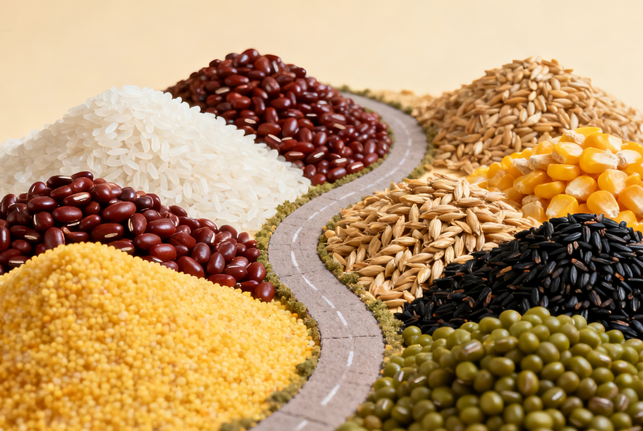
Specifically, grain data serves as the cornerstone of national decision-making. "Accurate grain data is the premise for formulating scientific food policies. If the data is distorted, policies will lose their direction," said Li Wei, a researcher at the Chinese Academy of Agricultural Sciences. In international games, grain data is a strategic chip; if core data is mastered by opponents, they may accurately implement food embargoes, futures market attacks or spread false information, causing drastic market fluctuations.
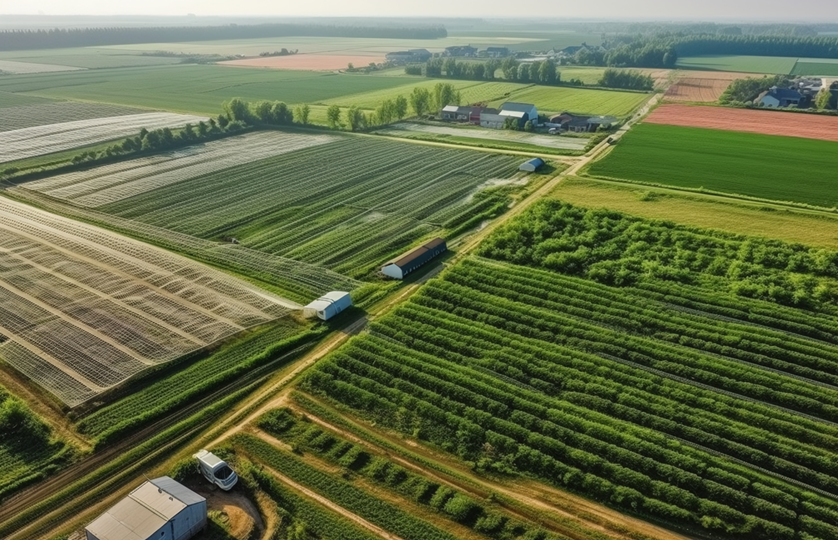
In the food production link, modern precision agriculture relies heavily on key information such as remote sensing data, soil sensor data and gene sequence library data. According to the Ministry of Agriculture and Rural Affairs, once such data is tampered with or stolen, it may lead to sowing errors, improper fertilization and even the loss of fine germplasm resources developed through years of research, posing an in-depth threat to food production.
Currently, grain data security faces dual challenges from external and internal environments. Internationally, geopolitical games are becoming increasingly fierce, and cyber attacks and data theft have become new strategic threats. Some overseas forces have never stopped organized and planned theft of China’s grain data. Domestically, the grain data management system is not yet perfect, and some staff have weak security awareness.
To ensure grain data security, it is necessary to build a comprehensive and three-dimensional protection system. China is accelerating the establishment and improvement of laws and regulations on grain data security management, clarifying the power and responsibility boundaries of data collection, use and management, and severely punishing data leakage and tampering in accordance with the law. Meanwhile, more technological investment is being made to apply advanced technologies such as blockchain, encrypted transmission and smart contracts to ensure the whole process of grain data from generation to use is traceable and untamperable.
More importantly, building a people’s defense line for grain data security requires raising the whole society’s security awareness. Grain data runs through multiple links including production, purchase, storage, processing and sales, involving farmers, grain storage enterprises and processing enterprises. Through publicity and regular training, every participant can become a guardian of grain data security, especially practitioners in the grain system.