Anqing Launches High-Quality Functional Rice Project, New Technology Boosts Ratoon Rice Yield
On April 12th, the launching ceremony and on-site observation meeting of the benchmark project for the technological development of high-quality functional rice industry in Anqing City, Anhui Province, was held at Dongfangwei, Luoling Town, Yixiu District, according to Anhui Agricultural News. Co-hosted by Anhui Agricultural University, Yushun High-Tech Seed Industry Co., Ltd. and other units of the "1+5" agricultural science and innovation alliance, the event aims to deepen the integration of agricultural scientific and technological innovation and industrial innovation, promote the construction of the alliance, and accelerate the transformation of agricultural scientific and technological achievements.
A total of 65 participants attended the event, including Researcher Wu Wenge, Academic Vice President of Anhui Agricultural University, responsible persons of agricultural and rural departments at provincial, municipal and district levels, experts from scientific research institutes, large-scale farmers and media representatives.
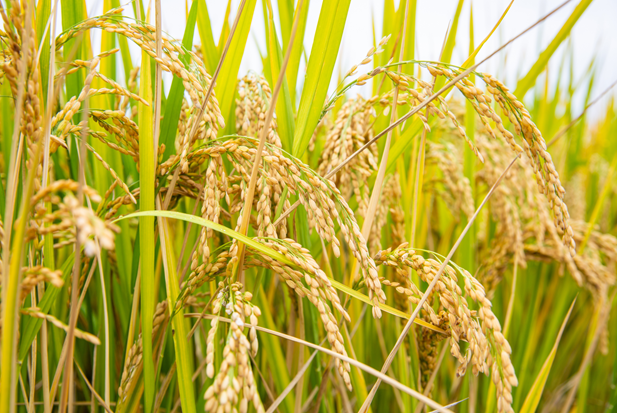
Ratoon rice is a green and efficient planting mode of "one planting, two harvests", which can fully utilize the light and heat resources in southern rice areas where "two seasons are insufficient and one season is surplus", with an average yield increase of 300 to 400 kilograms per mu compared with single-cropping rice, as reported by China Agriculture News. However, the traditional equal-row spacing mechanical transplanting combined with conventional harvester harvesting leads to a stubble rolling rate of 40% to 50% in the first crop, resulting in a 20% to 40% yield reduction in the ratoon season, along with uneven maturity and decreased rice quality, which has become a bottleneck restricting industrial development.
The technology observed on site is the "wide-narrow row mechanical transplanting + precise row-aligned non-rolling harvesting" solution innovatively proposed by Wu Wenge’s team after years of research, from the perspective of in-depth integration of agricultural machinery and agronomy.
Participants watched the demonstration of new technologies and equipment such as precise wide-narrow row mechanical transplanting, film-covered mechanical transplanting and ordered seedling throwing of ratoon rice. In the demonstration field, transplanters equipped with Beidou navigation system automatically traveled according to preset routes, with the wide-narrow row seedlings arranged in a composite row spacing of "25-45-25-25-25-45-25 cm", which was neat and uniform, attracting frequent photos from large-scale farmers.
Professor Zhang Shun from the Rice Mechanized Precision Cultivation Team of Anhui Agricultural University introduced the key points of the independently developed precise wide-narrow row mechanical transplanting technology for ratoon rice based on Beidou navigation automatic driving and the technical path of precise row-aligned harvesting in the first crop. "The most troublesome thing in the past was the harvester rolling the seedlings. Now the wide-narrow rows leave channels, and with Beidou navigation for row-aligned harvesting, the rolling rate has dropped from more than 40% in the traditional mode to less than 20%," Professor Zhang explained.
It is estimated that this mode increases yield by more than 20% compared with conventional equal-row spacing planting, with the per unit yield of the ratoon season reaching more than 400 kilograms, an increase of about 50% compared with the traditional ratoon rice planting method, and an average increase of more than 400 yuan per mu. A large-scale farmer at the scene said, "We tried this technology on a small scale last year, and it was really worry-free and yield-increasing. We plan to expand the planting area to 200 mu this year."
According to China National Intellectual Property Administration, the technology has obtained national invention patent authorization (Patent No.: CN 119138192B) and been included in Anhui Provincial Financial Agricultural Science and Technology Achievement Transformation Project. It is currently in the production verification stage, with remarkable pilot test results in Chizhou, Anqing and Hefei in 2024 and 2025, and is being expanded for demonstration in 2026.
Researcher Wu Wenge stated, "We will take the benchmark point as a window to truly write papers on the land and let more farmers benefit from science and technology. If this technology is promoted to 20 million mu of ratoon rice nationwide, it can increase annual output by 2 billion kilograms and increase farmers’ income by 7 billion yuan."