China’s Spring Irrigation Advances Steadily Amid Critical Farming Period
As the crucial period for spring sowing and field management unfolds across China, the country’s spring irrigation work is progressing in an orderly manner, with the irrigated area reaching 190 million mu, according to information from the Ministry of Water Resources on the 13th.
At present, full-scale spring irrigation has been rolled out in major winter wheat-producing regions such as the Huanghuaihai Plain and Northwest China. Meanwhile, rice-growing areas in South China and Northeast China have successively launched spring irrigation to ensure water supply for key links including seedling cultivation, field soaking and rice transplanting, which lays a solid foundation for stable grain production this year.
The soil moisture in most cultivated areas across the country is currently suitable for crop growth, though localised areas are experiencing insufficient moisture, according to CCTV News. To address this, the water conservancy department is scientifically allocating water sources from reservoirs and rivers, and continuously optimising irrigation plans based on crop planting structures, soil moisture and precipitation conditions to improve soil moisture levels in a targeted manner.
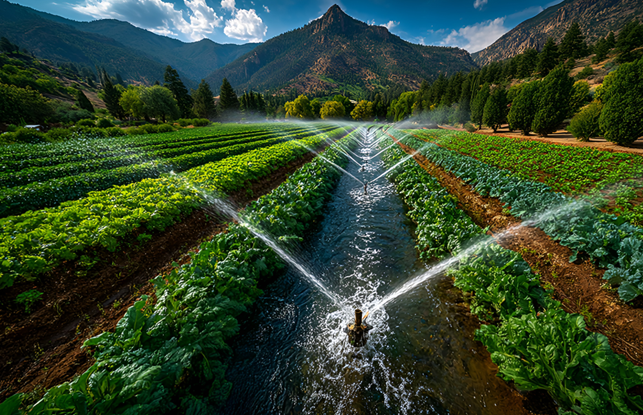
Latest dispatching data from the Ministry of Water Resources shows that irrigation water sources in China are relatively sufficient. The water storage capacity of 9,677 key reservoirs has reached 491.2 billion cubic meters, nearly 10% higher than the same period in previous years, with a more significant surplus in northern provinces. In late March, the Yellow River Conservancy Commission jointly dispatched the Xiaolangdi Reservoir and the Xixiayuan Reservoir, increasing the water discharge from the Xiaolangdi Reservoir to 1,600 cubic meters per second to guarantee spring irrigation water for farmland along the lower reaches of the Yellow River.
Up to now, 27 provinces and the Xinjiang Production and Construction Corps have launched spring irrigation, with a cumulative water supply of about 20 billion cubic meters and an irrigated area of 190 million mu, as reported by China National Radio.
Favourable hydrothermal conditions in northern winter wheat regions are facilitating seedling growth, according to key agricultural meteorological updates released by the Central Meteorological Observatory on the previous day. Until the 22nd, temperatures in Northeast China will be higher than the same period in previous years, which is conducive to the thawing of farmland soil. Temperatures in northern winter wheat regions are also above average, and as the crops enter the critical booting and heading stage, the sound hydrothermal conditions are highly beneficial to their growth and development.
However, it is predicted that from the 18th to the 20th, gale and temperature drop will occur in northern Xinjiang, eastern parts of Northwest China, Inner Mongolia, North China and the Huanghuai region. Light to moderate rain or sleet is expected in eastern Inner Mongolia and Northeast China, which may exert certain adverse impacts on fruit tree pollination and protected agriculture production, the Central Meteorological Observatory warned.
In contrast, South China has seen frequent rainfall in recent days, often accompanied by severe convective weather. The persistent rainy weather is not conducive to the yield formation of winter wheat and rapeseed. Moreover, some areas with heavy rainfall overlap with those that had excessive precipitation earlier, increasing the risk of waterlogging in low-lying farmland.
Cui Jing, a third-level researcher from the Irrigation and Water Conservation Department of the Rural Water Conservancy and Hydropower Bureau under the Ministry of Water Resources, noted that the water conservancy department will further strengthen the monitoring of weather and soil moisture changes, and continuously adjust water dispatch plans to ensure the smooth progress of spring irrigation and lay a solid foundation for a bumper harvest.