China Advances Seed Industry Revitalization with Tech Innovation and Industrial Integration
2026 marks a crucial year for China’s seed industry revitalization, transitioning from "achieving results in five years" to "making major breakthroughs in ten years". The 2026 Central No.1 Document proposes in-depth implementation of the seed industry revitalization initiative, accelerating the breeding and promotion of breakthrough varieties, and advancing the industrialization of bio-breeding.
At the recently held 2026 Seed Conference and Nanfan Silicon Valley Forum, participants offered suggestions on cutting-edge technological breakthroughs, industrial ecosystem construction, and in-depth integration of scientific research and enterprises. Experts believe that facing the new global pattern of seed industry competition, China urgently needs to build an independent and controllable technological system.
According to People’s Daily, Hainan’s Nanfan Silicon Valley has become a core hub for seed breeding, with over 70% of China’s new crop varieties cultivated there. "Nanfan Silicon Valley has built the largest and most comprehensive bio-breeding innovation platform in China, with the annual output value of Hainan’s Nanfan seed industry exceeding 20 billion yuan in 2025," said Zhang Qiaohui, deputy director of the Scientific Research Management and Industrial Development Department of Hainan Nanfan Administration.
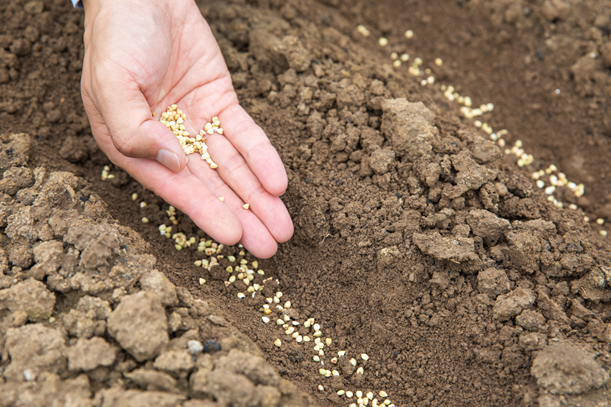
To address challenges in traditional breeding, Hainan launched the seed industry CRO (Contract Research Organization) model in 2023. This model reduces the cost of breeding a conventional variety from over 300,000 yuan to less than 100,000 yuan, while local farmers engaged in seed breeding services in Yazhou District, Sanya, can earn up to 200,000 yuan annually.
Digital and intelligent technologies are reshaping the breeding landscape. "Jier", the world’s first intelligent breeding robot developed in China, has been put into stable commercial operation, cutting tomato breeding costs by over 25%, introduced Zhang Tinghao, PhD from the Institute of Genetics and Developmental Biology, Chinese Academy of Sciences.
Li Jiayang, academician of the Chinese Academy of Sciences and director of Yazhou Bay National Laboratory, noted that intelligent variety manufacturing is the commanding height of future agricultural competition, including breeding "intelligent varieties" and realizing "intelligent breeding".
Enterprise-research cooperation has achieved remarkable results. Yang Xueli, deputy general manager of Henan Yuyu Seed Industry Co., Ltd., said their corn variety "Huangjinliang MY73" has been the most planted corn variety in China for two consecutive years. Meanwhile, Beijing Academy of Agricultural and Forestry Sciences has accelerated the transformation of scientific achievements through market-oriented operations.
Zhang Hongyu, president of China Agricultural Risk Management Research Association, emphasized that enterprises should play a leading role in seed industry innovation, helping China’s seed industry move towards high-quality development.