China’s Graphene “Black Technology” Boosts Crop Yields, Breaking Photosynthesis Bottleneck
Beijing, April 13 — As the saying goes, “All things grow by the sun.” However, the utilization rate of solar energy by crops has long been less than 2% globally, posing a natural bottleneck to agricultural production. Recently, Beijing Xuhua Times Technology Co., Ltd. (hereinafter referred to as “Xuhua Technology”) has proposed an innovative solution by introducing graphene, known as “black gold”, into agricultural plant protection and developing a new type of graphene foliar fertilizer, which awakens plants’ photosynthetic potential and helps increase yields and incomes, according to People’s Network.
Graphene is a new type of nanomaterial currently found to be the thinnest, strongest, and most conductive in terms of electricity and heat. Based on this material, Xuhua Technology’s new product gives full play to its unique physical and chemical properties, forming a special structure simulating the photosynthetic reaction center on the leaf surface. This structure enhances the efficiency of plants’ absorption and transmission of light energy, fundamentally improving crop photosynthesis efficiency and thus promoting plant growth and yield.
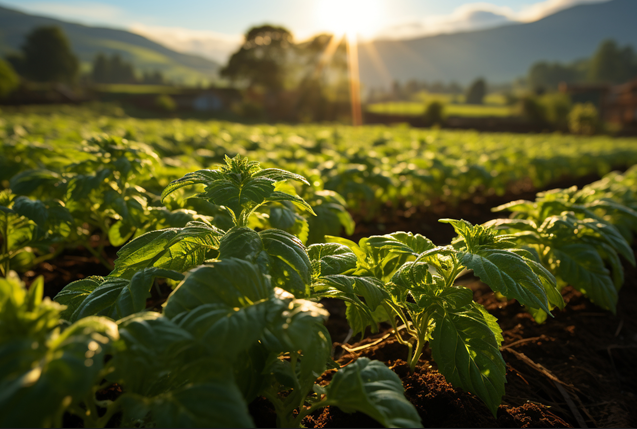
Different from traditional chemical fertilizers, this physical yield-increasing model is pollution-free, residue-free, and causes no secondary pollution to the soil. It can also enhance crop stress resistance, helping crops grow healthily and achieving both “yield increase and quality improvement”. According to Future Network, graphene has been increasingly applied in the agricultural field in recent years, with technologies such as biomass room-temperature graphitization making it more cost-effective and accessible for large-scale agricultural use.
Field tests have proved the effectiveness of the graphene foliar fertilizer. After spraying the graphene photosynthesis growth solution, the single bulb weight of Chinese cabbage increased by more than 50%, and the per mu yield is expected to rise by over 30%. For Huanggong peppers sprayed with the solution, the per mu yield increased by about 33%, with the per mu output value reaching about 60,000 yuan and an additional income of 15,000 yuan per mu. Both yield and quality have been significantly improved.
Cui Xu, Chairman of Xuhua Technology, stated that the graphene growth solution can be diluted 200 times for use, requiring only 2 to 3 sprays per growth cycle per mu of crops. “The comprehensive cost is only dozens of yuan, far lower than that of traditional chemical fertilizers and yield-increasing agents, which greatly reduces farmers’ planting costs,” he added. This cost advantage makes the technology more accessible to ordinary farmers, laying a solid foundation for its popularization and application.
As a new type of nanomaterial, graphene has shown broad application prospects in agriculture. According to People’s Network, graphene-based agricultural technologies have been applied in seedling cultivation, crop growth promotion and other fields, effectively promoting the green and high-quality development of agriculture. Xuhua Technology’s new graphene foliar fertilizer is another important achievement in the integration of graphene technology and agricultural production, reflecting China’s continuous progress in agricultural science and technology innovation.
The successful development and application of the graphene foliar fertilizer not only breaks the natural bottleneck of low solar energy utilization rate by crops, but also provides a new path for green and efficient agricultural development. It helps farmers reduce costs and increase incomes, and injects new vitality into the high-quality development of China’s agriculture, setting a good example for the application of new materials in the agricultural field.