Red Hawthorns Weave Prosperity: Sitou Town’s Practice in Rural Revitalization
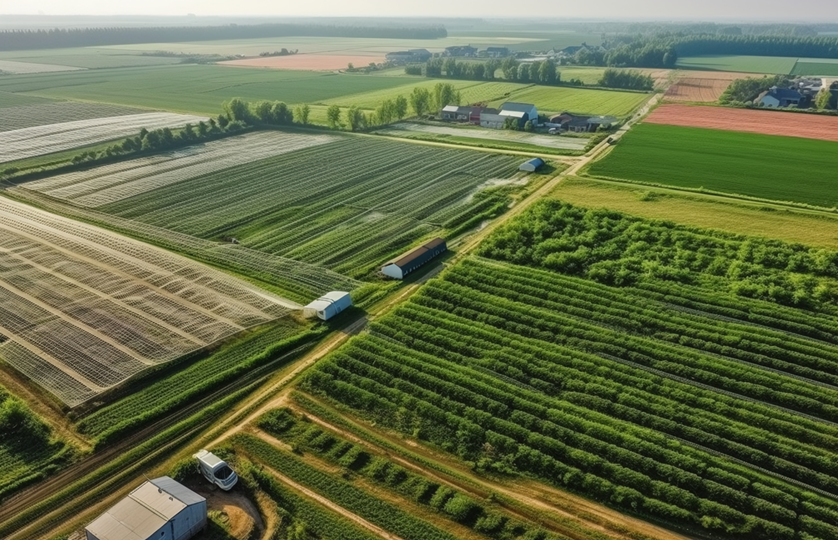
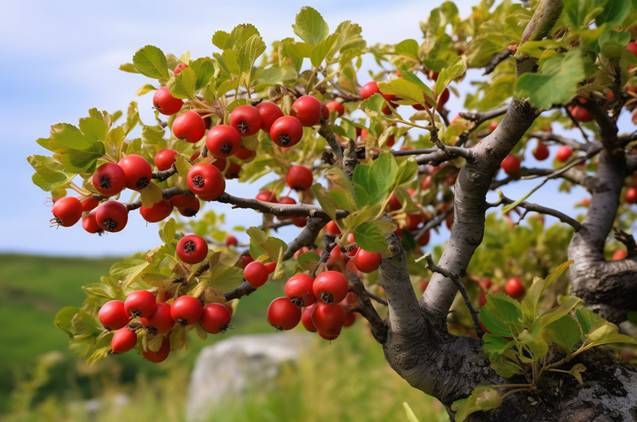
As spring breathes life into the mountains, clusters of red hawthorns in Sitou Town, Linqu County, Weifang City, Shandong Province, are set to become a “golden chain” of prosperity. Local farmers busily tend to their fields, where a 30,000-mu hawthorn planting base is gathering energy for the new growing season, according to Xinhua News Agency. This “Red Fruit Town” deep in the mountains is exploring a path to comprehensive rural revitalization through regional planning, construction, operation and governance.
“In the past, scattered farming by individual households failed to form a scale, and the problem of ‘increased output but not income, and high quality but not good price’ once plagued this traditional industry,” Hu Tao, Secretary of the Party Committee of Sitou Town, told reporters. “A single village is too small to develop advantageous industries, while a town is too large to focus on just one industry. Only by connecting adjacent villages into a whole can resources be pooled and industries strengthened.”
The Outline of the 15th Five-Year Plan proposes learning from the experience of the “Ten-Thousand-Village Project”, promoting rural revitalization in a classified, orderly and regionalized manner, and further implementing rural construction initiatives. Breaking village boundaries, Sitou Town has linked 8 administrative villages including Hekou Village, Jijiazhuang Village and Jizi Mountain Village, as well as 30,000 mu of hawthorn orchards, to build the “Red Fruit · Golden Mountain” rural revitalization area, solving the development dilemma of single villages with a regional approach.
“Regionalization is not a simple merger; the key lies in integration and efficiency enhancement,” said Liu Yuanyuan, Mayor of Sitou Town. A regional Party committee has been established in the area, adopting the “leading enterprises + cooperatives + farmers” model to unify technical guidance and planting standards, systematically integrate resources such as land, labor, technology and brands, and cultivate 3 provincial and municipal-level leading deep-processing enterprises.
In the intelligent workshop of Shandong Jingguan Food Co., Ltd., three hawthorn lollipops roll off the production line every second on average, accounting for 70% of the national market share. As a leading enterprise in the area, Jingguan Food has jointly invested 24 million yuan with 6 cooperatives to build a 7,000-ton cold storage center, extending the preservation period of hawthorns. The company also purchases hawthorns from farmers at a guaranteed price 0.15 yuan per catty higher than the market price, driving participating farmers to increase their annual income by thousands of yuan.
The area has fostered and attracted a number of hawthorn processing enterprises, creating jobs for more than 1,000 local villagers at their doorsteps. With an annual output of 50,000 tons of hawthorn products, the local processing rate of hawthorns exceeds 55%. Shi Xinglin, person in charge of Jingguan Food, noted that the company exports about 30 tons of hawthorn products monthly, which are sold to Japan, Malaysia and other countries and regions.
As farmers’ pockets grow fuller, their yearning for a better life becomes stronger. The Outline of the 15th Five-Year Plan emphasizes gradually improving the completeness of rural infrastructure, the convenience of public services and the comfort of the living environment, and this “construction plan” is quickly turning into a “realistic picture” in the “Red Fruit · Golden Mountain” area.
“In the past, the mountain roads were bumpy, and we had to carry hawthorns on our shoulders. Now cement roads extend to the orchard edges, allowing tricycles and small trucks to drive directly in, saving time and effort,” said Li Qiang, a fruit farmer. In recent years, Sitou Town has widened and renovated 23 inter-village roads totaling 55 kilometers, built 18 kilometers of new water supply pipelines, upgraded power grid lines and achieved full 5G coverage.
Walking into Jijiazhuang Village, winding bluestone roads and hawthorn trees frame white walls and black tiles. “We don’t just sell hawthorns; we also sell scenery and experiences,” said Zeng Fanxin, Deputy Secretary of the Party Committee of Sitou Town. Relying on its natural scenery, ancient trees, folk customs and scenic spots, the area has developed rural tourism, guiding villages to build 35 characteristic homestays and 7 high-quality tourist routes.
From “prosperity of one village” to “strength of a whole area”, the 30,000 mu of hawthorns in Sitou Town have woven a “prosperity chain” integrating industrial development and farmers’ income increase, writing a vivid footnote for regionalized rural revitalization during the 15th Five-Year Plan period.