Qianjiang Lobster Aims for 100 Billion Yuan Brand Value with Technological Innovation
Wuhan, Hubei – Taking advantage of the opening of the Liangzhilong · 2026 14th China Food Ingredients E-commerce Festival, the 2026 Qianjiang Lobster Industry High-Quality Development and Brand Investment Promotion Conference was held in Wuhan recently. As an annual industry event gathering over 6,000 food ingredients and equipment manufacturers nationwide and attracting more than 80,000 professional purchasers, the conference saw Qianjiang Lobster not only present its "top seasonal fresh produce" that has long won the hearts of diners across the country, but also announce an ambitious industrial blueprint to the whole nation: advancing from a 100 billion yuan output value to a 100 billion yuan brand value.
The launch of this new goal marks that after the Qianjiang lobster industry exceeded the 90 billion yuan comprehensive output value mark and its regional public brand value reached 52.72 billion yuan, it has officially stepped into a new stage of brand value reconstruction from scale expansion.
Variety, the "core chip" of the industry, became a highlight at the conference. Wang Zhongwei, a researcher from the Institute of Hydrobiology, Chinese Academy of Sciences, presented the latest achievements in variety breeding. He noted that the newly cultivated "Qianjiang Lobster No.1" grows more than 10.7% faster than ordinary crayfish with uniform specifications, and the new variety to be approved has passed on-site acceptance by experts. Meanwhile, "Qianjiang Red No.3", bred for larger harvest weight and faster growth, has completed five consecutive generations of breeding and officially submitted an application for new variety approval; "Qianjiang Lobster No.2" has successfully passed pilot-scale test and yield measurement, with approval materials expected to be submitted in June this year.
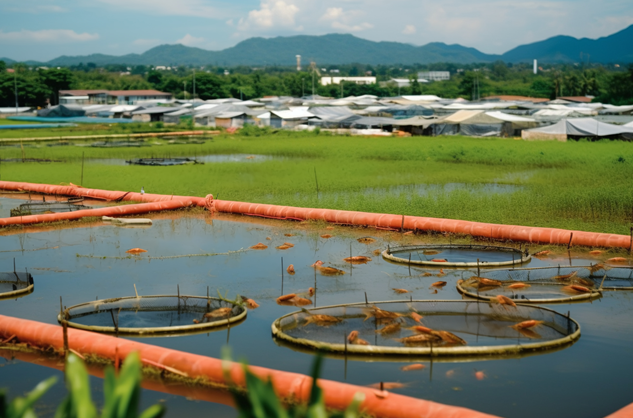
Luo Chuandai, a large-scale farmer in Bao'an Village, Qianjiang, who tried the test seedlings of "Qianjiang Lobster No.1" last year, shared his experience: "The most obvious feeling is that they grow fast and are of uniform size. It used to take more than two months to catch after seeding, but now the cycle is shortened by nearly half a month, and the specifications are almost the same when caught, so purchasers are willing to offer a high price." His 20-mu pond has now become one of the demonstration sites for the new variety.
While variety breakthroughs inject core momentum into the industry, the full implementation of the "four-season lobster" technology has completely rewritten the underlying logic of the crayfish industry. Once a seasonal delicacy limited to spring and summer, Qianjiang has successfully conquered core technologies such as "four-season lobster" and "four-season seedlings", breaking the seasonal consumption restriction and achieving a historic leap from "fresh in two seasons" to "fresh all year round".
Li Mingbo from Hubei Provincial Crayfish Industry Technology Research Institute introduced the technological breakthrough in detail. Qianjiang's innovative "early rice + winter lobster + early spring lobster" mode enables crayfish to molt and grow smoothly in autumn and winter through setting breeding areas, regulating nutrition and improving the environment, realizing autumn seeding and winter listing. Liu Juntao, a farmer in Zhengjiahu Village, Longwan Town, caught crayfish in his 500-mu shrimp field at 4 a.m. on the fourth day of the Spring Festival. "In the past, we stayed at home to keep warm during the Spring Festival, but now it’s our busiest time," he said, adding that the new mode brings 200 jin of winter lobster per mu and an increase of nearly 2,000 yuan per mu in income.
In terms of industrial chain extension, Qianjiang is promoting the transformation of crayfish from "sold by catty" to "sold by gram" through intensive processing. In 2025, Qianjiang introduced the Institute of Process Engineering, Chinese Academy of Sciences and Zhongke Rongxin Co., Ltd. to jointly promote an intensive processing project of chitin, chitosan and chitooligosaccharide, with a total investment of 110 million yuan and expected commissioning at the end of March this year.
At the new factory of Qianjiang Juhe Future Biotechnology Co., Ltd., workers are making final preparations before commissioning. The enterprise processes 10,000 tons of crayfish shells annually, which will produce 2,000 tons of chitosan and 300 tons of chitooligosaccharide after commissioning. "In the past, shrimp shells were either treated as waste or sold at a very low price, but now we turn them into high-value-added biological materials, with the price per ton rising from several hundred yuan to tens of thousands of yuan," said the project director.
Chen Yuan, vice mayor of Qianjiang, extended a sincere invitation to entrepreneurs nationwide at the conference: "We hope entrepreneurs will come to Qianjiang, understand Qianjiang and invest in Qianjiang, carry out in-depth cooperation in lobster breeding, intensive processing, brand operation and e-commerce sales, and share the dividends of the high-quality development of the Qianjiang lobster industry."
With more than 20 years of intensive cultivation, Qianjiang lobster has developed from a single shrimp to a driving force for the city, from seasonal freshness to year-round supply, and from 100 billion yuan output value to 100 billion yuan brand value. In the tide of rural revitalization and agricultural modernization, this red crayfish from Qianjiang is writing a new chapter for the branding and upgrading of Chinese agricultural products.