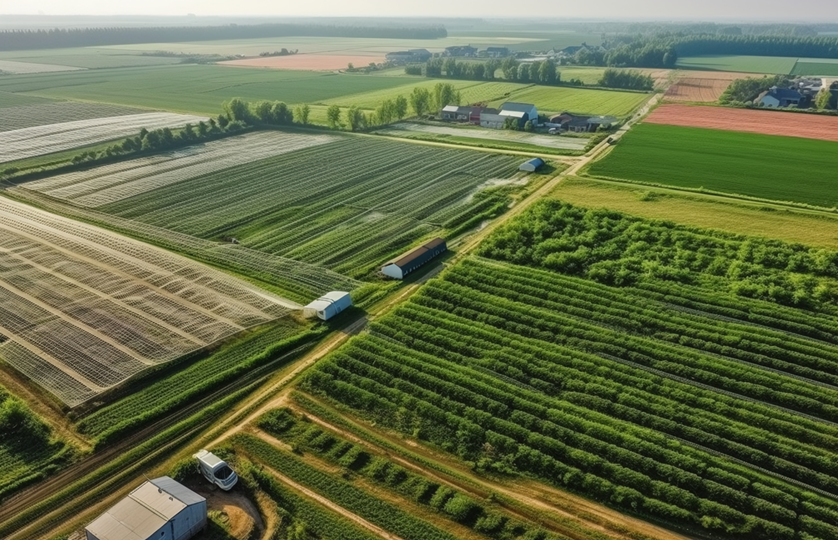
Spring Ploughing Underway as China Strives for Grain Security
As spring thunder echoes across the land, modern agricultural machinery roars to life in fields from the terraced fields of Yunnan and Guizhou to the fertile plains of the Central Plains, marking the start of another spring ploughing season. This year’s spring ploughing, the first of the 15th Five-Year Plan period, is particularly significant due to a new target set in the recently released 15th Five-Year Plan Outline: China’s comprehensive grain production capacity is expected to reach around 1.45 trillion jin during the period.
China’s confidence in reaching this new height stems from its solid foundation in grain production. Since the 18th National Congress of the Communist Party of China, the country has achieved consecutive grain harvests, with output remaining above 1.3 trillion jin for nine consecutive years since 2015. In 2024, grain output climbed to a new high of 1.4 trillion jin, and rose further to 1.43 trillion jin in 2025, drawing close to the 15th Five-Year Plan target.
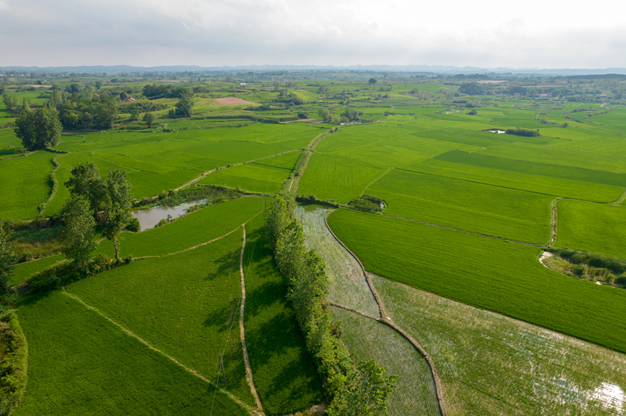
The resilience of China’s grain supply is underpinned by strong infrastructure and technological progress. By the end of the 14th Five-Year Plan period, more than 1 billion mu of high-standard farmland had been built nationwide, stably supporting grain production capacity of over 1 trillion jin. The contribution rate of agricultural technological progress exceeded 64%, the comprehensive mechanization rate of crop ploughing, sowing and harvesting reached 76.7%, and self-bred crop varieties covered over 95% of the planting area, ensuring China’s grain supply has its own “core technology.”
Despite stable per capita grain possession of over 1,000 jin, China remains vigilant about grain security, driven by a long-term perspective, bottom-line thinking and systematic thinking. Globally, the 2026 joint military strike by the United States and Israel against Iran nearly closed the Strait of Hormuz, threatening global supplies of petrochemical products and chemical fertilizers and potentially pushing up agricultural production costs, making food security a top priority for national development.
The 15th Five-Year Plan Outline signals a strategic shift from “ensuring supply” to “improving quality and efficiency” in grain production, emphasizing the need to balance output and production capacity, production and ecology, and yield increase and farmer income growth. This includes expanding high-standard farmland, promoting technological innovation, and safeguarding farmers’ interests through minimum purchase prices and subsidies.
Technological innovation is playing a key role in advancing grain production. At the Huairou Science City in Beijing, the world’s first autonomous cruising hybrid pollination intelligent breeding robot has been put into use, leading the way in intelligent breeding. In Jiangxi’s Ganzhong Green Grain and Oil Processing Park, rice is fully utilized — broken rice is made into rice noodles, rice husks are converted into green energy, and rice bran is refined into edible oil, extending the grain industrial chain.
Efforts are also being made to address challenges in agricultural modernization. Shanghai has built a 300,000-ton grain depot in Yancheng, Jiangsu, exploring inter-provincial interest compensation mechanisms between grain producing and consuming areas. The central government has extended the second round of land contracts by 30 years to stabilize farmers’ confidence, while agricultural socialized services are helping small-scale farmers integrate into modern agriculture.
From ensuring sufficient food to pursuing nutritious and healthy diets, China’s grain security concept has evolved with the times, embracing a broader food perspective that includes meat, eggs, milk, fruits, vegetables and aquatic products. As spring ploughing progresses, the hard work of farmers and the advancement of technology are laying a solid foundation for China to firmly hold the initiative in grain security and feed its own people independently.