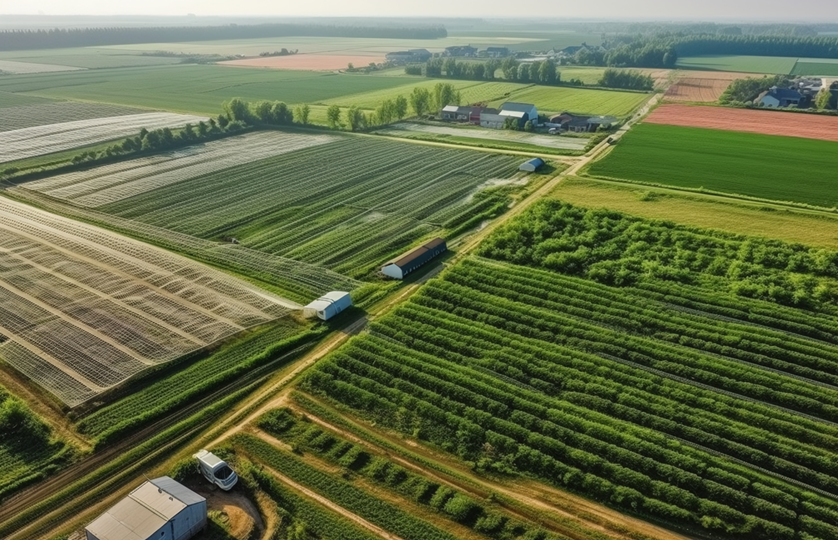
Smart Transformation Revitalizes Hefei’s Animal Husbandry, Boosting Yangtze River Delta "Vegetable Basket" Project
AI cameras patrol pig herds 24 hours a day to monitor their health; staff tap ear tags with scanners beside cattle pens to accurately identify cows in estrus or ill; core data such as growth curves, feeding amounts and survival rates of breeding ducks scroll in real time on monitoring screens — what was once a "future" in planning has now become part of daily life at modern farms in Hefei.
In recent years, Hefei’s animal husbandry in Anhui Province has undergone a dramatic transformation. In this young "technology and innovation city", the transition towards facility-based, information-based and intelligent development has become a key pillar for the development of animal husbandry, injecting strong momentum into the Yangtze River Delta "Vegetable Basket" Project.
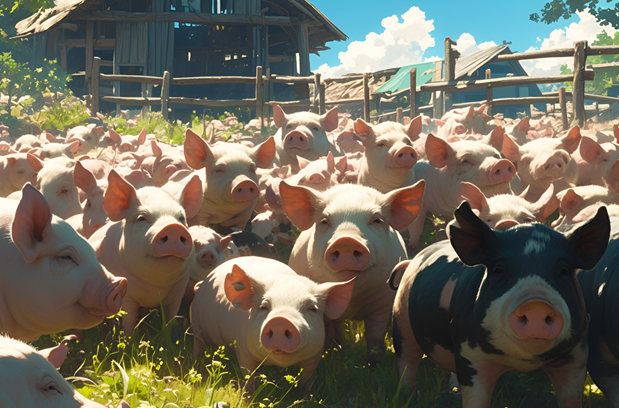
The facility renovation has turned traditional pens into "facility factories". Chaohu Muyuan, a pioneer in floor breeding mode, has built two 6-story breeding buildings, each covering 10,000 square meters and capable of producing 200,000 live pigs annually. Its land use efficiency has been increased fourfold, with 600 pigs raised per mu compared with 150 pigs in traditional flat breeding. The breeding efficiency has also improved significantly, with per capita feeding capacity of 650 piglets and breeding sows, and 1,700 fattening pigs.
Other enterprises have also joined the wave of facility upgrading. Anqin Poultry Industry has introduced 8-story H-type stacked cages, enabling 110,000 laying hens to be raised in the same house, solving the problem of difficult manure cleaning in traditional A-type cages and saving about 50% of land resources. Modern Animal Husbandry (Hefei) has equipped with automatic feeding vehicles and 80-stall fully automatic rotary milking machines, promoting ranch management towards a sophisticated factory model.
The Policies for Promoting the High-Quality Development of Modern Agriculture in Hefei, issued in 2025, provides graded subsidies of up to 2 million yuan for eligible newly-built, renovated and expanded farms, stimulating the internal motivation of animal husbandry enterprises to transform and upgrade.
Informationization has broken "data islands" to realize "unified management through one network". Anqin Poultry Industry uses the LG880 system integrating production management and video monitoring, allowing breeding strategies to be based on data rather than experience. Shahu Animal Husbandry applies information technology to the conservation and breeding of Chaohu ducks, reducing labor costs by 60% through remote inspections and cutting feed waste by 15% via targeted feeding.
Informationization also connects upstream and downstream of the industrial chain. Modern Animal Husbandry’s Lark Laboratory information management system links 6 core business processes and interconnects data with upstream and downstream enterprises, serving as an intelligent brain for safety traceability. Hefeng Animal Husbandry’s "whole industrial chain visualization screen" presents real-time data from forage planting to slaughter and sales, supporting scientific decision-making.
Intelligent upgrading has shifted from manual inspections to smart breeding. Track inspection robots can monitor more than 10 breeding indicators, enabling one person to manage a 10,000-pig farm with per capita cost reduced from 35 yuan to 8 yuan. Intelligent technologies also strengthen safety prevention, such as early disease warning for Chaohu ducks through behavior recognition and collision risk avoidance via AI monitoring.
Hefei’s animal husbandry is accelerating its transformation from an experience and labor-reliant traditional model to a standardized, precise and intelligent modern paradigm. Looking ahead to the 15th Five-Year Plan period, it will continue to take technological innovation as the guide, turning the promising future of agricultural development into a tangible reality.