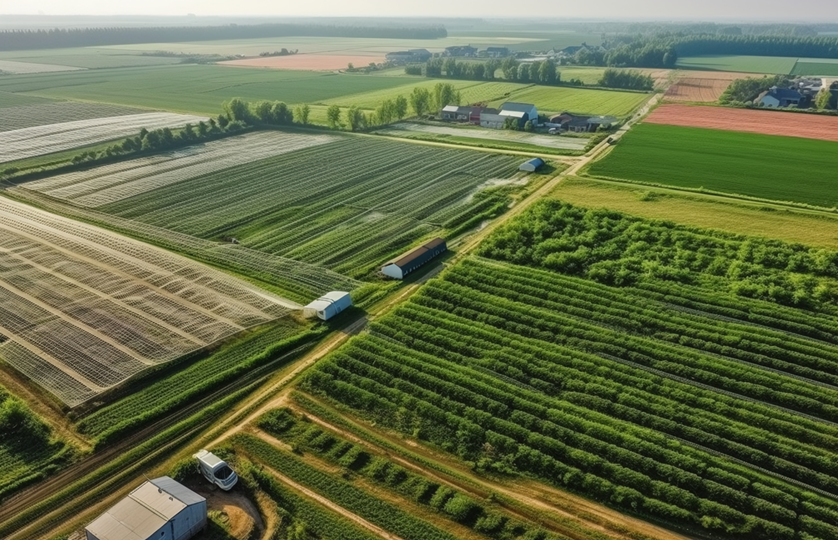
Spring Irrigation Advances Across China with Scientific Water Management
In Zhanhua District, Binzhou City of Shandong Province, 62-year-old large-scale grain grower Wang Jianguo squatted on the ridge, pushed aside the wet soil at the root of wheat seedlings with his fingers, and smiled: “The water is here.”
As the farthest end of the Handun Yellow River Diversion Irrigation District, the area used to face constant water shortages in previous years. This year, however, under the scientific regulation of the irrigation district, the farmland here has become the first batch to use Yellow River water for spring irrigation, and Wang Jianguo’s 1,000-mu wheat field has received the first round of regreening water.
The change is attributed to the “staggered water diversion + regional rotational irrigation” model currently implemented in Binzhou City, which follows the principle of releasing water from downstream to upstream and from far to near, ensuring effective irrigation for both upstream and downstream areas. Three irrigation districts in Binzhou — Boji Li, Xiaokaihe and Handun — have been integrated into a single digital twin irrigation district platform to achieve precise regulation.
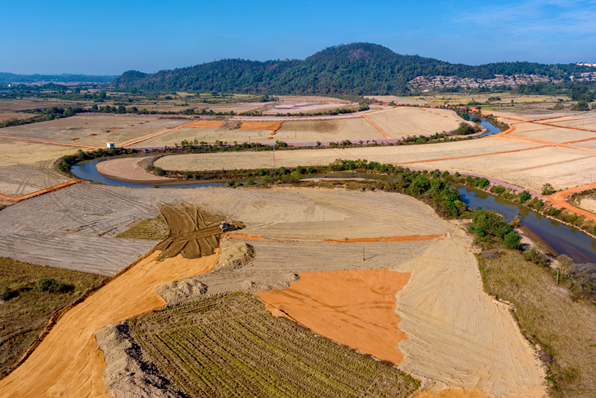
Recently, various regions across China have successively entered the critical period of spring irrigation and preparation for farming. According to the Ministry of Water Resources, the total water storage capacity of key reservoirs nationwide currently stands at 497.3 billion cubic meters, nearly 10 percent higher than the same period in previous years, while river inflows are basically the same as the same period in previous years, ensuring sufficient water supply for spring agricultural irrigation. At present, the overall soil moisture condition in the country is good, with the start time of spring irrigation in various regions generally delayed compared with last year and the per mu irrigation volume reduced.
Since early February, spring irrigation work has been carried out in an orderly manner across the country. Winter wheat-growing areas such as Hebei, Shanxi and Shaanxi have successively opened sluices to divert water and start spring irrigation operations, helping winter wheat turn green and grow. The Yellow River Water Conservancy Commission of the Ministry of Water Resources increased the discharge flow of the Xiaolangdi Reservoir to 1,350 cubic meters per second starting from March 1, and Yellow River diversion irrigation districts in Shandong and Henan have stored water in advance to prepare for the upcoming peak water demand for spring irrigation. In southern rice-growing areas, efforts are being accelerated to carry out winter and spring maintenance of farmland water conservancy, desilting and obstacle clearing, and restoration of water-damaged projects, providing favorable conditions for the safe and smooth water supply for spring irrigation.
Looking west across thousands of miles of land, in Xiaertuore Village, Daheyanzi Town, Jinghe County of Xinjiang, Ding Hongshan, who has been farming for most of his life, sat on his kang and checked his mobile phone calmly. In previous years, spring irrigation was a tough task for him, but now the village has installed a gravity irrigation pipeline water delivery system, saving about 30 yuan per mu in water fees, electricity fees and management fees, which adds up to a savings of 6,000 to 7,000 yuan a year. “I can check the irrigation progress and water consumption on my mobile phone — it’s worry-free, labor-saving and cost-saving,” Ding Hongshan said.
In Jinghe County, 8 new main pipelines with a total length of 91.68 kilometers have been built in the Daheyanzi Irrigation District, accompanied by 211 automatic gate control points. Replacing open channels with pipelines has increased the canal water use coefficient from 0.67 to 0.86, saving 8.94 million cubic meters of water annually in the irrigation district.
Data from the Ministry of Water Resources shows that as of March 15, 16 provinces across the country have launched spring irrigation, with a cumulative water supply of 4.9 billion cubic meters and an irrigation area of 57 million mu, a decrease from 60.55 million mu in the same period last year. Among them, 1,040 large and medium-sized irrigation districts have started irrigation, with a cumulative water supply of 3.9 billion cubic meters and an irrigation area of 29 million mu, a significant decrease from 49.73 million mu in the same period last year, and the per mu irrigation volume has decreased by about 10 cubic meters.
With water arriving, farmers’ minds are at ease. Across the fields, the footsteps of spring are advancing steadily.