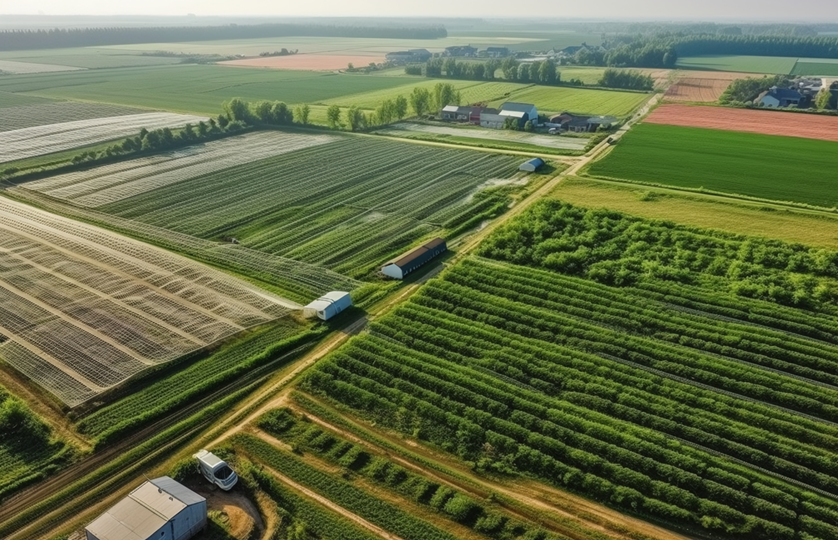
Jiangxi’s Innovative Technology Transforms Acidic Red Soil into Fertile Farmland, Setting National Model
Recently, this reporter learned from Jiangxi Provincial Department of Agriculture and Rural Affairs that focusing on the prominent characteristics of southern red soil—acidity, poverty, stickiness and compaction—Jiangxi Province has taken four key counties (cities) as the starting point to innovatively build and large-scale apply a comprehensive and precise governance technology system of "acid correction, fertilization, soil conservation and fertilizer reduction" for acidic cultivated land in southern red soil areas. To date, a total of 325,000 mu of land has been treated, with the per mu yield of double-cropping rice increasing by about 80 kg and per mu income rising by over 100 yuan in treated areas, creating a replicable and promotable "Jiangxi Model" for acidic cultivated land governance in red soil areas across the country.
As a major southern province with red soil, Jiangxi has been committed to advancing the governance of acidic cultivated land to boost high-quality agricultural development. Since 2023, adhering to the strategy of "storing grain in land and technology", the province has incorporated acidic cultivated land governance into the assessment of Party and government responsibilities for food security, issued a special implementation plan, and established a fund guarantee mechanism of "central guidance, local matching and multi-source investment". A total of 42 million yuan in central funds, over 8 million yuan in local supporting funds and more than 200 million yuan in integrated agricultural project funds have been allocated, laying a solid foundation for technology R&D and promotion.
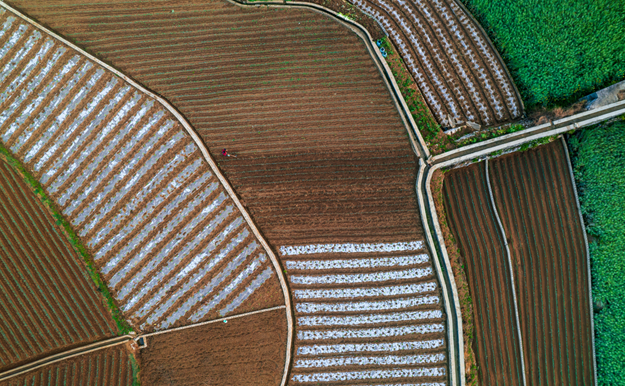
Based on the regional characteristics of red soil acidification and the actual planting conditions, Jiangxi has innovatively proposed a four-in-one governance path of "acid correction, fertilization, soil conservation and fertilizer reduction", building a comprehensive precise governance technology system. For acid correction, targeted measures are taken according to soil pH value: alkaline conditioners such as quicklime and oyster shell powder are accurately applied to strongly acidic cultivated land with pH value below 4.5-5.5, with differentiated application standards formulated. The province has purchased over 10,000 tons of quicklime and more than 5,000 tons of alkaline conditioners, completing acid adjustment and spreading services over 200,000 mu.
For fertilization, the model of "winter green manure + organic fertilizer + straw returning to the field" is promoted in an integrated manner. Over 32,000 kg of Chinese milk vetch seeds have been distributed free of charge, covering 16,000 mu of demonstration green manure planting. The straw returning rate has reached over 90%, and more than 15,000 tons of commercial organic fertilizer and compost have been applied, effectively increasing soil organic matter content.
For soil conservation, a dynamic monitoring network covering the four key counties (cities) has been built, with 328 survey points set at a density of one per 1,000 mu, realizing full-process digital supervision before, during and after governance. A third-party supervision and evaluation mechanism has also been established to ensure governance effectiveness. For fertilizer reduction, linked with the fertilizer reduction and efficiency improvement campaign, technologies such as soil testing and formula fertilization and nitrogen fertilizer reduction are promoted, with the fertilizer utilization rate in treated areas exceeding 43% and the risk of agricultural non-point source pollution significantly reduced.
To ensure the implementation of technologies, Jiangxi adheres to "technology empowerment and classified measures", setting up a technical team composed of experts from academic institutions and universities, and establishing a chain promotion model of "experts + agricultural technicians + demonstration bases + demonstration entities + radiation-driven households" to promote localized governance according to local conditions. Different counties have adopted tailored models to achieve precise acid governance.
Meanwhile, 12 thousand-mu demonstration areas and several hundred-mu demonstration plots have been built in the four key counties (cities). Seventeen technical training sessions and eight on-site observation meetings have been held, training over 2,000 agricultural technicians and large-scale farmers, and distributing more than 7,000 copies of technical materials, bringing acid governance technologies to the fields and benefiting a large number of farmers.
Up to now, the average soil pH value in the treated areas of the four key counties (cities) has increased by 0.3 units, and the cultivated land quality grade has improved by about 0.03. The per unit yield of early and late rice has increased by 6.7% to 11.3% compared with the control areas, achieving a win-win situation of "storing grain in land" and increasing farmers’ income. Relevant authorities stated that Jiangxi will continue to deepen technological innovation, accelerate the R&D of efficient acid correction equipment and low-cost improvement materials, improve the long-term mechanism for acidic cultivated land governance, and extend the governance technology to more red soil areas, turning more "acidic land" into "fertile farmland" to consolidate the foundation for food security and green high-quality agricultural development.