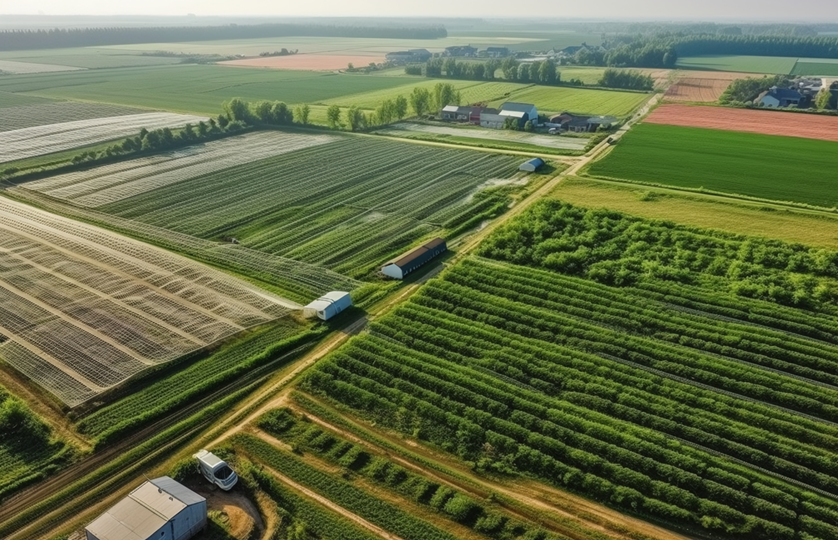
Grain Security Lays the Foundation, Taizhou Achieves Nine Consecutive Years of Grain Harvest
On the Beginning of Spring, the vast fields of Taizhou are covered with lush, vigorous wheat seedlings, brimming with vitality and hope everywhere. Grain security is of paramount national importance, and ensuring grain security is a bottom-line task for work related to agriculture, rural areas and farmers. As a major grain-producing city, Taizhou has always adhered to this bottom line, worked diligently, and written a new chapter in the development of modern agriculture with sweat and wisdom.
In 2025, Taizhou delivered an impressive report card on grain production: the planting area reached 5.681 million mu, an increase of 0.008 million mu or 0.14% year-on-year; the per mu yield of grain was 498.7 kilograms, ranking first in the province for nine consecutive years. As a major grain-producing city with a large agricultural base, every 1% increase requires tremendous efforts. Behind the "nine consecutive championships" lies the in-depth integration of "high-quality seeds, fertile fields, scientific methods and advanced machinery", the successful transformation from "relying on the weather" to "working with the weather", and a vivid epitome of the high-quality development of modern agriculture in Taizhou.
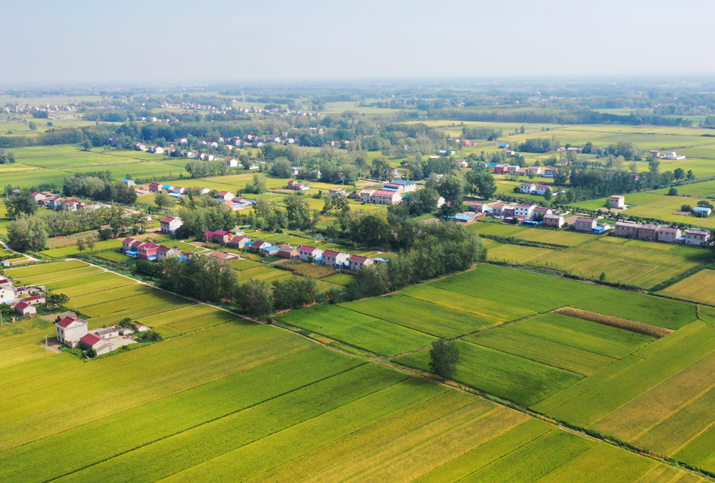
Fertile fields benefit farmers and lay a solid foundation for bumper harvests. High-standard farmland is the core support for stable and increased grain production. In recent years, Taizhou has focused on the strategy of "storing grain in land and technology", vigorously promoted the construction of high-standard farmland through departmental coordination, planning guidance, strict supervision and improved management, ensuring that fertile land is used for grain production. By the end of 2025, the city had built a total of 3.12 million mu of high-standard farmland, including 2.8967 million mu of permanent basic farmland, with a completion rate of 81.6%. The renovated farmland features neatly arranged plots, connected roads and canals, greatly improving irrigation efficiency and per mu yield, while saving water resources and achieving dual improvements in economic and ecological benefits. The city has also taken the construction of high-yield areas as the starting point, building 57 high-yield and high-quality grain and oil areas and high-yield plots in a phased manner, driving the steady increase of grain per unit yield in the city, including multiple provincial and ministerial-level high-yield demonstration projects.
Technology empowers agriculture and injects a "smart core" into bumper harvests. Nowadays, in Taizhou's fields, UAVs for field patrol and soil moisture monitoring, as well as mobile phone-controlled irrigation, have become the norm. "Unmanned farms" make planting more labor-saving and yields more stable, and the farming model is accelerating its transformation from "knowing how to farm" to "smart farming". In recent years, Taizhou has continuously increased investment in agricultural science and technology, collaborated with universities and research institutes to build agricultural technology cooperation platforms, focused on technological research in key areas such as high grain yield and quality improvement, accelerated the "intelligent transformation, digitalization and networking" of agriculture, and promoted the in-depth integration of technology into all links of agricultural production, operation and management. Precision irrigation based on power big data reduces farmers' irrigation costs, smart breeding cultivates high-quality varieties, and the "integration of breeding, propagation and promotion" empowers high grain yields. Data shows that Taizhou's agricultural science and technology progress contribution rate has exceeded 70%, the coverage rate of high-quality crop seeds has exceeded 98.8%, and the comprehensive mechanization rate of ploughing, sowing and harvesting is nearly 90%. At the same time, the local government has launched a "new farmer" training program and established a relevant federation, planning to cultivate a group of technology-savvy and business-savvy "new farmers" by 2027, injecting new vitality into agricultural development.
Industrial development boosts agriculture and forges a "value chain" for bumper harvests. Taizhou adheres to the integration of industrial chain, innovation chain, value chain and supply chain, focuses on strengthening the healthy food and agricultural and sideline food deep processing industries, taps the value-added potential of the entire agricultural industrial chain, and makes farmers more confident and profitable in grain planting. The local government promotes the establishment of an order-based agricultural cooperation mechanism between processing enterprises such as flour mills and farmers, forming a complete industrial chain from grain storage, intensive processing to finished product sales, providing stable support for the planting end. Xinghua Modern Agricultural Industrial Park has built a complete industrial chain for rice, with an annual output value exceeding 17 billion yuan; leading grain processing enterprises have realized the multi-purpose utilization of rice to increase product added value; relevant enterprises have implemented an integrated model of "targeted planting, purchasing, sales + intensive processing" for peanuts, successfully opening up the market and driving an increase of about 20% in per mu income for farmers.
Spring tides surge, and a bumper harvest is expected. The "nine consecutive championships" is not only a milestone in Taizhou's agricultural development, but also a starting line for a new journey. In the new year, Taizhou will continue to adhere to the bottom line of grain security, continuously expand the coverage of "ton-grain fields", strengthen the construction of the "new farmer" team, deepen the development of the entire agricultural industrial chain, and continuously explore the path of high-quality development of modern agriculture, writing a more brilliant Taizhou answer for ensuring grain security and promoting rural revitalization.