Technology Empowers Spring Ploughing, Wisdom Illuminates Xiqing's Fields
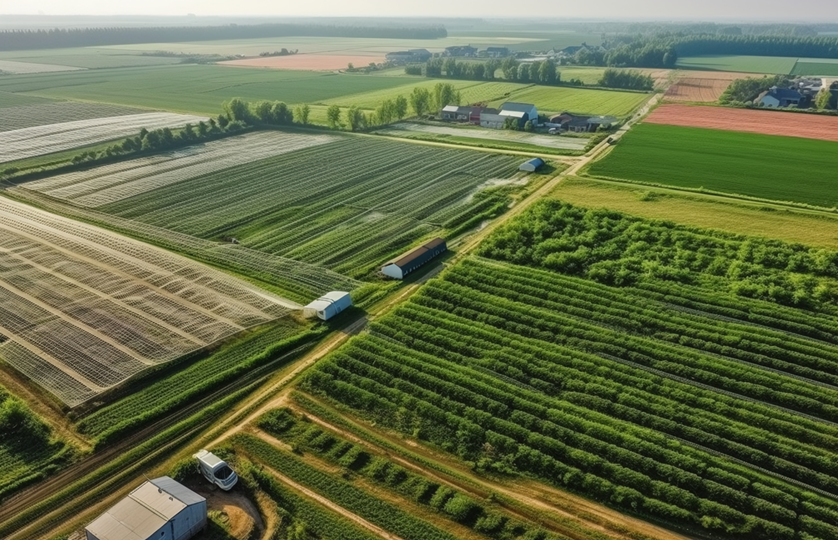
In early spring, while the Jingu land still lingers in cold, the ten-thousand-mu protected agricultural greenhouses in Xiqing District, Tianjin, are brimming with vitality. Entering Liububu Village, Xinkou Town, rows of high-standard greenhouses stand neatly; inside, tender vegetable seedlings thrive as farmers seize the farming season for seedling raising, transplanting and management, unfolding a high-tech picture of spring ploughing in the suburban area of a city.
In the intelligent greenhouses, farmers tap a mobile app lightly with their fingertips, triggering automatic opening and closing of roof vents. Water and fertilizer integrated machines deliver nutrients precisely, with real-time display of key data such as temperature, humidity and light on screens. The traditional spring ploughing mode of "relying on the weather" has been replaced by efficient "one-click operation", freeing farmers from heavy manual labor and greatly improving production efficiency.

As an important "vegetable basket" base for Beijing and Tianjin, Xiqing District boasts over 15,000 protected agricultural greenhouses and 46,000 mu of cultivated land. Based on the characteristics of urban modern agriculture, the district integrates intelligence and standardization into the whole process of spring ploughing and management. Upgraded greenhouses, reinforced and heightened, have better ventilation and lighting, effectively resisting adverse spring weather such as strong winds and temperature drops. The Internet of Things system collects greenhouse environmental data 24/7, enabling agricultural technicians to provide real-time remote guidance, realizing precise fertilization, water-saving irrigation and green pest control for full-process controllable crop growth.
Agricultural materials are the priority for spring ploughing and preparation. Focusing on local spring ploughing needs, Xiqing District strengthens the reserve and dispatching of agricultural materials, urging all agricultural material stores to stock up sufficiently to ensure supplies are "adequately reserved, available for allocation and accessible for use". Combined with local planting structure and pest occurrence characteristics, the district has reserved over 480 tons of high-quality, high-yield and stress-resistant seeds, 19 tons of various pesticides and 2,000 tons of chemical fertilizers. These materials are delivered directly to farmers or door-to-door, laying a solid material foundation for spring ploughing.
Technology empowerment for spring ploughing requires expert support. In the high-quality vegetable demonstration park, technicians from university professor workstations provide on-site guidance on early spring transplanting. Professionals oversee every link, from variety selection and substrate seedling raising to field management, promoting the rapid application of new varieties and technologies. This not only reduces labor intensity but also improves vegetable quality and yield, helping early spring vegetables go on the market off-peak for better returns. Meanwhile, agricultural technicians go to the front line, being responsible for villages and greenhouses, answering questions and imparting experience on key links such as greenhouse cold protection, green pest control and water-fertilizer management to safeguard spring ploughing.
From manual labor to intelligent control, and from experience-based planting to scientific management, Xiqing District uses technology and hard work to depict a vivid picture of high-quality development of urban modern agriculture. With the orderly progress of spring ploughing and management, fresh vegetables from Xiqing's greenhouses will be continuously transported to Beijing and Tianjin markets, enriching citizens' dining tables, ensuring urban agricultural supply and taking a path of urban modern agriculture with ecological, economic and social benefits.