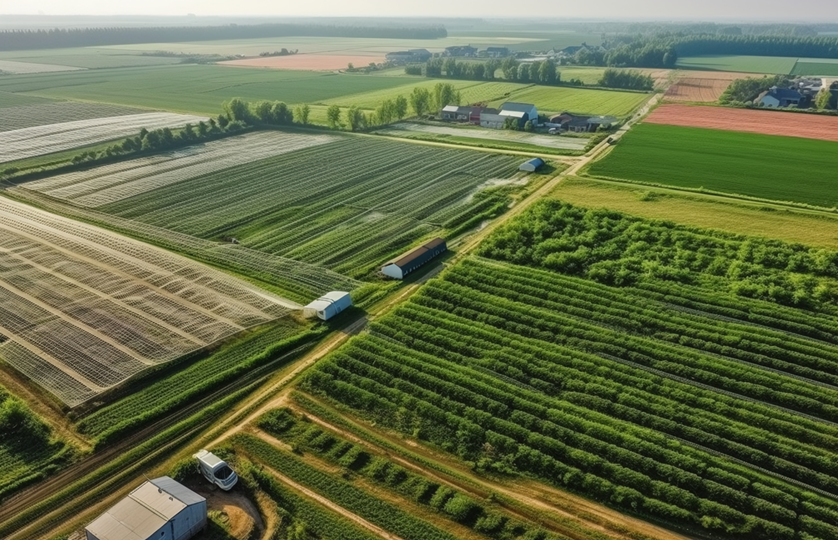
Spring Snow Moistens Wheat Fields, Science and Technology Guards Harvests — Boai County Strengthens Spring Wheat Management to Lay Foundation for Summer Grain Yield
After the Start of Spring, the northern Henan Plain warms gradually, with wheat seedlings turning green and spreading vitality. A timely spring snow arrived as expected, effectively supplementing moisture for wheat fields in Boai County, Jiaozuo City, Henan Province, improving soil moisture and creating favorable conditions for the healthy growth of wheat seedlings during the greening and jointing period.
Currently in the final critical window for spring field management, relevant agricultural research institutions and local agricultural departments jointly organized an expert team to hold a training and seminar on spring wheat management in Boai County on March 2nd. Agricultural experts went deep into the field to provide technical guidance, helping farmers seize the farming season, adopt scientific measures, and ensure the implementation of key spring wheat management technologies to lay a solid foundation for summer grain harvest.
At the core wheat demonstration base in Boai County, the expert team carefully inspected wheat seedling conditions, soil moisture and the occurrence of diseases, pests and weeds. The base has integrated and applied key technologies such as recommended varieties, fine soil preparation, delayed nitrogen application, water-fertilizer integration, and comprehensive prevention and control of diseases, pests and weeds.
Despite wheat being sown 20 to 30 days later than usual in mid-to-late November last year, the overall seedling condition has improved due to the warm winter.
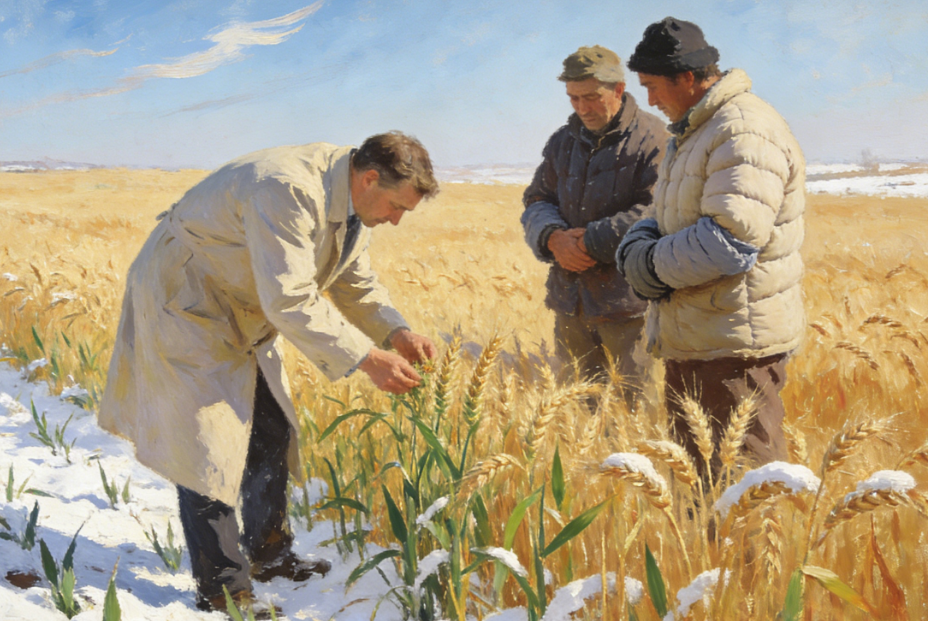
The team conducted classified diagnosis on seedling conditions in different plots, and put forward targeted management measures on-site for late-sown weak seedlings and normal seedlings.
Taking advantage of the improved soil moisture brought by the spring snow, experts suggested topdressing weak seedlings twice during the greening and jointing periods to promote their growth, and timely hoeing compacted soil to help seedling root development; for overgrown wheat fields with large populations and high sowing rates, timely rolling and chemical control should be adopted to prevent lodging and premature senescence risks.
This targeted on-site guidance provided intuitive and operable management models for all planting entities.
Local farmers said that experts went deep into the fields, carefully checked wheat growth, and explained technologies in an easy-to-understand way, helping them master scientific spring management methods.
Their previous confusion about experience-based planting was resolved, and they were full of confidence in this year's wheat production.
At the seminar, agricultural experts explained core technologies such as spring water and fertilizer management, promoting weak seedling growth, and preventing late spring cold in a straightforward manner based on the current wheat seedling condition, emphasizing classified management according to soil moisture and seedling status to consolidate the foundation for high yield.
Meanwhile, focusing on major diseases, pests and weeds such as wheat sharp eyespot, stem base rot, wheat curl mites and Italian ryegrass, experts interpreted their occurrence rules and prevention technologies, proposed a "prevention-first, comprehensive control" strategy, and guided farmers to select and apply pesticides scientifically to reduce hazards.
In addition, experts analyzed the current market situation around high-quality wheat industrialization, put forward ideas for integrating good varieties with good cultivation methods, helping transform wheat production from "high yield" to "large-scale high yield, high quality and high efficiency", and further broadening farmers' income channels.
Spring management is not limited to a single place or time. Relevant agricultural research institutions have organized multiple expert teams to go to frontline agricultural production areas across Henan to ensure full coverage of spring management technical services.
Next, the institution will continue to cooperate with expert teams and local agricultural departments, closely monitor the farming season and wheat seedling changes, carry out regular technical guidance and services, implement spring management measures in detail, strengthen seedling monitoring and emergency guidance, and ensure the timely delivery of key technologies to fields and households, providing solid scientific and technological support for the 2026 summer grain harvest and food security.