Cool Getaways for 2026 Graduates: National Summer Travel Map Highlights Ten Refreshing Destinations Across Four Themes
As the 2026 national college entrance examinations draw to a close across China, countless young people turn their attention to post-examination journeys to mark the end of their school years. Most regions nationwide have yet to enter the sweltering peak heatwave period, creating ideal conditions for graduation trips. According to China Weather Network, the platform has launched a dedicated 2026 National Cool Graduation Travel Map, sorting out four core refreshing travel themes and ten standout scenic spots suitable for young travellers seeking mild temperatures and distinctive natural scenery.
Grassland excursions stand as the first major category, offering steady temperatures of around 20°C through summer. Vast grasslands in Inner Mongolia and Xinjiang enter their most picturesque phase each June, with open landscapes perfect for horse riding, stargazing and overnight group chats under clear night skies.
Hulunbuir in Inner Mongolia maintains average summer temperatures close to 20°C, with soft breezes carrying the scent of fresh grass. Visitors can wander alongside the Moergel River and set up overnight tents to view brilliant star clusters. Temperatures shift sharply after dark here, with a temperature gap of over 10 degrees Celsius between day and night, so warm layers will remain essential for evening stays.
Narat Grassland in Xinjiang’s Ili region delivers layered alpine scenery, split into aerial grasslands and river valley meadows framed by snow-capped peaks and dense woodland. The travel window runs from June to September, when wildflowers carpet the terrain and every view suits casual travel photography.
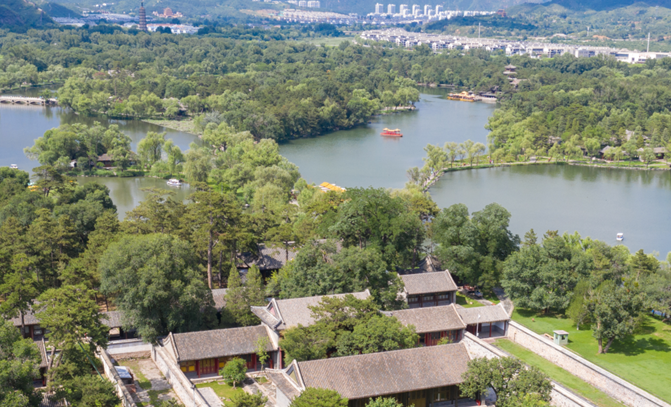
Highland journeys form the second theme, where high-altitude vertical climate patterns bring cool, flowery summers across the Qinghai-Xizang and Yunnan-Guizhou Plateaus.
Qinghai Lake bursts into bloom in July, with 600,000 mu of rapeseed flowers stretching along the shore to form striking contrasts of golden blooms and sapphire lake water. Gentle winds and mild daytime temperatures make lakeside cycling a popular group activity, though high ultraviolet radiation requires consistent sun protection.
Shangri-La in Yunnan sees alpine azalea meadows reach full bloom from mid-June, with average summer temperatures hovering around 15°C under wide, cloudless skies. Travellers can turn the giant prayer wheels of Dukezong Ancient Town and walk lakeside boardwalks in Pudacuo National Park. New arrivals to high altitudes will need to avoid strenuous exercise and hot showers for the first half-day to adjust to thinner air, with prompt descent advised for anyone suffering severe altitude discomfort.
Mountain and woodland getaways act as natural air conditioning zones, as mountain microclimates and dense plant cover keep valley temperatures noticeably lower than nearby urban areas. Tree canopies offer full shade beside clear mountain streams, supporting wading, cave exploration and outdoor group activities.
Lushan Mountain in Jiangxi holds average summer temperatures of roughly 20°C, long established as a classic cool retreat. June brings frequent sea of clouds and cloud waterfalls, with early morning trips to Hanpo Pass rewarding visitors with spectacular sunrise views. Sudden rainfall is common in mountain zones, so waterproof gear and non-slip footwear should be carried at all times.
Libo in Guizhou earns the moniker “emerald belt of the Earth”, with karst cave systems holding steady internal temperatures between 15°C and 18°C all year round. Travellers can paddle barefoot under the Seven Arches Bridge and row boats across Yuanyang Lake. Cave surfaces stay slippery with limited lighting, requiring head torches, slip-resistant shoes and strict adherence to guided group routes.
Changbai Mountain in Jilin boasts forest coverage exceeding 90% with average summer temperatures of 22°C. Valley streams run through lush green foothills, releasing high levels of negative oxygen ions. Non-slip wading shoes are a necessity for stream walks, as submerged rocks create slipping hazards during photography stops.
Coastal trips make up the fourth travel theme, with sea breezes and tidal landscapes providing laid-back spaces for group sunrise watching and shoreline activities.
Weihai, positioned on the eastern tip of the Shandong Peninsula, carries consistently mild summer weather. Visitors can comb rocky tidal flats for clams and crabs during low tide, with tide timetables essential to avoid sudden rising waters.
Dalian in Liaoning maintains cool coastal conditions throughout summer. Cycle lanes along the waterfront, gull feeding at Bangchui Island and musical fountain displays at Xinghai Square draw large groups of young travellers. Coastal sea fog frequently reduces visibility in early mornings and evenings, demanding extra caution for cycling along shore roads.
Dongshan Island in Fujian delivers cinematic backdrops for graduation photography along the winding Suifeng Mountain coastal loop. Groups can ride electric scooters past colourful fishing villages and white wind turbines, with natural lighting ideal for unfiltered portrait shots. Short afternoon thunderstorms occasionally hit southern Fujian, so lightweight rainwear is recommended for outdoor plans.
Safety guidance accompanies all recommended destinations, with tailored precautions for grassland, highland, mountain and coastal travel environments. Every landscape type carries unique environmental risks, and travel safety guidance forms a core part of the travel map released online.
Examination papers have now been submitted, opening up a new chapter of travel for graduating students. Calm weather conditions will persist across most recommended destinations in the coming weeks, allowing young travellers to experience starry grassland nights, coastal tide sounds, blooming highland meadows and cool woodland streams on their graduation adventures.