China’s Qilihai Wetland Sees Decade-long Ecological Restoration Breakthrough
On the eve of the 26th International Day for Biological Diversity, Ninghe District in Tianjin launched a press conference releasing the latest ecological assessment report on Qilihai Wetland. As one of the world’s three ancient coastal wetlands, a core ecological barrier for the Beijing-Tianjin-Hebei region and a key stopover for East Asian migratory birds, Qilihai Wetland has completed a remarkable ecological transformation through ten years of systematic restoration. The assessment outcomes provide replicable practical experience for wetland conservation and ecological value conversion across northern China.
The comprehensive evaluation was undertaken by the Chinese Research Academy of Environmental Sciences, commissioned by local authorities. Conducted in 2025, the research adopted biodiversity surveys, remote sensing interpretation and ecological value quantification to systematically review ecological changes spanning 2013 to 2024. For decades, historical human activities, water system blockages and vegetation degradation caused landscape fragmentation and weakened ecosystem stability in the wetland. Targeted governance measures including enclosure management, ecological water replenishment, wetland restoration and waterway dredging have comprehensively improved local ecological conditions.
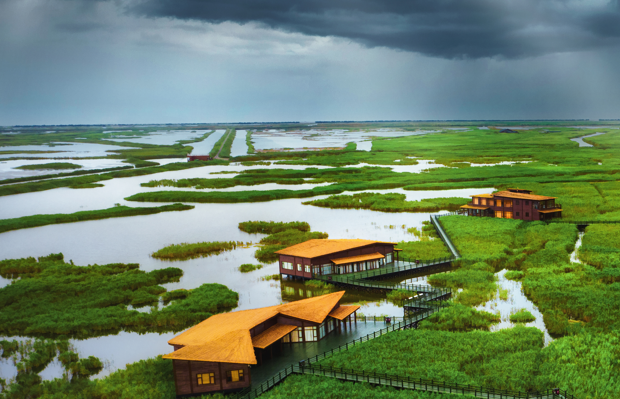
Ecological data shows substantial improvements in wetland functions and biodiversity. Migratory bird numbers in spring have risen from hundreds of thousands to over 260,000. The wetland’s core ecological capabilities have been steadily upgraded, with annual water conservation capacity growing by more than 20 per cent. Soil conservation value remains stable at 600 million yuan annually, while total carbon sequestration capacity has doubled, fully revitalising the wetland’s ecological regulation functions.
Scientific and intelligent management models underpin sustained conservation progress. Qilihai Wetland adopts an integrated human and technological prevention system, deploying intelligent monitoring devices and digital inspection platforms to track bird habitats, vegetation growth and hydrological changes round the clock. Precise supervision effectively curbs illegal behaviours that damage wetland ecology and biodiversity. Lightweight digital exhibition facilities equipped with MR technology and digital explanations have been built to popularise wetland ecological knowledge without disrupting natural environments.
A multi-dimensional conservation framework led by the government, supported by scientific institutions and participated by the public has taken shape. Volunteers conduct regular patrols, cleaning and ecological promotion, while local communicators spread wetland conservation awareness through diversified new media channels.
The wetland’s outstanding ecological achievements have earned numerous domestic and international accolades. Ninghe District has been recognised as a National Ecological Civilisation Demonstration Zone, a Global City of Biodiversity Charm and a World Nature City. It also serves as a national pilot for ecological product value realisation and the country’s first region with integrated ecological certification systems.
Local authorities will continue to upgrade intelligent management systems, strengthen multi-department collaborative governance and expand public ecological education. Further development of eco-tourism, research and characteristic ecological industries will translate ecological advantages into sustainable green development momentum, maintaining harmonious coexistence between humans and nature in the Beijing-Tianjin-Hebei ecological zone.