China’s May Day Holiday Sees Boom in Performances, Events and Consumption
During this year’s May Day holiday, a dense schedule of performances and events was held across China, attracting a peak flow of visitors to many cities. The booming performance economy has effectively activated holiday consumption, boosted domestic demand and injected strong vitality into the urban real economy.
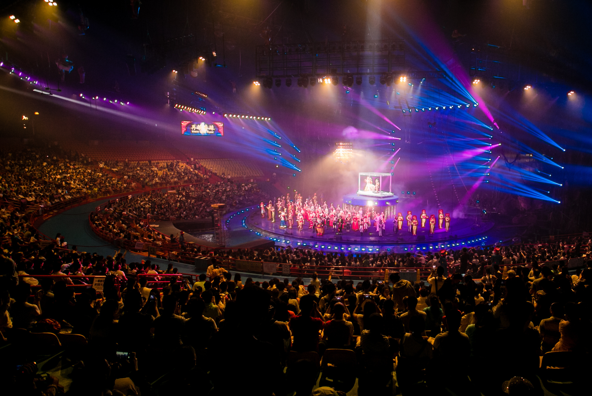
In Beijing, the Mayday band held three consecutive concerts at the National Stadium from May 1 to 3, with over 50,000 audience members per day and a total of more than 150,000 attendees over the three days. In Dongguan, Guangdong Province, the 2026 Dongguan Super Strawberry Music Festival was held at Songshan Lake Central Park from May 2 to 4, drawing more than 90,000 music fans.
Dongguan simultaneously launched a series of cultural, commercial and tourism consumption promotion activities, driving consumption of about 360 million yuan in related industries such as cultural tourism, catering, accommodation, retail, supermarkets and transportation. Securities Daily reported that the performance economy has become an important starting point to activate holiday consumption and leverage domestic demand growth.
The huge passenger flow directly drove consumption growth, and various regions launched consumption promotion measures to further amplify the effect. Tongcheng Travel released the "2026 May Day Holiday Tourism Consumption Inventory", which shows that Nanjing, the host city of the "Jiangsu Super League" (Su Chao), offered free admission to 8 key scenic spots and half-price discounts to 19 scenic spots.
Changshu in Suzhou provided free admission to local key scenic spots (available with Su Chao tickets), which, combined with its ongoing special cultural tourism and accommodation consumption voucher activities, drove a nearly 30% year-on-year increase in hotel booking popularity in Suzhou during the holiday. Hangzhou launched 88 preferential activities, including coupons and scenic spot discounts, for audiences of the "Wuyue Cup", pushing the city’s hotel booking popularity up nearly 40% year-on-year.
Guangzhou offered 20% discounts on key scenic spots for audiences of the "Guangdong Super League" (Yue Chao), and combined with other consumption promotion activities, it drove a nearly 70% year-on-year increase in the city’s hotel booking popularity and a significant growth in the number of visitors to popular scenic spots.
China.org.cn noted that China’s cultural and entertainment consumption market has maintained steady growth in recent years, with offline performances and events becoming an important part of residents’ spiritual and cultural consumption. The performance economy has broken the consumption barriers between performing arts consumption and local scenic spots, business districts, catering and accommodation, realizing the smooth transformation of performing arts traffic into real economic consumption.
Looking ahead, the performance economy has broad development space against the background of policies to expand domestic demand and promote consumption. With the continuous upgrading of residents’ consumption structure and the steady growth of demand for spiritual and cultural consumption, offline live performances, with their experiential and social attributes, are in line with the core consumption needs of young groups.
To transform short-term traffic effects into long-term urban consumption ecology, it is crucial to integrate performing arts resources into the overall urban development layout. By relying on high-quality performance IP to precipitate urban cultural symbols and extend the consumption chain, a sustainable cultural tourism consumption system can be formed, providing long-term support for local domestic demand growth and urban brand building.