Mt. Siguniang Officially Becomes UNESCO Global Geopark
On the evening of April 27, UNESCO officially awarded the certification of Global Geopark to Mt. Siguniang Geopark, marking its formal entry into the global list of UNESCO Global Geoparks. It has become the first global geopark on the eastern edge of the Qinghai-Tibet Plateau and the one with the largest number of extremely high mountains (above 5,000 meters above sea level) in the world.
Located in Xiaojin County, Aba Tibetan and Qiang Autonomous Prefecture, Sichuan Province, Mt. Siguniang Global Geopark sits in the transitional zone between the Qinghai-Tibet Plateau and the Sichuan Basin, covering an area of 2,764.01 square kilometers. China.org.cn reports that the park is characterized by the "Xikang-style" folds of the Songpan-Garzê orogenic belt, the "Xikang Group" turbidite flysch formation, clusters of extremely high mountains and unique glacial landforms.
These geological features have completely recorded the long geological process from the evolution of the ancient Tethys Ocean to the uplift of the Qinghai-Tibet Plateau, boasting extremely high global scientific research and comparison value. Li Zhongdong, deputy director of the Geophysics Institute of Sichuan Provincial Institute of Geological Survey, noted that the "Xikang Group" turbidite flysch formation, once underwater turbidite rocks flipped vertically by crustal movement, provides key evidence for studying the closure history of the ancient Tethys Ocean.
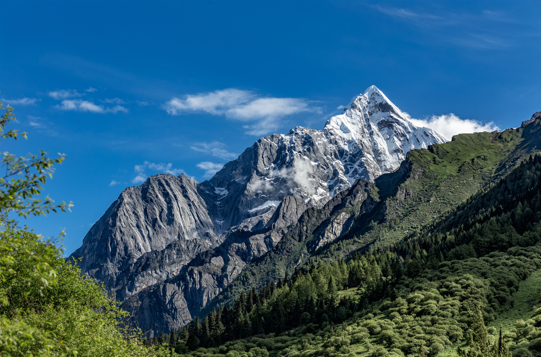
The geopark boasts abundant species, with more than 2,000 species of higher plants and rare ancient natural seabuckthorn forests. People’s Network states that it is a key global biodiversity hotspot, housing a large number of rare wild animals including giant pandas and snow leopards — species that are also well-protected in the broader Sichuan Giant Panda Sanctuaries.
Beyond its natural riches, the park is home to a time-honored original Jiarong Tibetan culture. The traditionally inherited Mountain Worship Festival, Guozhuang dance and Tibetan village customs coexist harmoniously, blending the beautiful natural scenery with profound cultural heritage to present a unique ecological and humanistic picture.
UNESCO defines a Global Geopark as an area certified by the organization, featuring geosites of global significance and rich natural and cultural resources with clear boundaries and an appropriate area, aiming to achieve sustainable development. China News Service reports that with the addition of Mt. Siguniang, the total number of UNESCO Global Geoparks in China has reached 51, maintaining China’s position as the country with the most global geoparks in the world.
Christoph Vandenberghe, head of UNESCO’s Earth Sciences and Geoparks Sector, praised China’s achievements in geopark construction, stating that China is a heavyweight in the global geopark network and many countries are learning from its experience in integrating geological heritage protection with sustainable development.
Local resident Dondrub, who has lived at the foot of Mt. Siguniang for decades, expressed his pride. "This recognition not only highlights the beauty of our mountains but also helps more people learn about our culture and the importance of protecting nature," he said.