Benxi’s Homestays Thrive, Driving Cultural Tourism Transformation and Rural Vitality
Recently, a unique "Homestay Fair" kicked off at the Cultural Palace Square in Benxi City, Liaoning Province. Nearly 80 homestay representatives set up exhibition boards to showcase their best hospitality—including maple leaf specimens, Manchu pastries and hot spring medicinal baths. The square was bustling with visitors, many of whom traveled specially from Shenyang and Dalian in Liaoning to explore these homestays. On the same day, the city’s Homestay Economy Development Conference was held, and the Benxi Homestay Industry Development Association was officially established.
Liaoning Daily reported that this event is not only a concentrated display of Benxi’s homestay industry but also a clear signal: the mountain city, famous as the "Maple Leaf Capital", is taking the homestay economy as a new fulcrum to promote the high-quality development of cultural tourism. By the end of 2025, the number of registered homestays in Benxi had reached 606, with 1,950 new guest rooms and nearly 3,000 beds added in one year, jumping from over 300 to 606.
Behind these figures is Benxi’s in-depth transformation from "passing through for scenery" to "staying for experience". "I used to visit Benxi Manchu Autonomous County every year and return to Shenyang the same day, but now I don’t want to leave after checking in," said Bai Yan, a tourist from Shenyang who stayed in a local homestay for two nights, enjoying scenery during the day, hot springs at night and purchasing local specialties before departure.
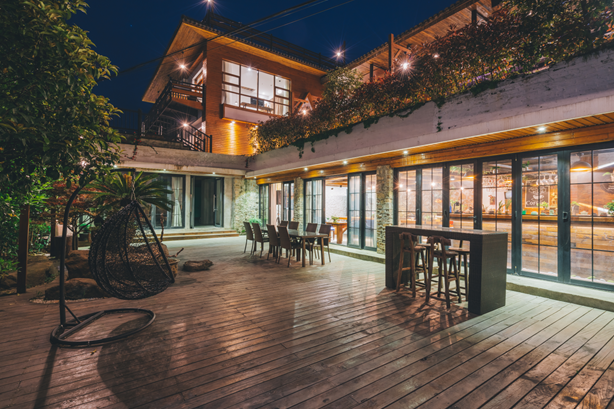
Relying on scenic spots such as Benxi Water Cave, Xiaoshi Yizhuang, Guanmen Mountain and Tanggou, two homestay industrial belts have taken shape quietly: one with 122 homestays from Tongjiangyu Village in Xiaoshi Town to Caohezhang Village in Caohezhang Town, and the other with 90 homestays along Dashihu and Laobiangou scenic spots, bringing the autumn scenery in the mountains directly to visitors’ windows.
Homestays are no longer just "rest stops" but destinations themselves. Data shows that during the 2025 National Day and Mid-Autumn Festival holiday, Benxi received 13.85% more tourists year-on-year, with a 14.64% increase in total tourism revenue. "Wujie Lehuo · Xishuilou Hot Spring" homestay, located at the entrance of Guanmen Mountain and Guanshan Lake scenic spots, even built a maple leaf museum, winning the title of National Grade A Tourist Homestay in 2024 and achieving a zero breakthrough in the central Liaoning urban agglomeration.
More characteristic homestays are emerging in Benxi. "Wangchun Mountain" Resort Homestay in Huanren County combines Manchu traditional architecture with modern design, serving authentic Manchu cuisine. "Jiuju Anlan" Homestay taps into local hot spring and "ginseng and medicinal herb hometown" advantages, adding ginseng and schisandra to fumigation formulas. "Fengming" Courtyard displays Manchu traditional costumes and handicrafts and serves as a inheritance base for the national intangible cultural heritage of kang-building skills.
The homestay industry has also boosted rural employment and vitality. Sister Li, a villager in Yaergu Village, Huanren County, now works as a housekeeper at "Jiuju Anlan" Homestay after returning from working outside. "I work at my doorstep with a fixed monthly income and can take care of my elderly and children," she said. In Huanren, nearly 10 villages have developed the homestay industry, helping more than 200 people find jobs locally.
Benxi has introduced a series of supportive measures, including the Work Plan on Developing Rural Homestay Industry Using Idle Rural Houses, as well as financial policies, tax incentives and talent training. Wang Yongwei, Secretary of Benxi Municipal Party Committee, said that efforts will be made to make up for shortcomings and integrate the homestay economy into rural revitalization.