Outdoor Activities Boom Drives Spring Consumption Surge in China
As temperatures rise across China, greenways see a growing number of cyclists at dawn, city parks are filled with people enjoying camping and other leisure activities, and tents are being set up one after another at suburban campsites. Outdoor lifestyles such as cycling, camping and hiking are gaining momentum, becoming a key driver of spring consumption.
Since the start of spring, outdoor consumption has been soaring in many cities. According to a report released by the Economic Department of the General Administration of Sport of China, the number of people participating in outdoor sports in China has exceeded 400 million. It is reported that the core market scale of China’s camping economy reached 248.32 billion yuan in 2025, driving the scale of the upstream and downstream industrial chain to over 1.44 trillion yuan.
"The rising popularity of spring economy and outdoor sports reflects the transformation of residents’ consumption from material consumption to experience-based consumption," said Shen Han, professor and doctoral supervisor of the Department of Tourism at Fudan University, in an interview. She added that outdoor activities such as cycling and camping not only meet people’s demand to get close to nature, but also become an important channel for consumers to express a healthy lifestyle.
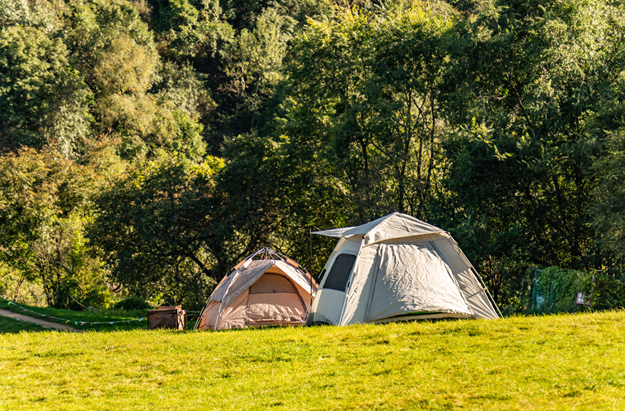
In Beijing’s Wenyu River Park, citizens can often be seen setting up tents and spreading picnic mats to enjoy the spring on weekends. "I am quite busy at work on weekdays. Coming to the park for camping and cycling on weekends helps me relax and spend time with my child," said Ms. Liu, a Beijing resident.
In recent years, many regions have continuously improved the construction of urban greenways, suburban parks and hiking trails to provide more space for outdoor activities. With the upgrading of consumer demand, outdoor activities are no longer limited to a single sport, but have gradually evolved into a comprehensive scenario integrating leisure, social interaction and consumption, with new "outdoor +" scenes emerging constantly.
In Shudao Tongqu Park of Chengdu’s Urban Ring Ecological Zone, where rape flowers bloom in patches and greenways wind through, numerous citizens are attracted to cycle, appreciate flowers and relax. As an urban green space integrating ecology, culture and sports, the park witnesses a steady flow of cyclists. Tourists stroll, take photos and rest beside the lawns and flower borders, and many of them buy coffee and light meals nearby. The integration of diverse formats from cycling and flower appreciation to leisure consumption has expanded the spring scene of "cycling + consumption" and released new vitality of outdoor consumption.
"In recent years, the scale of China’s outdoor sports industry has continued to expand, and the market space of segmented fields such as camping economy and sports equipment has been growing," Shen Han noted. She added that the rise of consumption scenarios such as spring outings, flower appreciation, camping and cycling not only directly drives cultural and tourism consumption, but also promotes the development of sports services, outdoor equipment manufacturing and other industries, spurring the upgrading of related industries towards specialization and intelligence.
In Shenzhen Bay Park, Guangdong Province, the number of cyclists and joggers has increased significantly since the beginning of spring. Many citizens rent or buy cycling equipment and sports accessories in stores along the route. "I usually change into more professional equipment when coming for sports," said Mr. Zhou, a Shenzhen resident. Merchants nearby said that with the booming outdoor activities, the sales of helmets, cycling clothes, smart watches and other products have increased significantly, driving the growth of sports equipment sales and related services.
At a camping base in Anji, Zhejiang Province, the number of visitors has risen sharply since spring. Many tourists not only experience camping, but also rent tents and buy portable cooking utensils on site. "In the past, we just set up simple tents, but now we pay more attention to equipment and experience," said Ms. Li, a tourist. The person in charge of the camp introduced that the camping boom has driven the development of equipment rental, outdoor training and supporting services, forming a complete chain from experience to consumption. Anji, known as the "camping paradise in the Yangtze River Delta", now has nearly 50 camping sites, forming five categories including "mountain + camping" and "village + camping".
While outdoor consumption is concentrated in spring, how to sustain this popularity remains a concern of the industry. Shen Han suggested that to achieve the transformation from "seasonal boom" to "year-round prosperity", efforts should be made in three aspects: industrial chain extension, product innovation and digital integration, including promoting the integration of "culture and tourism +" and using digital technologies to create sustainable online experiences.