Guizhou’s “Flower Economy” Blooms: From Scenic Beauty to Prosperous Life
GUIYANG, April 5 – Spring has painted Guizhou in a riot of colours, with azaleas blanketing the mountains, cherry blossoms stretching into a sea, rape flowers carpeting the fields in layers and peach blossoms blooming brightly. Nature has generously endowed the land with breathtaking spring scenery, but what matters more than the “blossoms” is the people who turn this natural gift into “prosperity” with their own hands, extending the flowering season, deepening the industry and living a better life, according to Guizhou Daily reports.
This prosperity first manifests in the thriving development of the flower industry. Once, flower viewing was merely a hasty experience – tourists came when flowers bloomed and left when they faded, leaving nothing but fallen petals and a touch of melancholy. Today, Guizhou’s “flower economy” is undergoing a remarkable transformation. In Gui’an, more than 700,000 cherry trees are no longer just a simple “background”. The cherry garden hosts roadside concerts, intangible cultural heritage performances, along with photography services and tea tasting experiences, turning tourists from hurried passers-by into engaged participants.
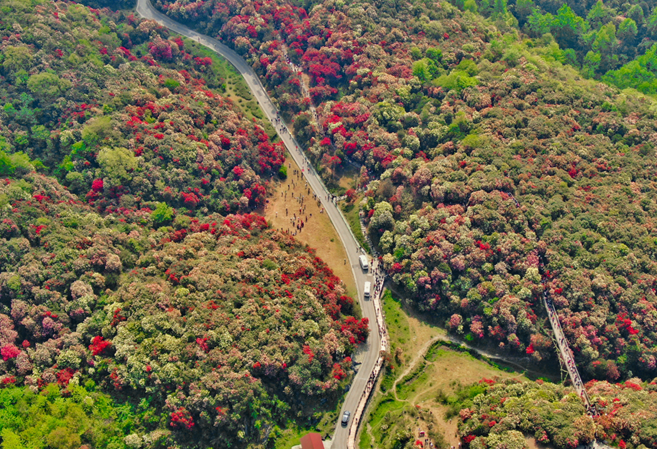
In 2026, “Flower-Filled Gaofeng” was selected as one of the new top ten scenic spots in “Cool Guiyang”. On March 12 alone, the cherry garden received 12,000 visitors, and the daily peak number of tourists has remained stable at 60,000 over the past five years. From simply “viewing flowers” to “eating flowers”, “staying among flowers” and “purchasing flower-related products”, a single flower has driven the growth of an increasingly robust industrial chain. The flower remains the same, but its “value” has been greatly enhanced.
Prosperity also means a more prosperous life for local residents. The arrival of the flowering season has brought new livelihoods to rural areas. Villagers who once relied solely on the weather for their living have now found new ways to make a living in the flower seas. Some set up stalls selling snacks, some run farmhouses, some renovate their old houses into homestays, and others work as tour guides to tell stories about the flowers. The flowering season brings not only tourists but also tangible income, turning “visitor flow” into “long-term stays” and further into “increased income”.
In the core production area of hollow plums in Yanhe, Tongren, the annual Plum Blossom Cultural Tourism Festival has been held for many years. This year, it launched a series of themed activities focusing on “flower viewing + folk customs + e-commerce”, continuously converting the popularity during the flowering period into income for local people. “In the past, growing plums depended on the weather, and we only sold the fruits at the market, earning little per mu. Young people all went out to work,” said Li Qiaofei, a large-scale grower with over 400 mu of plum trees. “Now the government provides technology, sets standards and finds sales channels. When flowers bloom, there are tourists; when fruits ripen, there are purchasers. We have work all year round.”
Fundamentally, prosperity lies in the growing prosperity of rural areas. In the past, many villages lived in poverty despite being surrounded by flower seas – the flowers were others’ scenery, and the villagers were mere onlookers. Today, the “flower economy” has driven the improvement of infrastructure: roads have become wider, the environment has become more beautiful, and public services have become more comprehensive. More importantly, the development concept has upgraded from simple flower viewing to a health and wellness tourism layout based on the flower sea ecology.
At the end of February, the “Implementation Plan for the Development of Health and Wellness Tourism Real Estate in Baili Azalea Management Zone” was issued, which clearly states that high-quality houses featuring “safety, comfort, greenness and intelligence” will be developed, relying on world-class azalea resources, a golden health and wellness altitude, cool climate, fresh air and convenient transportation network. Currently, Guizhou’s “flower viewing +” model is breaking the seasonal boundary – viewing flowers in spring, avoiding summer heat, picking fruits in autumn and health preservation in winter, with attractions all year round. When the flowers fade, the story of prosperity continues.