Chinese Counties Boost Cultural Tourism with Ancient Heritage
As tourists’ demand for cultural experiences keeps rising, regions across China are accelerating the integration of culture and tourism, continuously unleashing the potential of cultural and tourism consumption. With spring in full bloom, a season ideal for flower viewing and outdoor excursions, many places are leveraging their unique cultural resources to attract visitors, breathing new life into the county-level tourism market.
In Sishui County, Jining City of Shandong Province, the poetic charm of Zhu Xi’s famous Song Dynasty poem "Spring Day" has become a driving force for local tourism. The poem, which describes "seeking beauty by the Sishui River on a fine day, where the scenery is refreshed in an instant", has turned the county into a popular destination for spring trips. At present, apricot blossoms are in full bloom here, with flower seas complementing the lakeside scenery, and the "Seeking Beauty on a Fine Day" themed tour is gaining increasing popularity as visitors follow the poem’s artistic conception to enjoy the spring scenery.
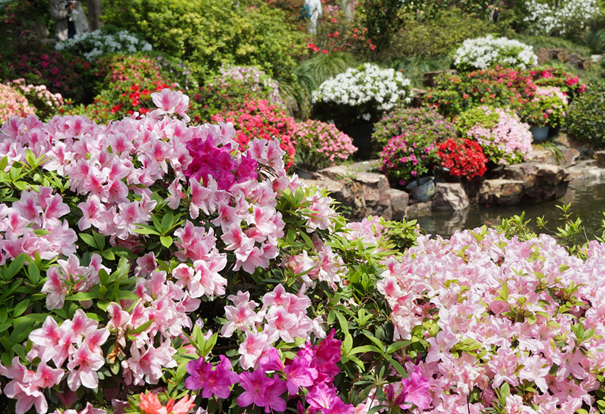
Centering on the theme of "Seeking Beauty in Sishui", the local government has restored over 133 hectares of ecological wetlands along the riverbank and built more than 200 hectares of themed flower seas. Meanwhile, poetic cultural elements have been integrated into scenic streets, lanes and rural courtyards, with more than 120 poetry inscriptions and 15 poetic footpaths built to ensure "poetry in scenery and scenery with poetry". This allows tourists to enjoy both the flowers and a cultural experience.
Beyond appreciating the poetic scenery, Sishui County has made great efforts to extend the cultural tourism chain. It has connected 23 villages to form a poetic rural cultural tourism cluster and developed more than 200 poetry-themed cultural and creative products as well as characteristic agricultural and sideline products, promoting the integrated development of cultural and tourism resources. According to the Sishui County Bureau of Culture and Tourism, the county received 5.7 million tourists in 2025, achieved 4.5 billion yuan in tourism revenue and drove more than 30,000 people to employment and income increase.
In Fenyi County, Xinyu City of Jiangxi Province, the "Tiangong Culture" derived from the ancient classic "Tiangong Kaiwu" is illuminating the local cultural tourism industry. Written by the Ming Dynasty scientist Song Yingxing in Fenyi, the book, known as "China’s Encyclopedia of Production Technology in the 17th Century", records more than 130 specific production techniques and crafts. Now, Fenyi County is tapping into the "Tiangong Culture" IP, making the ancient classic "come alive" through intangible cultural heritage (ICH) museums, rural workshops and immersive experiences.
Inside the Tiangong Kaiwu Cultural Museum in Fenyi, reprinted versions of the ancient book and cultural relics of ancient farming and handicraft tools are neatly displayed. Modern technologies such as sound, light and electricity vividly reproduce the iron smelting, textile and farming techniques of the Ming Dynasty. The museum also has special functional areas for research studies, interactive experiences and document reading, catering to the needs of different groups including teenagers on study tours, family parent-child trips and cultural tourists.
In Chongzhou City of Sichuan Province, local chronicles are empowering ancient town tourism and unlocking the thousand-year-old Bashu culture. "Huayang Guozhi", the earliest and most complete local chronicle extant in China, has become a core cultural resource for Chongzhou’s tourism. This spring, visiting the Huayang Guozhi Museum in Chongzhou allows tourists to start an immersive journey into the thousand-year-old Bashu culture.
The museum features a multi-dimensional artistic sand table and a bamboo slip-shaped LED sky curtain. As the lights change, the mountains, rivers and city distributions of the Chengdu Plain in the pre-Qin period are clearly presented. A 360-degree panoramic circular screen is also set up in the museum, enabling tourists to personally experience the living scenes of ancient Shu people such as fishing, hunting, farming and worshiping as recorded in "Huayang Guozhi". Since the beginning of this year, the museum has received a total of 46,000 tourists, becoming a new landmark of Chongzhou’s cultural tourism.
From poetic landscapes in Shandong to ancient classics in Jiangxi and local chronicles in Sichuan, these counties have successfully integrated traditional culture into tourism, not only enriching tourists’ experiences but also promoting local economic development and rural revitalization. The integration of culture and tourism has truly turned ancient heritage into a driving force for sustainable development in rural areas.