China Launches Larger-Scale Home Appliance Trade-In Campaign to Boost Consumption and Industry Upgrade
Launched in 2022, the “Home Appliance Benefit Trade-In Campaign” has developed into a long-term strategy for promoting home appliance consumption upgrading and high-quality industrial development over the past four years, transforming the industry from short-term promotions to building a long-term and sustainable industrial ecology. Recently, a new chapter of this campaign — the “2026 Larger-Scale National Home Appliance Benefit Trade-In Campaign Covering Hundreds of Cities, Thousands of Towns and Ten Thousand Households” — was officially launched in Beijing, marking that the home appliance service industry will move towards a broader market and embark on in-depth industrial ecological restructuring.
The campaign has achieved remarkable results, activating the domestic demand market, promoting industrial upgrading, practicing the concept of green development and building a new circular economy model. It has also led to changes in consumption concepts, driving three rounds of restructuring in the industry in terms of user groups, brand patterns and industrial ecology.
In 2025 alone, a single enterprise undertook nearly 160 million national subsidy orders for trade-in, driving social retail sales of over 200 billion yuan. Orders and user numbers in towns and rural areas increased by 64% and 38% year-on-year respectively, fully demonstrating the campaign’s strong market influence.
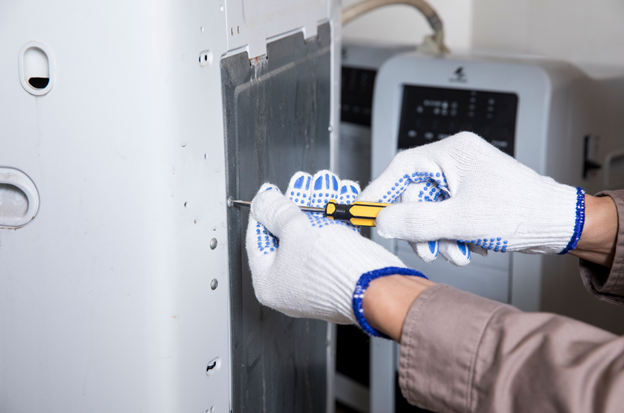
To address new challenges in consumption demand, recycling systems and service capabilities, the campaign working group has proposed three solutions: shifting focus from “product-centric” to “scenario service-centric” to meet users’ overall needs for smart life; establishing a standardized and value-based recycling system to eliminate pain points in waste home appliance recycling; and building an all-round collaborative service ecosystem to integrate resources and form synergy.
The campaign is evolving from its initial focus on “awakening new concepts, replacing old appliances and refreshing life” to “understanding users’ needs, meeting their demands and enhancing their well-being”, putting users at the core and upgrading from simple commodity transactions to value co-creation for a better life.
Looking ahead, the China Household Electrical Appliances Service and Maintenance Association predicts that three emerging markets — whole-house intelligent systems, AI displays and service robots — will become the industry’s growth engines, driving enterprises to shift from “selling products” to “selling smart life solutions”.
Suggestions have been put forward to expand and refine policies, including incorporating emerging smart home appliances such as dishwashers, steam ovens, sweeping robots and garbage disposals into the subsidy scope, solving tax compliance issues for recycling enterprises and providing direct subsidies to consumers, to build an efficient and smooth closed-loop system covering “recycling — trade-in — recycling — reuse”.
As a long-term project lasting until 2035, the campaign is based on but not limited to trade-in. The General Rules for the Safe Service Life and Recycling of Household and Similar Electrical Appliances will mandate that home appliances be labeled with their safe service life, guiding the orderly withdrawal of overused appliances and releasing huge replacement space for green and intelligent new products.