Digital Technology Revives Ancient Rock Art in Helan Mountains
Sunlight filters through the chilly Helan Mountain Valley, casting a warm glow as agile bharals leap along steep cliffs, occasionally passing the deeply carved rock art—ancient patterns seemingly awakened by their movement.
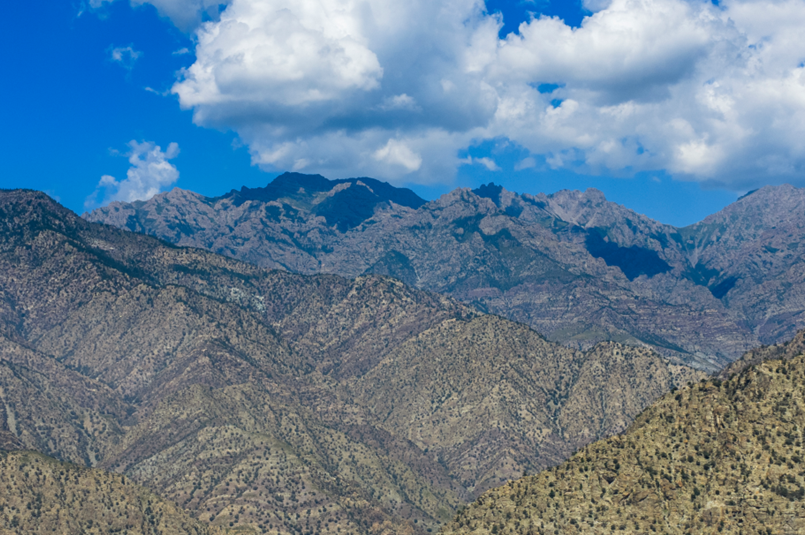
Stretching between the Ningxia Plain and the Alxa Plateau, the Helan Mountains have witnessed the integration and collision of nomadic and agricultural civilizations for thousands of years. Nearly 30,000 rock carvings scattered across the 250-kilometre mountain range, known as "the book on stones" and "the prehistoric art gallery", silently tell vivid stories of ancient ancestors.
However, with the passage of time and natural erosion, the totem marks on the rock faces have gradually faded. Digital technology has stepped in to preserve these cultural relics, endowing the rock art with a "digital life".
The most famous piece of Helan Mountain rock art is a circular "human face" carving, located 40 metres above the ground at Helankou. With double-ringed eyes, short eyelashes and a semicircular outline exuding a solemn aura, it radiates sun-like rays from its top, earning it the name "Sun God"—the most representative work of Helan Mountain rock art.
Beyond the "Sun God", more rocks bear witness to history. Along the plank road at the entrance of the rock art scenic area, carvings of various patterns and symbols are visible on both cliff faces, some faded and worn, others still clear despite wind and rain erosion.
Archaeological studies show that the nearly 30,000 rock carvings record ancient human life scenes such as herding, hunting, sacrifice and dancing, as well as patterns of animals like sheep, horses, cattle, deer, tigers and leopards, along with abstract symbols. They reveal the cultural connotations of natural and ancestral worship of primitive clans and tribes, serving as a precious treasure for studying human cultural history, religious history and primitive art history.
Within the 12-square-kilometre protection area of Helankou Rock Art Reserve, nearly 6,000 rock carvings are densely distributed, forming an "ancient human cultural and artistic corridor". Dating from the early Neolithic Age to the Bronze Age, these carvings reflect the evolution of civilization, from simple animal outlines to complex social scenes, and from hunting records to ritual worship.
The Helan Mountains lie in the transition zone between arid and semi-arid regions, with large temperature differences between day and night that damage the rocks. Natural erosion, rock, mudslides, animal and plant activities, and human behavior all pose threats to the rock art. Traditional physical and chemical protection methods can only delay its disappearance, while some carvings are too steep for regular monitoring.
Since 2020, a digital protection project has been launched, combining remote sensing images, UAV oblique photography, refined regional surveying and mapping with computer visualization technology to build a 3D visualization system for the rock art in the 12-square-kilometre reserve. So far, 170,000 high-definition images, 519 sets of rock art survey data, and centimeter-level 3D models of the entire reserve (millimeter-level for key areas) have been collected.
In the Helan Mountain World Rock Art Museum, a 3D model of the "Sun God" is displayed on the screen. With a click of the mouse, the model zooms in to show every scratch, weathered spot and even tiny crystal structure on the rock face. Each rock carving has been assigned a unique ID, linked to its 3D model, attribute information, research documents and protection records, making it accessible and explorable.
While physical rock carvings will eventually fade, their digital lives have just begun. Endowed with new vitality by digital technology, this "book on stones" is no longer just silent patterns on cliffs, but a touchable, explorable and transmissible cultural gene, continuing to interpret the praise of history and life.