GCL Tech Accelerates Strategic Shift, Targets New Growth Curve with LFP and Silicon-Carbon Anodes
Shanghai, June 10 — GCL Technology Holdings, a leading global producer of granular polysilicon, is undergoing a profound strategic transformation to become a diversified new energy materials platform, with plans to reduce photovoltaic product revenue to 20% of its total within three years, according to senior executive remarks at SNEC 2026 in Shanghai.
The company is pivoting strongly toward lithium iron phosphate (LFP) as its primary new growth driver. The strategic logic rests on clear economic comparisons: at current prices, 200,000 tonnes of polysilicon generate around RMB 8 billion in revenue, while 300,000 tonnes of LFP could yield approximately RMB 21 billion. Future expansion to 1 million tonnes of LFP would push polysilicon’s revenue share below 10%.
GCL Tech’s LFP push builds on seven years of R&D. Since 2019, it has developed a proprietary physical iron oxide process, distinct from the mainstream ferrous oxalate method. The technology features a simplified workflow, lower capital expenditure, reduced energy consumption, and zero emissions. Its fourth-generation and newer products demonstrate superior performance in compact density, capacity, and voltage profile. Haitong Securities research notes that the process cuts production costs by RMB 1,600 to 2,000 per tonne versus conventional routes.
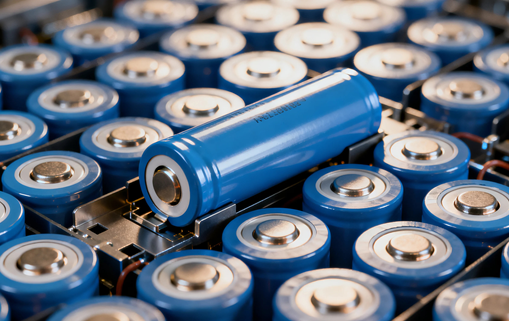
The company has bypassed oversaturated mid-tier LFP markets to focus on high-density premium products. Its fifth-generation C18 high-compaction LFP has completed validation at six major power and energy storage firms. Only three Chinese manufacturers can mass-produce such high-density LFP.
GCL Tech also adopts a unique “lithium supply by downstream customers” model, insulating itself from extreme lithium price volatility. Payment terms are shortened from the standard three months to one month, easing cash flow pressure. The LFP division is already profitable.
Its first large-scale LFP facility in Leshan, Sichuan, has completed construction of 200,000 tonnes annual capacity and entered commissioning, with pre-orders secured for planned expansions.
While scaling LFP, GCL Tech is revitalising its silicon-based strengths. Higher demand for BC solar cells increases the value of high-purity granular polysilicon, which better meets strict impurity standards than traditional rod polysilicon. GCL Tech holds roughly 25% global granular polysilicon market share, with adoption exceeding 40% among top clients. New restrictions on polysilicon capacity expansion create supply constraints around 480,000 tonnes, reinforcing its low-carbon polysilicon premium in overseas markets.
Additionally, the company plans to redirect part of its granular polysilicon capacity toward silicon-carbon anode production, leveraging its massive silane gas output. 2026 is seen as the commercial launch year for automotive-grade silicon-carbon anodes, which offer up to 1,800mAh/g capacity versus 360mAh/g for conventional graphite. Penetration is expected to rise from 5–10% today to 15% by 2027. GCL Tech’s silicon-carbon pilot line will come online within 2026.
The company will avoid industry consolidation and acquisitions of inefficient capacity, focusing instead on scaling its new materials segments.