Guangdong’s Power Load Hits Record Highs Amid Sustained Heatwaves with Robust Grid Safeguards
Per China National Radio, Guangdong’s provincial power grid has registered three record-high load surges since 27 May, reaching a peak of 173.67 million kilowatts. The figure represents a 5.3 per cent year-on-year increase on the previous annual maximum, making Guangdong the first provincial region nationwide to break the 170-million-kilowatt power load threshold this year. Multiple prefecture-level cities across the province have simultaneously set new local power consumption records.
Guangzhou’s grid load climbed twice to a fresh peak of 25.946 million kilowatts on 28 and 29 May, marking a 3.33 per cent rise compared with last year’s highest level. Persistent high temperatures have continued to drive strong electricity demand across Guangdong, despite intermittent rainstorms sweeping through parts of the region. China Southern Power Grid has rolled out comprehensive measures covering grid infrastructure upgrading, digital intelligent empowerment and on-site duty deployment to secure stable power supply throughout the summer peak period.
Targeting potential power supply vulnerabilities ahead of the summer consumption surge, power authorities in Guangzhou have accelerated the upgrading and reinforcement of urban distribution networks. A total of 827 summer power guarantee projects were fully completed and operational by 30 April, with a total investment of 989 million yuan. These projects have added 616,800 kilovolt-amperes of new distribution capacity, prioritising infrastructure improvements in power-deficient areas including urban villages and ageing residential communities. A three-year construction task list for village-level distribution network land utilisation has been formulated, incorporating 1,092 land plots into phased grid development plans. Collaborative mechanisms with local governments are being strengthened to resolve long-standing challenges in grid construction, including site selection, land acquisition and renovation implementation.
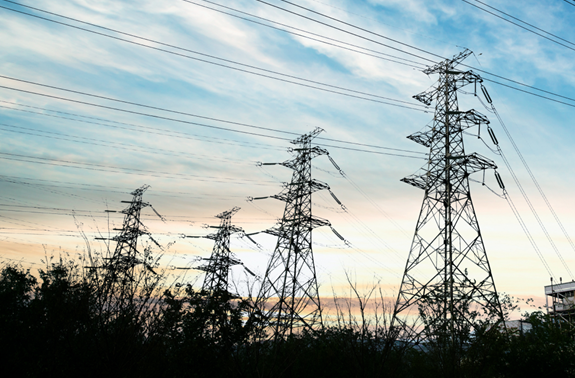
Focusing on densely populated urban village clusters in Haizhu District, targeted grid renovation works have been carried out to resolve recurring operational issues such as peak-time overload, low voltage and frequent tripping. Upgrades include transformer capacity expansion, additional equipment deployment and renewal of outdated power lines, alongside systematic hazard rectification and refined operational maintenance. Regular coordination mechanisms with sub-district offices and community committees have been established to deliver grid-based grassroots power services and respond promptly to residential electricity demands. The optimisation model pioneered in Haizhu has been replicated and adapted for implementation in Tianhe, Baiyun, Panyu and Huangpu districts.
Frontline operational adjustments have effectively addressed emergent power supply bottlenecks in rural areas. In Nanhe Village of Suixi Town, Zhanjiang, soaring summer power consumption repeatedly pushed four 630-kilovolt-amperes transformers beyond operational limits. Restricted by narrow village lanes that blocked the access of large-scale power generation vehicles, on-site teams have completed temporary power supply facilities within a single day by utilising idle homestead spaces for makeshift transformer installation, successfully diverting excessive load from original equipment and stabilising local power supply. In Jieyang, power departments have eliminated long-standing operational faults across 11 historically high-risk distribution areas through transformer capacity expansion, load redistribution and three-phase imbalance regulation. A community-based communication service model has been implemented to build efficient interaction channels between power supply stations, village committees and customer service teams.
Digital and intelligent technologies have become core drivers in enhancing summer power guarantee efficiency across Guangdong. An independently developed intelligent distribution network operation system has been fully deployed throughout Guangzhou, integrating multi-dimensional spatial data covering grid facilities, user information and geographic coordinates. The platform enables precise identification of 77 types of operational risks and real-time perception of line faults, compressing traditional manual fault assessment time from 15 minutes to one minute of automated response. The overall fault disposal efficiency has improved by more than 90 per cent, effectively shortening power outage duration during high-load periods. The intelligent system has accurately detected and addressed 1,347 faults to date. Grid-based emergency repair teams have been deployed across urban village areas, with round-the-clock online and hotline service channels maintained to deliver uninterrupted public power services.
Sustained on-site duty and meticulous equipment inspections underpin stable grassroots power delivery. Frontline maintenance teams conduct intensive equipment replacement and upgrading works under high-temperature conditions to resolve low-voltage issues in residential zones. Specialised inspection teams carry out nightly patrols on offshore islands, conducting infrared temperature detection on distribution transformers and line connectors. Faced with harsh operational conditions caused by perennial sea wind and salt fog corrosion, night high-load inspections effectively identify latent overheating and overload risks that remain undetected during daytime operations, reinforcing the stability of island power supply systems.
High-temperature weather patterns will persist across Guangdong in the coming period, maintaining robust regional electricity demand and sustaining pressure on summer power guarantee operations. China Southern Power Grid will continue to advance infrastructure optimisation, digital intelligent monitoring and refined grassroots services to sustain reliable and high-quality power supply for residential livelihoods and industrial operations across the province.