Jiangsu's Traditional Manufacturers Forge New Quality Productive Forces via AI-driven Transformation
Silent equipment operates automatically with barely any workers in the production workshop of Willary Advanced Materials Co., Ltd. A few kilometers away, a key component for coal mine conveyors named "roller" rolls off the intelligent production line of East China Machinery Co., Ltd. at a rate of one per minute, with only one or two workers needed to monitor the entire line.
These scenes are vivid examples of Jiangsu's traditional manufacturing sector shifting toward a dual-driver development model of "new materials plus intelligent equipment". Local state-owned manufacturers are deeply integrating artificial intelligence into the entire chains of research, production and service to accelerate the cultivation of new quality productive forces featuring high technological content and industrial resilience.
Willary, a national-level specialized, refined, distinctive and innovative "little giant" enterprise, has secured over 200 patents since its founding 11 years ago and is recognized as an "invisible champion" in the metal 3D printing powder industry. Its core products, including high-temperature alloys, titanium alloys and die steel powders, are widely used in aerospace, new energy vehicles and consumer electronics. A 3D-printed replica of the He Zun, an ancient bronze artifact from the Western Zhou Dynasty that bears the earliest written record of the term "China", stands prominently in its exhibition hall, demonstrating the application of cutting-edge additive manufacturing technology.
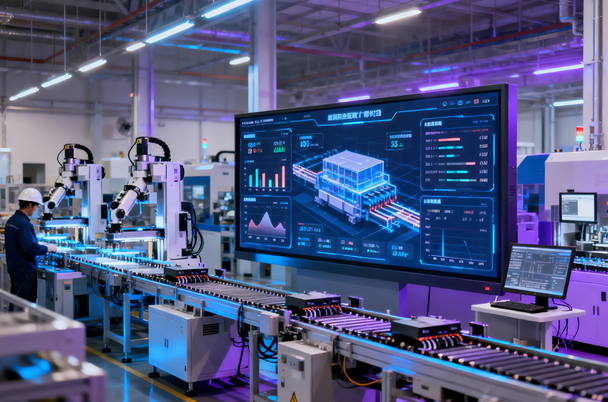
In its workshop, AI has revolutionized production efficiency. The scattered data and delayed information flow that once plagued operations are now resolved by an AI data conversion system. Customer demands are accurately transformed into technical parameters that guide the entire process from order acquisition and production to quality inspection. This technological upgrade has boosted the qualification rate of products from 50 percent to 90 percent, drastically reducing the cost of trial and error.
East China Machinery showcases the power of intelligent equipment in reshaping traditional manufacturing. The roller, a small but critical part for coal belt conveyor systems, used to require seven to eight workers for each unit and a total of 30 workers per day for the entire production line. Now, the intelligent production line achieves almost unmanned operation, churning out one roller every 60 seconds steadily.
Intelligent technologies have also extended to frontline mining services. Sorting robots work as the first line of defense in underground coal mines. They accurately identify and remove hard impurities like anchor rods and iron blocks mixed with newly mined coal, which prevents severe wear to subsequent production equipment and ensures coal quality. At power plants, intelligent sampling robot systems equipped with rail-mounted trolleys and robotic arms conduct calorific value testing. They can adapt to train carriages and large mining trucks, taking samples randomly in accordance with national standards and completing the whole process of sampling and sealing automatically—a crucial step as coal procurement prices are determined by calorific value.
Such intelligent applications are becoming widespread. AI restructures Willary’s entire production chain of metal powders, while East China Machinery expands intelligence to production, operation and service. With 67 AI application scenarios being implemented by Jiangsu’s provincial-owned enterprises, these targeted technological solutions are gradually becoming a regular part of the transformation of traditional manufacturers, paving the way for more efficient and resilient industrial development.