Domestic 103-grade Racing Fuel Debuts, Breaking Foreign Monopoly in High-end Oil Products
China’s domestic high-performance fuel industry has achieved a historic breakthrough, with self-developed 103-grade racing petrol officially deployed at the ongoing China Tarim Rally. The launch fills the long-standing domestic gap in high-end racing fuel and terminates reliance on imported specialised oil for top-level motorsport events.
High-grade racing fuel has long been dominated by overseas suppliers. Imported racing petrol involves high procurement costs, lengthy transportation cycles and insufficient adaptive performance, restricting the development of domestic professional motorsports. The stable launch of China’s 103-grade racing fuel marks a substantial leap in the national oil refining sector, representing an industrial upgrade from basic oil refining to high-precision petroleum manufacturing.
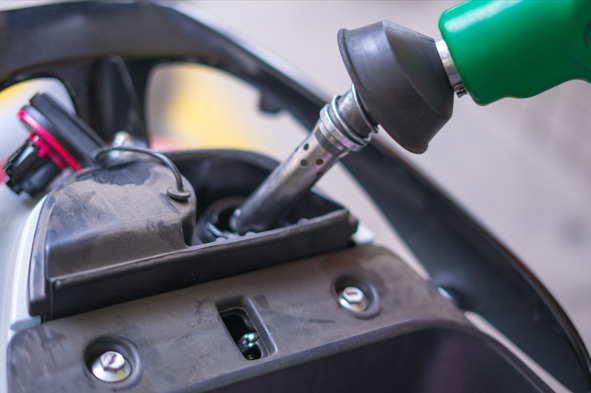
Tailored for extreme racing engine conditions, the new fuel features a research octane rating exceeding 103. Racing engines operate at ultra-high compression ratios and rotating speeds, where conventional petrol easily causes engine knocking, power attenuation and hardware damage. The upgraded formula delivers outstanding anti-knock performance, maintaining steady and powerful power output under extreme pressure. Free of lead, manganese and other metallic additives, the fuel produces minimal combustion deposits and fully meets international environmental standards for professional racing events.
Different from laboratory prototypes, the 103-grade racing fuel has achieved full industrial mass production. Stable large-scale manufacturing capacity demonstrates that China’s precision blending, fractionation and quality control technologies have reached world-class standards, achieving reliable conversion from advanced formulas to commercial products.
Fuel octane ratings correspond to anti-knock performance rather than overall quality. Higher-grade petrol does not equate to better fitness for ordinary civilian vehicles. Standard 92, 95 and 98-grade petrol remains the optimal choice for most household cars, as blind adoption of ultra-high-grade fuel brings no extra performance improvement and causes unnecessary resource waste.
The independent breakthrough in racing fuel reshapes the global competitive landscape of high-end petroleum products. It eliminates supply chain constraints and overseas pricing monopoly, forming a standardised and professional supply system for domestic motorsport events. As a core benchmark technology in the refining industry, racing fuel manufacturing accumulates valuable experience for upgrades in aviation fuel and specialty lubricant production.
The advanced refining technologies applied in the 103-grade fuel will drive overall quality improvement of civilian petrol products and boost the iterative upgrading of China’s high-end petrochemical industrial chain. Continuous technological optimisation in precision processing and clean formulation will further consolidate the competitiveness of domestic petroleum manufacturing sectors.