China’s Battery-swapping Industry Expands Rapidly with Standardisation and Energy Integration
China’s battery-swapping sector maintains robust expansion in 2026, underpinned by booming market demand, improved technical standards and supportive industrial policies. Official statistics show rapid growth in both infrastructure scale and service consumption, driving profound transformation across the new energy vehicle and clean energy sectors.
The National Energy Administration released electricity consumption data for April on May 19. The power consumption of battery charging and swapping services reached 13.7 billion kWh, marking a year-on-year surge of 61.9 percent. Data from the China Electric Vehicle Charging Infrastructure Promotion Alliance shows China’s total battery swap stations exceeded 6,000 by early May. Around 1,000 new stations were added from January to April, with annual growth rates surpassing 40 percent.
Efficient battery-swapping scenarios are widely deployed nationwide, covering passenger vehicles, heavy-duty trucks and logistics fleets. Fast swap services enable vehicles to resume operation within minutes, greatly improving energy replenishment efficiency. Leading new energy industrial players have accelerated layout iteration, forming a multi-dimensional ecosystem featuring network expansion, technical upgrading and cross-industry collaboration.
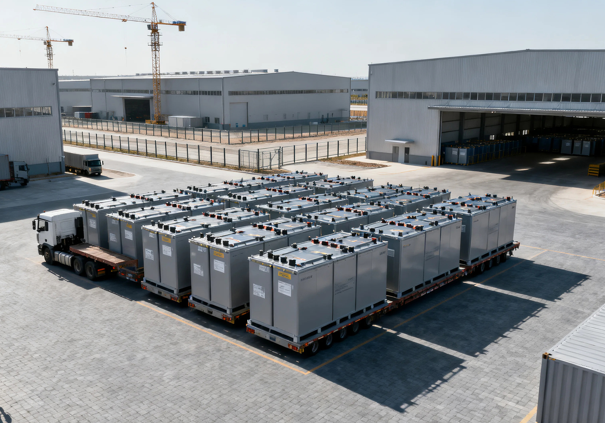
Industry-wide standardisation has broken historical development barriers. In March, CATL led the establishment of an innovation consortium jointly with vehicle manufacturers and equipment enterprises, releasing unified technical specifications for bolt-type battery swapping systems. The new standards cover battery pack design, mechanical connection, electrical interfaces and communication protocols, eliminating incompatible barriers between different brands. Major enterprises including NIO and GAC Group have participated in national standard formulation to promote cross-brand battery compatibility.
Diversified operational models further enrich industrial vitality. CATL has partnered with Chery Automobile to build 4,000 swap stations and operated 1,470 stations across 99 cities by early May. Strategic cooperation between GAC Group, CATL and JD.com innovates tripartite investment mechanisms to reduce heavy-asset pressure and accelerate network implementation. Third-party operators continue to optimise regional service coverage, forming complementary and inclusive industrial patterns.
Favourable policies provide steady impetus for industrial iteration. Preferential vehicle purchase tax policies for battery-swapping models effectively lower consumer costs via battery-excluded pricing mechanisms. National pilot schemes for county-level charging and swapping infrastructure improvement also offer targeted support for new station construction.
The industry expands across dual tracks of passenger cars and heavy-duty logistics. While private vehicles and online car-hailing remain dominant markets, heavy-duty truck swapping has become a new growth driver. CATL’s heavy-duty swap network has covered major logistics routes, with continuous expansion plans for 2026.
The sector is exploring viable profitability models to resolve long-term operational challenges. Asset-heavy investment and high daily operating costs have constrained sustainable profitability. Optimised business models including battery leasing, cascade utilisation, photovoltaic-storage-charging-swapping integration and peak-valley electricity arbitrage help diversify revenue streams and reduce operational expenditure.
Beyond vehicle energy replenishment, battery-swapping infrastructure functions as distributed energy storage carriers, advancing integrated development of transportation and energy sectors. Integrated photovoltaic, energy storage and battery swap stations facilitate grid stability and renewable energy consumption. Continuous industrial improvement will further reshape China’s new energy industry landscape and support long-term high-quality development.