China’s Highway NEV Charging Hits Record High During May Day Holiday, Infrastructure Improves Significantly
During this year’s May Day holiday, the charging volume of new energy vehicles (NEVs) on China’s highways hit a record high, with remarkable improvements in charging infrastructure along expressways. The continuous optimization of the power replenishment network has effectively supported the surge in NEV self-driving trips, marking steady progress in the low-carbon transformation of China’s transportation sector.
National Energy Administration stated that on the first day of the May Day holiday, the charging volume of NEVs on highways reached 23.0339 million kilowatt-hours, a year-on-year increase of 55.6%, with more than 946,300 charging services provided. This figure has refreshed the historical record of charging volume on the first day of the May Day holiday, reflecting the booming demand for NEV travel.
Ministry of Transport had previously estimated that the average daily traffic volume on national highways during the holiday would reach about 64 million vehicles, a year-on-year increase of 3.4%, with the peak expected to hit 70 million vehicles, the highest in the history of the May Day holiday. Among them, the average daily traffic volume of NEVs was about 15.4 million vehicles, rising by 33% compared with the same period last year.
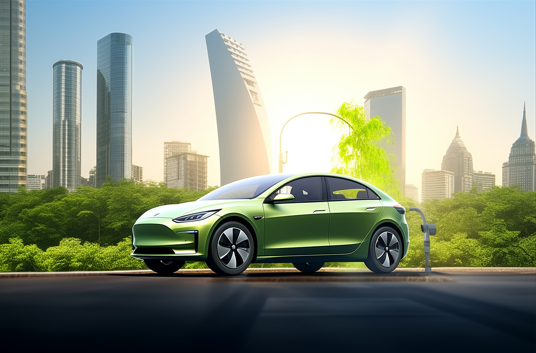
To cope with the strong demand for NEV charging during the holiday, local authorities have taken a series of measures to enhance charging convenience. For instance, on April 29, State Grid Lingbi County Power Supply Company added 4 high-power DC fast charging piles in both north and south directions of Fengmiao Service Area on Xuming Expressway, putting a total of 8 high-power charging devices into operation. With a maximum output power of 160 kilowatts per gun and compatible with dual-side simultaneous charging, the new devices are nearly three times more efficient than traditional ones.
Jiangsu Suqian has built 98 fast charging piles in 8 highway service areas, realizing full coverage of fast charging in highway service areas. State Grid Shandong Electric Power Company deployed mobile emergency charging cabins in 9 popular charging stations, including the one at Jinan Service Area on Beijing-Taipei Expressway, and 6 mobile charging piles in 4 highway charging stations with rapidly growing demand, such as Linyinan Service Area on Beijing-Shanghai Expressway, to ease charging pressure during peak hours.
China Daily reported that the charging volume of NEVs on China’s highways increased significantly during the five-day May Day holiday, with a total of 3.97 million charging sessions and 94.93 million kilowatt-hours of electricity consumed. The average daily charging volume was 18.98 million kilowatt-hours, 2.34 times the average level on normal working days this year.
Looking ahead, China will continue to strengthen the construction of highway charging infrastructure. Xinhua News Agency reported that in 2026, the Ministry of Transport plans to build more than 10,000 charging guns in highway service areas across the country, of which no less than 25% will be high-power charging guns, aiming to further improve the guarantee capacity of charging services.
Industry analysis indicates that with the gradual improvement of the NEV energy replenishment network and continuous breakthroughs in fast charging technology, the proportion of NEVs in highway travel is expected to increase significantly in the future and may become the absolute main force in the medium and long term. This will not only promote the structural optimization of travel methods but also help form a green and intelligent transportation infrastructure network, laying a solid foundation for the low-carbon and high-quality development of the transportation sector.