UNESCO Science Club Asia-Pacific Network Launched in Beijing to Boost Science Education
On April 25, the 2026 International Workshop on Enhancing Practical Competencies in Science Education and the Launch Ceremony of the UNESCO Science Club Network Programme for the Asia-Pacific Region kicked off at the China Science and Technology Museum in Beijing. The event serves as a key initiative to respond to the UN’s “International Decade of Science for Sustainable Development (2024—2033)” and implement the cooperation agreement between the China Association for Science and Technology and UNESCO.
Its core purpose is to build a platform for scientific education exchange and cooperation in the Asia-Pacific region, enhance the practical capabilities of science teachers at home and abroad, and deepen international scientific, technological and cultural exchanges. Xinhua News Agency reports that the launch marks a new milestone in cross-border cooperation in science education across the Asia-Pacific, aligning with global efforts to promote quality science learning for all.
The workshop is co-hosted by UNESCO, the World Organization for Public Science Literacy, the China Science and Technology Museum, and the Chinese Society of Natural Science Museums. Lydia Brito, Assistant Director-General for Natural Sciences at UNESCO, delivered a speech via video, while Shahbaz Khan, Director of the UNESCO Beijing Cluster Office for East Asia, attended the event in person and announced the official launch of the UNESCO Science Club Asia-Pacific Network.
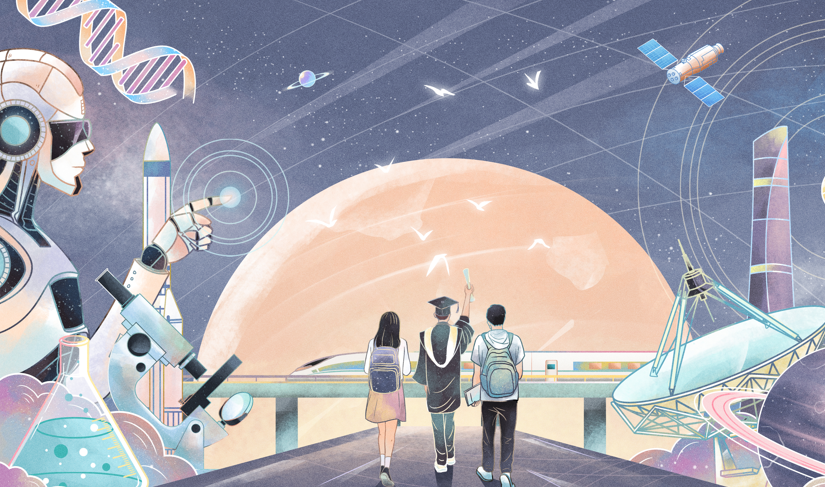
This launch signifies the formal establishment of a long-term mechanism for transnational cooperation, resource sharing and personnel exchange in science education in the Asia-Pacific region, with science clubs as the core platform. Shahbaz Khan emphasized in his speech that the network would bridge gaps between science educators in different countries, fostering mutual learning and collaborative progress.
Centered on the theme “STEM Activity Design for the Future”, the workshop focuses on core areas including artificial intelligence, teaching aid development, interdisciplinary practice, and green low-carbon development and sustainable development. It has recruited more than 40 Chinese science teachers and 15 science teachers from 12 countries in the Asia-Pacific region.
People’s Network notes that the event aims to enhance the STEM activity design and practical teaching capabilities of science teachers in the Asia-Pacific, supporting the long-term operation of the UNESCO Science Club Network in the region. The six-day workshop adopts an integrated model combining expert lectures, practical training, case sharing, project-based learning, exhibition hall practice, achievement display and enterprise visits.
Participants engage in professional learning on STEM education innovation, AI tool empowerment in science education, and science activity development and teaching aid production. This systematic training helps participants improve their scientific thinking, engineering thinking and interdisciplinary teaching practical abilities, promoting in-depth integration of science education with the digital economy and new quality productive forces.
Wang Yu, a science teacher from Shanghai who participated in the workshop, said the practical training on AI-enabled science teaching tools had provided new ideas for her daily teaching. “It’s valuable to learn from peers from different countries and gain insights into diverse teaching methods,” she added.
The workshop will further promote the precise connection between popular science resources, enterprise resources and the needs of science clubs in various countries, laying a solid foundation for the high-quality and sustainable development of regional science education. UNESCO stated that it would continue to support such initiatives to advance science education and contribute to the UN’s sustainable development goals.